
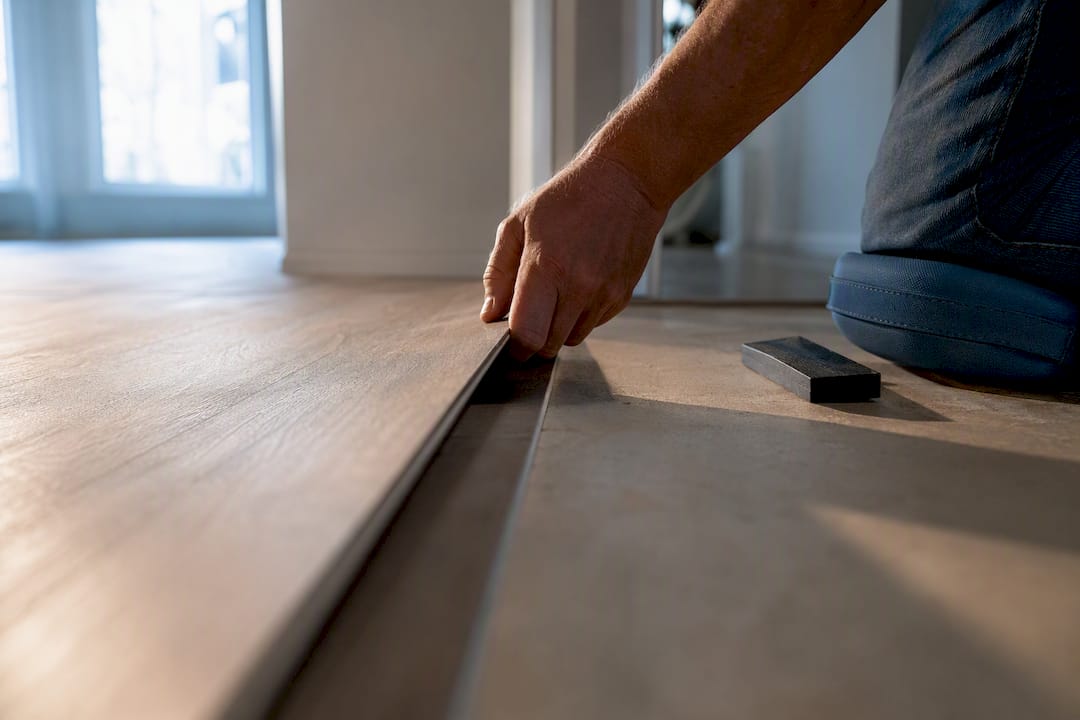
Loose lay vinyl plank is the fastest way to put a durable, waterproof floor down without glue or click-lock joints, and it’s one of the easiest floors to repair plank by plank. The trade-off is stability: rooms with heavy rolling loads or wide-open, high-traffic layouts can cause planks to shift over time. This guide covers subfloor prep, honest pros and cons, and where loose lay actually belongs.
TL;DR:
- Loose lay vinyl plank relies on weight, a stiff core, and friction backing to stay in place, making subfloor flatness and moisture control critical for success.
- Its quick installation and easy plank-by-plank repairs save time and labor but offer less stability in areas with heavy rolling loads or large open spaces.
- Suitable for rental units, staging homes, basements, and access floors, but not recommended for high-traffic commercial areas or rooms with constant wheeled traffic.
- Higher-end products with thicker wear layers and advanced backing technology typically come with longer warranties of 10 to 25 years, suitable for residential use.
- Proper subfloor prep, including flatness testing and moisture checks, is essential to prevent creeping and gaps in loose lay vinyl floors.
Table of Contents
- What Is Loose Lay Vinyl Plank and How Does It Stay Put?
- Pros and Cons: What You Gain and What You Give Up
- Where Loose Lay Actually Makes Sense
- Installing Loose Lay: Subfloor Prep and Layout Basics
- Keeping Your Floor Looking New: Maintenance and Repairs
- Loose Lay vs. Click-Lock vs. Glue-Down: Which Wins?
- Why We Stock What We Stock: A Note From 40+ Years in Flooring
- What I’d Tell Each Buyer Before They Order
- Getting Samples, Specs, and Straight Answers Before You Buy
- Sources
- FAQ
What Is Loose Lay Vinyl Plank and How Does It Stay Put?
Loose lay vinyl plank flooring sits on the subfloor without glue or interlocking edges. It relies on three things to stay in place: added mass, a stiff core, and a friction backing that grips the subfloor instead of bonding to it. Most planks run 4.0 to 5.5 millimeters thick, with a fiberglass-reinforced core that resists curling and a textured or rubberized underside that acts like a non-slip mat.
Manufacturer spec sheets typically list overall thickness and wear layer depth for residential-grade products.
- Backing type and friction rating
- Recommended subfloor flatness and moisture limits
- Warranty length tied to residential or commercial use
Karndean’s LooseLay line, for example, uses a proprietary K-Wave friction-grip backing at roughly 4.5 mm thick with a 20 mil wear layer, a spec sheet that shows how backing technology and wear layer depth drive both performance and warranty terms.
Pros and Cons: What You Gain and What You Give Up
Loose lay earns its popularity on speed. A skilled installer can often finish a room in about half the time it takes to lay click-lock planks, since there’s no adhesive cure time and no locking profile to align.
What you get:
- Fast installation with minimal tools
- Plank-level repairs instead of ripping up a whole floor
- Full waterproof performance for kitchens, laundry rooms, and basements
- Reusability if you’re renting or staging a property
What you give up:
- Some risk of creep or gapping under rolling chairs, carts, or heavy furniture
- Seams that need snug, careful cutting since there’s no locking mechanism to pull planks tight
- A cost per square foot that can run close to, or above, mid-range click-lock products
Pro Tip: Premium loose-lay products cost more upfront but often save on labor and rework, which matters most in rental units and staged homes where you’ll pull the floor up again in a few years.
Residential loose lay products typically carry warranties in the 10 to 25 year range depending on wear layer thickness, with commercial-grade lines rated for lighter, more consistent foot traffic rather than constant wheeled loads.
Where Loose Lay Actually Makes Sense
Loose lay flooring shines in specific situations, not everywhere.
- Rental units and turnover properties. Landlords like that damaged planks can be swapped in minutes between tenants, no adhesive removal required.
- Staged or short-hold homes. Sellers get a finished look fast, and the flooring itself can theoretically be lifted and reused elsewhere.
- Basements. Waterproof core plus friction backing handles occasional dampness better than most laminate options.
- Access floors and offices. Loose lay works well as an access-floor solution where underfloor wiring needs periodic access without tearing up glued material.
Avoid loose lay in large open-plan spaces with rolling office chairs, in commercial areas with wheeled carts or pallet jacks, and in any room where planks run wall to wall with no breaks. Long, uninterrupted runs give creep more room to happen, and doorway transitions become the weak point without extra anchoring.
Installing Loose Lay: Subfloor Prep and Layout Basics
Subfloor prep is where most loose lay problems start, or get prevented.
- Check flatness first. Manufacturers commonly cite a tolerance around 3/16 inch over 10 feet, but confirm the exact figure on your product’s spec sheet before you buy.
- Test for moisture. Use a calcium chloride kit or an in-situ relative humidity probe. High readings mean you address the moisture source before laying anything.
- Clean and patch. Strip old adhesive residue, grind down high spots, and fill low spots with a leveling compound.
- Plan your layout. Pick a straight starting wall, stagger end joints between rows, and leave the expansion gap your manufacturer specifies at every wall.
- Decide on adhesive strategy. Straight loose lay works for most residential rooms. Perimeter adhesive or double-sided tape at thresholds and doorways helps prevent creep even in fields left loose everywhere else. Full spread glue-down is the better call for heavy rolling loads or consistently wet commercial areas.
Pro Tip: Loose lay is slightly more forgiving of minor subfloor imperfections than click-lock, but debris or bumps still telegraph through the finish. Sweep and vacuum thoroughly before laying a single plank.
Keeping Your Floor Looking New: Maintenance and Repairs
Routine care is simple: sweep or vacuum regularly, then damp mop with a neutral pH cleaner — for guidance on maintaining a durable surface, see epoxy floor coating options for residential and commercial garages. Skip ammonia-based or abrasive cleaners, which can dull the wear layer over time. A microfiber mop head picks up grit without scratching the surface.
Replacing a damaged plank is one of loose lay’s biggest advantages:
- Lift the damaged plank straight up, no prying against adhesive
- Clean the exposed subfloor area
- Drop in the replacement plank, matching the pattern direction
- Add a small dab of perimeter adhesive if that spot sees regular foot traffic near a doorway
Minor creep or a gap that’s opened up along one edge is usually a quick fix: push the plank back into position and press firmly. If gaps keep reappearing in the same spot, or an entire section has shifted, that’s a sign the subfloor needs another look, and it’s worth calling a flooring professional rather than repeating a fix that won’t hold.
Loose Lay vs. Click-Lock vs. Glue-Down: Which Wins?
Each installation type answers a different question. Loose lay wins on speed and repairability. Click-lock sits in the middle. Glue-down wins on stability.
- Stability under rolling loads: Glue-down holds up best; click-lock is a solid middle ground; loose lay is the least stable of the three under constant wheeled traffic.
- Install speed: Loose lay is fastest, click-lock is close behind, and glue-down takes the longest due to adhesive spread time and cure periods.
- Repairability: Loose lay allows single-plank swaps in minutes; click-lock repairs mean disassembling rows back to the damaged plank; glue-down repairs are the most labor-intensive.
- Cost trade-offs: Loose lay often costs more per plank but less in labor; glue-down flips that, with cheaper material but higher installation labor; click-lock tends to land in between on both counts.
If you’re weighing loose lay against laminate or want the fuller technical rundown on vinyl plank construction, our guide on luxury vinyl plank flooring and our LVP vs. laminate comparison both go deeper on the details this section only summarizes.
Why We Stock What We Stock: A Note From 40+ Years in Flooring
Our longstanding experience supplying flooring materials to contractors, builders, and homeowners shapes which loose lay products we carry and recommend. We offer a showroom where you can compare backing texture, thickness, and wear layer in person instead of guessing from a photo online.
If you’re specing a project, bring your subfloor measurements and moisture readings with you. A practical field tip from our contractor relationships: always verify slab relative humidity before drop-laying loose lay planks, and plan on perimeter adhesive at every threshold. That single step prevents most of the creep complaints we hear about after the fact.
What I’d Tell Each Buyer Before They Order
If you’re a homeowner doing one room or a basement refresh, loose lay is a smart, low-risk choice. If you’re a DIYer, it’s genuinely one of the easier vinyl formats to install correctly, but don’t skip the moisture test. If you’re a flooring pro bidding commercial work with rolling carts, steer the client toward glue-down instead. Whoever you are, read the manufacturer’s warranty terms before you buy. They tell you exactly what conditions void the coverage.
— Mike Solomich
Getting Samples, Specs, and Straight Answers Before You Buy
We provide a showroom experience where you can feel the backing texture, check the actual wear layer, and compare thickness side by side before you commit to a full order.

Start by ordering samples of a few loose lay vinyl plank options so you can test them against your subfloor at home. Bring your room measurements, photos of the existing floor, and any moisture readings you’ve taken to the showroom, and our team will walk through the spec sheets with you, including thickness, wear layer, and warranty terms, so you’re buying the right product the first time. If loose lay turns out to be the wrong fit for your project, we also carry laminate and hardwood options worth comparing before you decide.
Sources
Check manufacturer pages directly for exact flatness tolerances, moisture thresholds, and warranty language before buying, since specs vary by product line. For more on installation trade-offs, read our breakdown of LVP downsides and our DIY installation guide.
- Loose Lay Vinyl Plank Flooring: The Complete Guide - D and G Flooring
- LVT Installation Guide: Dry Back vs Click Lock vs Loose Lay - Ecoflors
- Click vs Glue Down vs Loose Lay: LVP Installation Types Explained - House2Home Flooring
FAQ
What Is a Loose Lay Vinyl Plank?
It’s a vinyl flooring plank installed without glue or interlocking joints, held in place by its own weight, a fiberglass-reinforced core, and a friction-grip backing.
Can You Loose Lay Vinyl Flooring Yourself?
Yes. Loose lay is one of the more DIY-friendly vinyl formats since it skips adhesive spreading and locking mechanisms, though subfloor flatness and moisture testing still matter.
What Are the Cons of Loose Lay Vinyl Flooring?
The main downsides are potential creep or gapping under heavy rolling loads, seams that require careful cutting, and a material cost that can run close to mid-range click-lock products.
Which Loose Lay Vinyl Plank Is Best?
The best option depends on your project. Premium lines with thicker wear layers and proven friction backing, like Karndean’s LooseLay, suit long-term residential use, while mid-grade products work fine for rentals or staged homes where reusability matters more than decades of wear.