
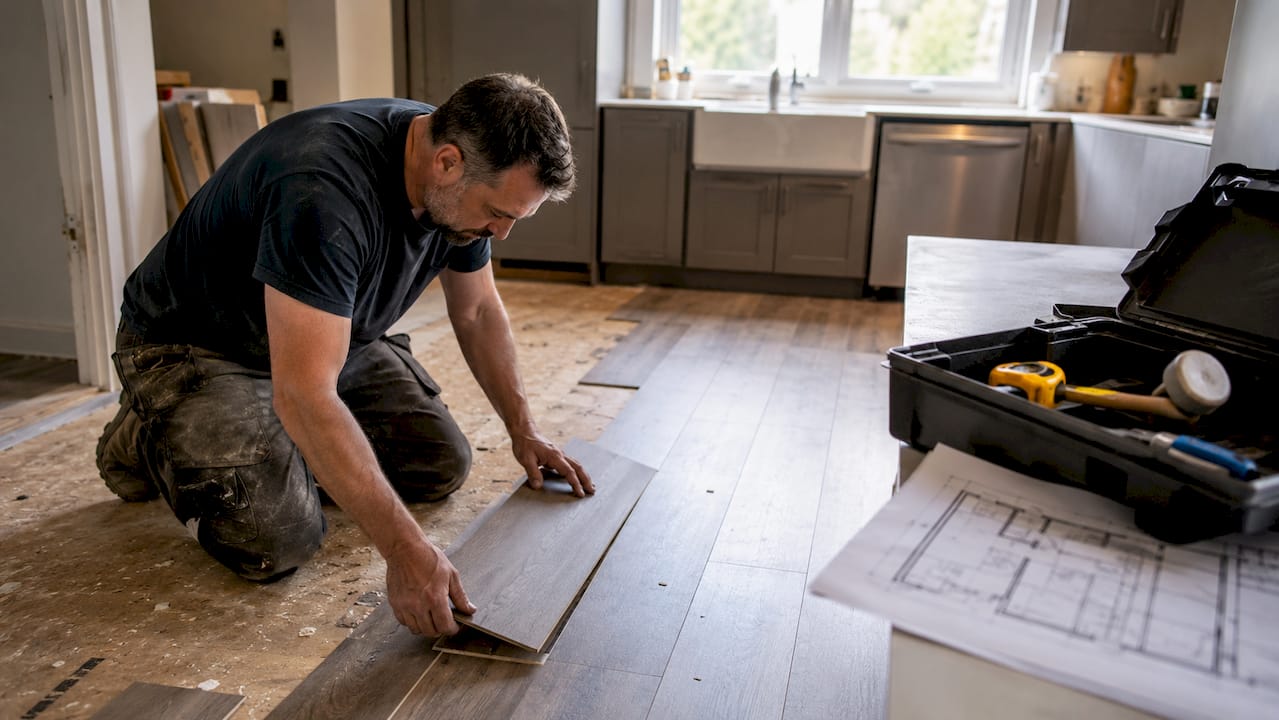
Click lock vinyl flooring is a floating floor system made of rigid vinyl planks that connect through a mechanical tongue-and-groove locking mechanism, requiring no glue, nails, or staples. The industry standard term for this product category is “rigid-core luxury vinyl plank” (LVP), and the click lock name refers specifically to the installation method. Two core technologies dominate the market: SPC (Stone Polymer Composite) and WPC (Wood Polymer Composite). Both deliver waterproof performance and DIY-friendly installation, making rigid-core click lock vinyl the most popular DIY flooring type in 2026 for good reason.
What is click lock vinyl flooring and how does it work?
Click lock vinyl flooring works by interlocking planks along their long and short edges using a tongue-and-groove profile. You angle the tongue of one plank into the groove of the next at roughly a 15 to 25 degree angle, then press it flat until you hear and feel a distinct click. That click signals the joint is locked. The plank rests on the subfloor but is not attached to it, which is why this system is called a floating floor.
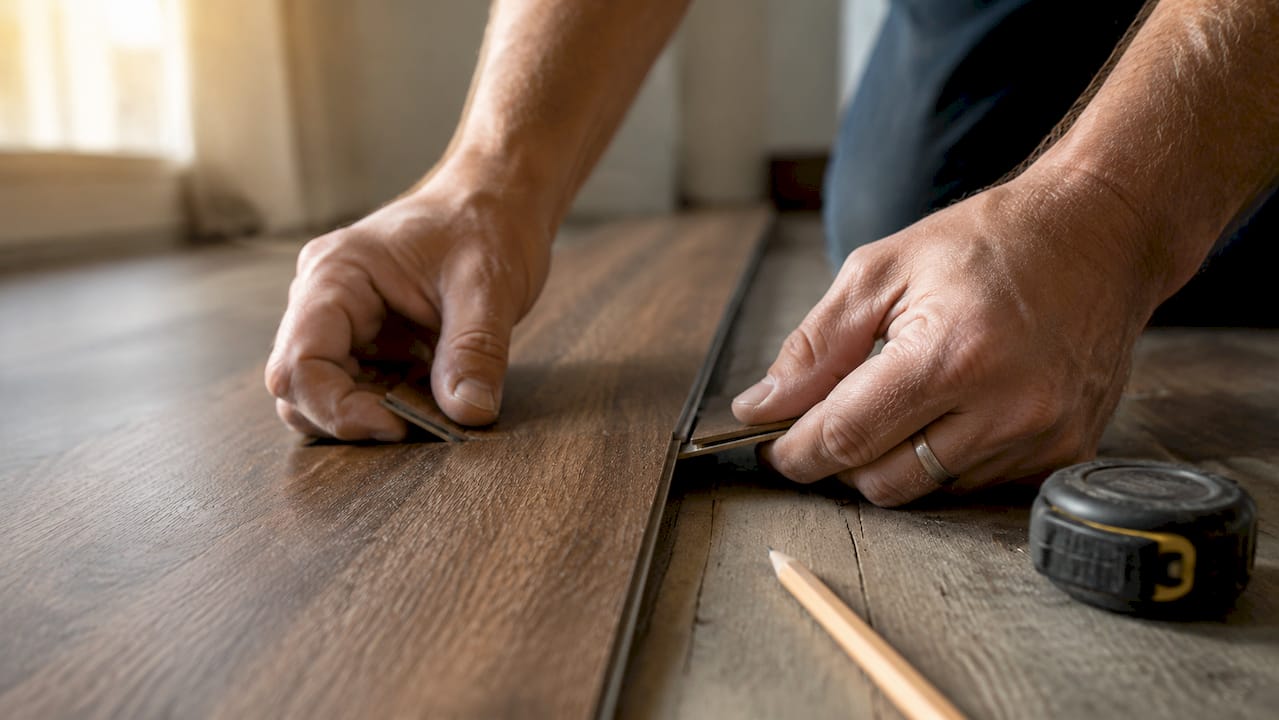
The floating design is not just a convenience feature. Floating floors expand and contract as a single unit when temperatures shift, which prevents the buckling and gapping that adhesive floors develop over time. This matters especially in Michigan homes where seasonal temperature swings are significant.
Several patented locking systems exist across the industry:
- Uniclic (used by Mohawk): planks lock by angling and clicking, with tight joint tolerances
- Valinge: one of the original floating floor patents, widely licensed across brands
- 5G: a fold-down system where the short end locks vertically
- Drop-lock: planks press straight down to lock, no angling required
Drop-lock systems are the most beginner-friendly option. You do not need to angle the plank, which makes working in tight spaces or around obstacles much easier.
The rigid core underneath the decorative layer is what makes the click system reliable. Soft vinyl cannot hold a mechanical lock under foot traffic. SPC and WPC cores provide the stiffness that keeps joints tight for years.
Pro Tip: Subfloor flatness is the single biggest factor in click lock performance. The floor must be flat within 3/16 of an inch over a 10-foot span. High spots cause planks to rock, which stresses the locking joints and leads to premature failure.
SPC vs WPC: which core is right for your home?
SPC and WPC cores look similar from above but perform differently underfoot and in different rooms. Understanding the difference saves you from buying the wrong product for your space.
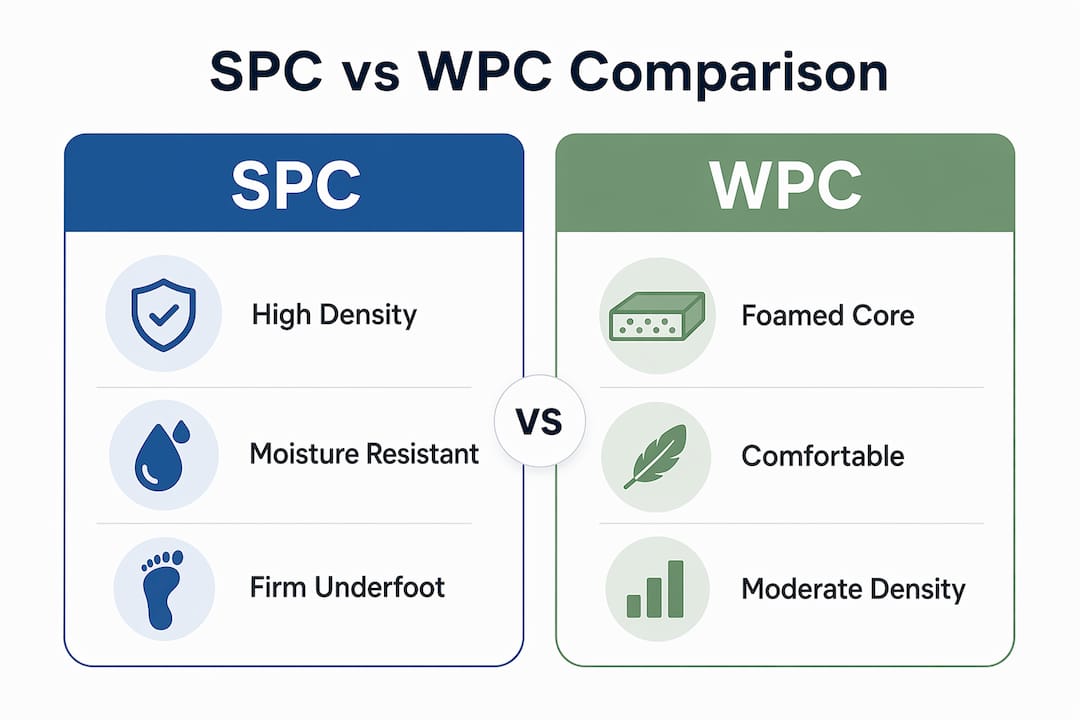
SPC (Stone Polymer Composite) is made from limestone powder, PVC, and stabilizers. The result is an extremely dense, rigid plank. SPC is the preferred core for moisture-prone areas like kitchens, bathrooms, laundry rooms, and basements. It handles temperature fluctuations better than WPC, and its density makes it highly resistant to denting.
WPC (Wood Polymer Composite) uses a foamed polymer core that contains wood flour or similar fillers. The foam makes WPC slightly softer and warmer underfoot. It also absorbs sound better than SPC, which makes it a strong choice for living rooms, bedrooms, and upper floors where comfort matters more than extreme moisture resistance.
| Feature | SPC | WPC |
|---|---|---|
| Core density | Very high | Moderate |
| Moisture resistance | Excellent | Good |
| Comfort underfoot | Firm | Softer, warmer |
| Sound absorption | Lower | Higher |
| Best rooms | Kitchens, basements, baths | Living rooms, bedrooms |
| Typical price range | Lower end | Slightly higher |
Both core types come with wear layers measured in mils (thousandths of an inch). Wear layer thickness is the most critical factor for scratch resistance and long-term durability. Residential products typically range from 12 to 20 or more mils. For homes with pets or heavy foot traffic, choose 20 mils or above.
Click lock vinyl flooring prices range from $2.00 to $7.00 per square foot depending on core type, wear layer, and brand. SPC products generally sit at the lower end of that range, while premium WPC with thick wear layers and attached underlayment reach the higher end.
How to install click lock vinyl flooring step by step
Installing click lock vinyl is one of the most accessible flooring projects a homeowner can tackle. You do not need specialized trade skills, and most rooms can be completed in a single day.
Tools you will need
- Tape measure and chalk line
- Utility knife or vinyl plank cutter
- Pull bar and tapping block
- Rubber mallet
- Spacers (for expansion gaps)
- Safety glasses
Step-by-step installation
-
Prepare the subfloor. Click lock vinyl installs over concrete, tile, existing vinyl, and plywood as long as the surface is flat, dry, and clean. Grind down high spots and fill low spots with floor leveling compound. Remove any debris or loose material.
-
Acclimate the planks. Leave the boxes in the installation room for 24 to 48 hours before opening them. This lets the planks adjust to the room’s temperature and humidity.
-
Plan your layout. Snap a chalk line parallel to the longest wall. Aim for full planks along the most visible wall. Calculate your last row width so it is not narrower than 2 inches.
-
Install the first row. Place spacers against the starting wall to maintain a 1/4-inch expansion gap. Lay planks end to end, locking the short ends together first.
-
Continue row by row. Angle the tongue into the groove at roughly 15 to 25 degrees and press flat to click. Stagger end joints by at least 6 inches between rows. Use a pull bar to close gaps at walls.
-
Cut the final row. Measure and rip the last row to width. Use a utility knife and straight edge, or a vinyl plank cutter for cleaner cuts.
-
Install trim and transitions. Remove spacers and install baseboards or quarter-round molding to cover the expansion gap. Add transition strips at doorways.
Pro Tip: Acclimate planks before installation even if the manufacturer does not require it. Planks that adjust to room conditions before locking together are far less likely to develop gaps or buckle after installation.
Common mistakes to avoid include skipping subfloor prep, ignoring expansion gaps at walls and fixed objects, and mixing plank batches from different production runs, which can cause slight color variation.
Click lock vinyl vs traditional vinyl: benefits and drawbacks
Click lock systems outperform traditional glue-down and loose-lay vinyl in most residential situations. The advantages are concrete and practical.
Advantages of click lock vinyl flooring:
- No adhesive means no mess, no fumes, and no waiting for glue to cure
- Floating installation allows the floor to expand and contract without damage
- Waterproof core protects against spills and moisture from below
- Planks can be removed and reinstalled if you move or need to access the subfloor
- DIY installation is realistic for most homeowners without professional help
- Repairs are straightforward since individual planks can be replaced
Potential drawbacks to consider:
- Large open areas (over 30 feet in any direction) may require additional expansion breaks
- Click lock vinyl is not recommended for fully submerged or below-grade wet areas like saunas or wet rooms
- The floating floor can feel slightly hollow underfoot compared to glue-down installations
- Poor subfloor prep will telegraph imperfections through the planks
Traditional glue-down vinyl bonds directly to the subfloor, which eliminates the hollow feel and reduces movement in very large spaces. However, it is far harder to install, nearly impossible to remove cleanly, and more vulnerable to moisture-related adhesive failure. For most Michigan homeowners doing a renovation, click lock vinyl is the practical and durable choice.
Key Takeaways
Click lock vinyl flooring is the most practical DIY flooring choice for homeowners who want waterproof, durable results without adhesives, professional tools, or subfloor demolition.
| Point | Details |
|---|---|
| Core type determines performance | Choose SPC for wet areas and basements; choose WPC for living rooms and bedrooms. |
| Wear layer drives durability | Select 20 mils or above for homes with pets or heavy foot traffic. |
| Subfloor prep is non-negotiable | The floor must be flat within 3/16 of an inch over 10 feet before installation begins. |
| Floating design prevents damage | Click lock floors expand as one unit, avoiding the buckling common in glue-down vinyl. |
| Price reflects quality | Budget $2.00 to $7.00 per square foot based on core type and wear layer thickness. |
Why I always recommend click lock vinyl for first-time DIY renovations
After years of watching homeowners tackle flooring projects, click lock vinyl is the one product I consistently recommend to first-timers. The reason is not just ease of installation. It is the margin for error.
With glue-down floors, a mistake is permanent. With click lock, you can pull up a row, fix a mistake, and re-lock the planks without damaging them. That forgiveness changes the entire experience for someone who has never laid a floor before.
The one area where I see homeowners consistently underestimate is subfloor preparation. People want to skip it because it is unglamorous work. But a floor that fails at the joints after six months almost always traces back to a subfloor that was not flat enough. Spend the time on prep, and the rest of the project goes smoothly.
I also push people toward thicker wear layers than they think they need. A 12-mil wear layer looks fine in the showroom. After two years with a dog and kids, you will wish you had bought 20 mils. The price difference per square foot is small. The difference in how the floor looks at year five is not.
If you are comparing vinyl flooring options and feeling overwhelmed by the choices, focus on three things: core type for your room, wear layer for your lifestyle, and a flat subfloor. Get those three right, and click lock vinyl will perform well for a decade or more.
— Mike
Get expert help from Qualityhardwood for your flooring project
Qualityhardwood has served Michigan homeowners and contractors for over 40 years, and click lock vinyl flooring is one of the most requested products in the showroom right now.
Whether you are selecting between SPC and WPC cores, comparing wear layers, or need a professional to handle installation, Qualityhardwood carries top-rated products and connects you with experienced installers across Michigan. The team in Salem, MI offers hands-on guidance so you buy the right product the first time. For homeowners ready to move from research to installation, professional flooring installation in Salem, MI is available through Qualityhardwood’s network of trusted local professionals. Stop by the showroom or reach out to get a recommendation matched to your specific room, budget, and lifestyle.
FAQ
What is the difference between SPC and WPC click lock vinyl?
SPC (Stone Polymer Composite) is denser and better suited for moisture-prone rooms like kitchens and basements. WPC (Wood Polymer Composite) is softer, warmer underfoot, and absorbs sound better, making it ideal for living rooms and bedrooms.
Can I install click lock vinyl flooring myself?
Yes. Click lock vinyl is designed for DIY installation. Planks snap together without glue or nails, and drop-lock systems make the process even more beginner-friendly by allowing planks to press straight down rather than angle into place.
How long does click lock vinyl flooring last?
Durability depends primarily on wear layer thickness. Products with 20 or more mils of wear layer hold up well in high-traffic homes for a decade or more with basic maintenance like regular sweeping and damp mopping.
What subfloor types work with click lock vinyl?
Click lock vinyl installs over concrete, plywood, existing tile, and existing vinyl as long as the surface is flat, dry, and clean. The floor must be flat within 3/16 of an inch over a 10-foot span for the locking joints to perform correctly.
How much does click lock vinyl flooring cost?
Prices range from $2.00 to $7.00 per square foot depending on core type, wear layer thickness, and brand. SPC products typically cost less than premium WPC options with attached underlayment.