
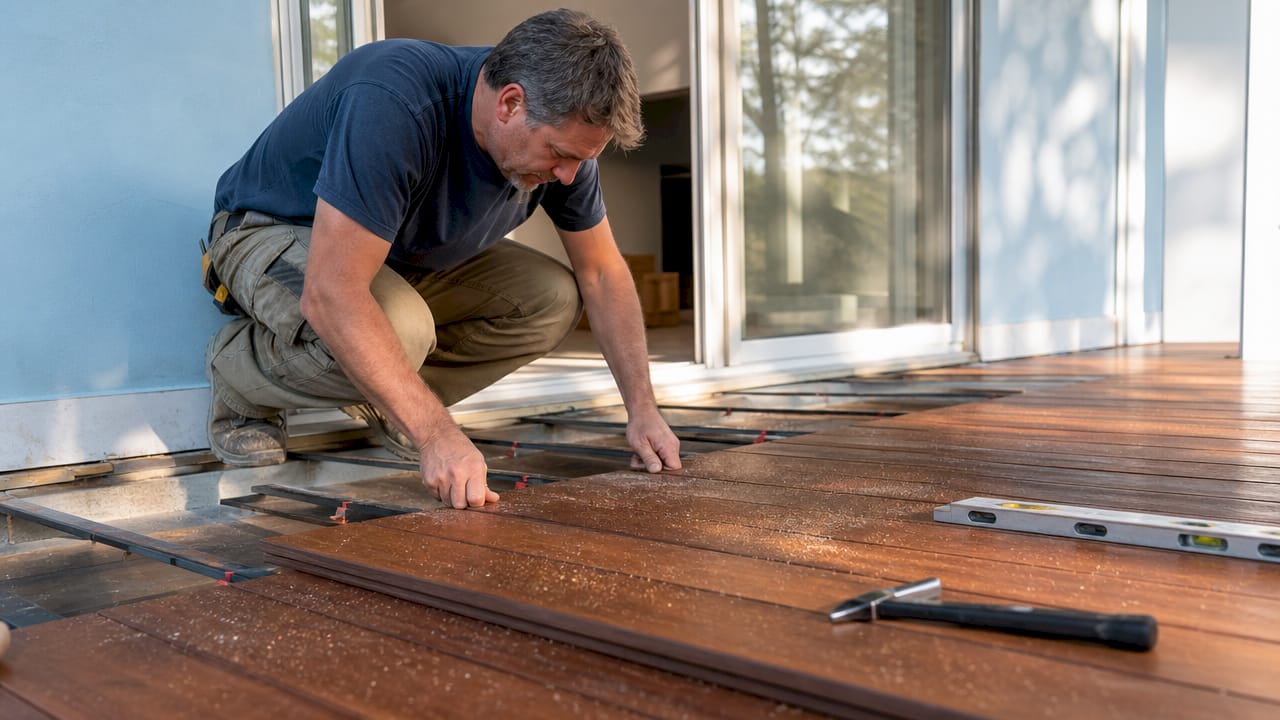
Prefinished hardwood floor is solid wood flooring that arrives at your home already sanded, stained, and sealed at the factory, ready to install and walk on the same day. Unlike unfinished hardwood, which requires on-site sanding, staining, and multiple coats of finish, prefinished flooring skips all of that. Manufacturers apply 7–10 protective layers of aluminum oxide-enhanced polyurethane, cured under UV light for a finish harder than anything achievable on a job site. Quality Hardwoods of Michigan, Inc has carried solid prefinished hardwood for over 40 years, and the demand for it has only grown as homeowners prioritize speed, cleanliness, and durability.
What is prefinished hardwood floor and how is it made?
Prefinished hardwood floor is defined by its factory finishing process. Each plank gets sanded to a consistent thickness, stained to a chosen color, and then run through a UV curing line where multiple finish coats bond to the wood at the molecular level. The result is a finish far harder than what a painter’s brush or roller can apply in a living room.
The key ingredient in that finish is aluminum oxide. It is an industrial abrasive compound mixed into the polyurethane coating, and it gives prefinished floors their signature scratch resistance. UV curing locks each layer in seconds rather than hours, which is why manufacturers can stack 7–10 protective layers without the process taking days. That layer count is the single biggest durability advantage prefinished floors hold over site-finished alternatives.
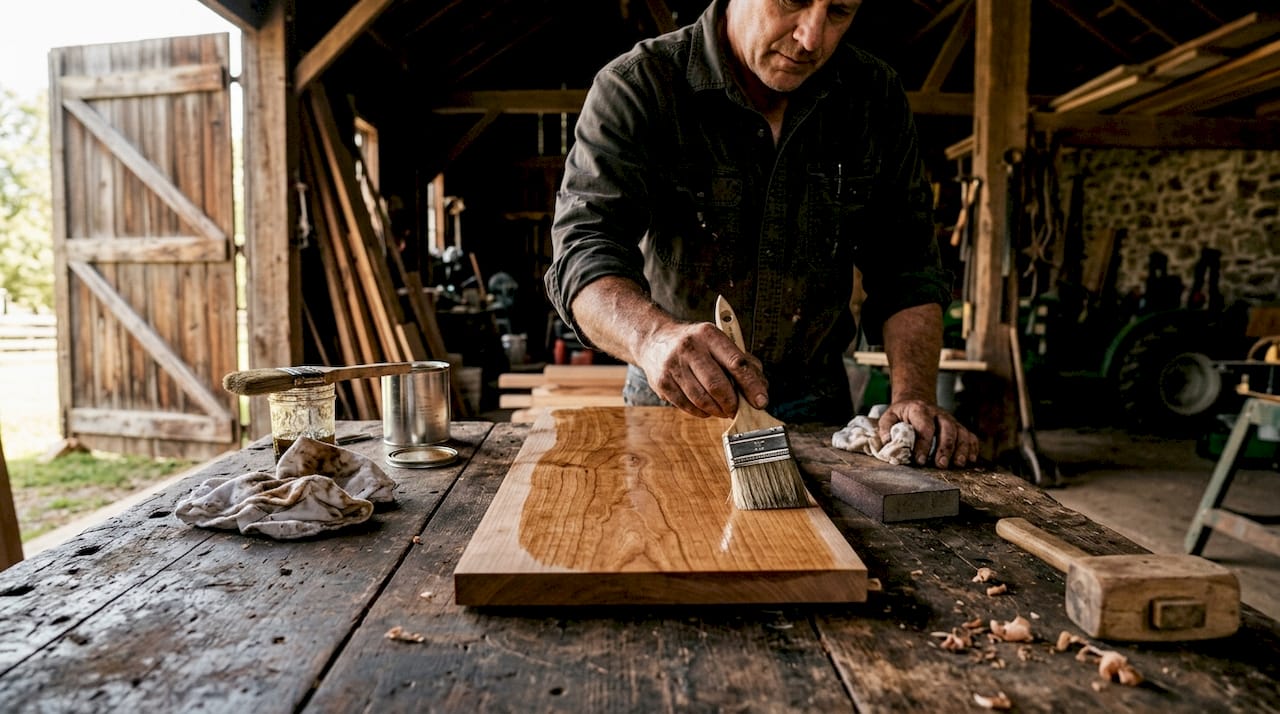
One design feature worth understanding early is the micro-beveled edge. Every prefinished plank has a small chamfer along its long edges. This bevel serves a practical purpose: it prevents chipping during shipping and installation. It also creates a subtle V-groove between boards once they are laid, which gives the floor a defined, plank-by-plank look rather than a flat, seamless surface.
How do factory finishes compare to site-applied finishes?
Factory finishes win on hardness and consistency. A site-applied finish, even a high-quality oil-based polyurethane, cures in ambient air with dust, humidity, and temperature all affecting the result. A factory finish cures in a controlled UV tunnel with zero variables.
The practical difference shows up in daily life. UV-cured aluminum oxide finishes make prefinished floors ideal for high-traffic areas, kitchens, and occupied renovations because they resist scratching better and produce no curing fumes. You can move furniture back in the same afternoon you finish installing. That is not possible with a site-finished floor, which needs 24–72 hours of cure time per coat.
The one area where site-finished floors have an edge is customization. If you want an exact stain match to existing trim or a completely flat, seamless surface, unfinished hardwood gives you that control. The choice between prefinished and unfinished comes down to whether you prioritize speed and durability or design precision. For most occupied renovations, prefinished wins.
Pro Tip: Visit the unfinished hardwood guide from Quality Hardwoods of Michigan, Inc if you are weighing a custom stain match. Seeing the full comparison helps you commit to the right product before you buy.
- Scratch resistance: Factory UV-cured coatings outperform site-applied finishes in hardness.
- Cure time: Prefinished floors are walkable immediately. Site-finished floors need days.
- Customization: Site-finished floors allow custom stain colors and a seamless flat surface.
- Fumes and dust: Prefinished installation produces no finish odor or sanding dust.
- Micro-beveled edges: A signature of prefinished floors, not a defect, but a manufacturing feature that defines the floor’s visual style.
How is prefinished hardwood installed?
Prefinished hardwood installation completes in 1–2 days compared to 4–7 or more days for site-finished floors. That time difference matters enormously for homeowners renovating a kitchen or a main living area while still living in the house. No sanding, no staining, no waiting for finish coats to dry.
The installation steps follow a clear sequence:
- Acclimate the wood. Stack the boxes in the room for 3–5 days so the planks adjust to the home’s humidity and temperature before installation begins.
- Prepare the subfloor. Check for flatness across the entire surface. Any high spots or dips greater than 3/16 of an inch over 10 feet need correction before the first board goes down.
- Rack the boards. Pull planks from multiple boxes and lay them out across the room before nailing or gluing. This blends any subtle color or sheen variations between factory batches.
- Fasten the planks. Nail, staple, or glue the boards according to the manufacturer’s specification for the wood species and thickness.
- Install trim and transitions. Add baseboards, thresholds, and reducer strips to finish the edges cleanly.
Subfloor preparation is the step most DIY installers underestimate. With site-finished flooring, a sander can flatten minor imperfections after installation. With prefinished flooring, subfloor evenness is critical because there is no on-site sanding to correct mistakes. A hump in the subfloor becomes a permanent high spot in the finished floor.
Pro Tip: Rack boards from 3–5 boxes simultaneously before you start nailing. Factory batches can vary slightly in color, and mixing them across the room prevents visible streaks or patches in the finished floor.
What are the benefits and cost considerations?
Prefinished hardwood flooring reduces total project cost for most homeowners. The biggest savings come from labor. Professional on-site finishing typically costs $1.50 to $3.00 per square foot on top of installation. Prefinished floors eliminate that cost entirely because the finish is already applied. For a 1,000-square-foot project, that is a potential savings of $1,500 to $3,000 in finishing labor alone.
Beyond cost, the cleanliness advantage is real. Site-finishing generates fine wood dust that settles on every surface in the home and requires thorough cleanup before the space is livable. Prefinished installation produces no finish dust and no chemical fumes. Homeowners with dust sensitivities, young children, or pets benefit directly. For occupied renovations, prefinished hardwood is the practical default because it keeps disruption to a minimum.
| Factor | Prefinished hardwood | Site-finished hardwood |
|---|---|---|
| Installation time | 1–2 days | 4–7+ days |
| On-site finishing labor | None | $1.50–$3.00 per sq ft |
| Fumes and dust during install | None | Significant |
| Finish hardness | Very high (UV-cured) | Moderate (ambient cure) |
| Design customization | Limited to factory options | Fully custom stain and sheen |
| Immediate occupancy | Yes | No |
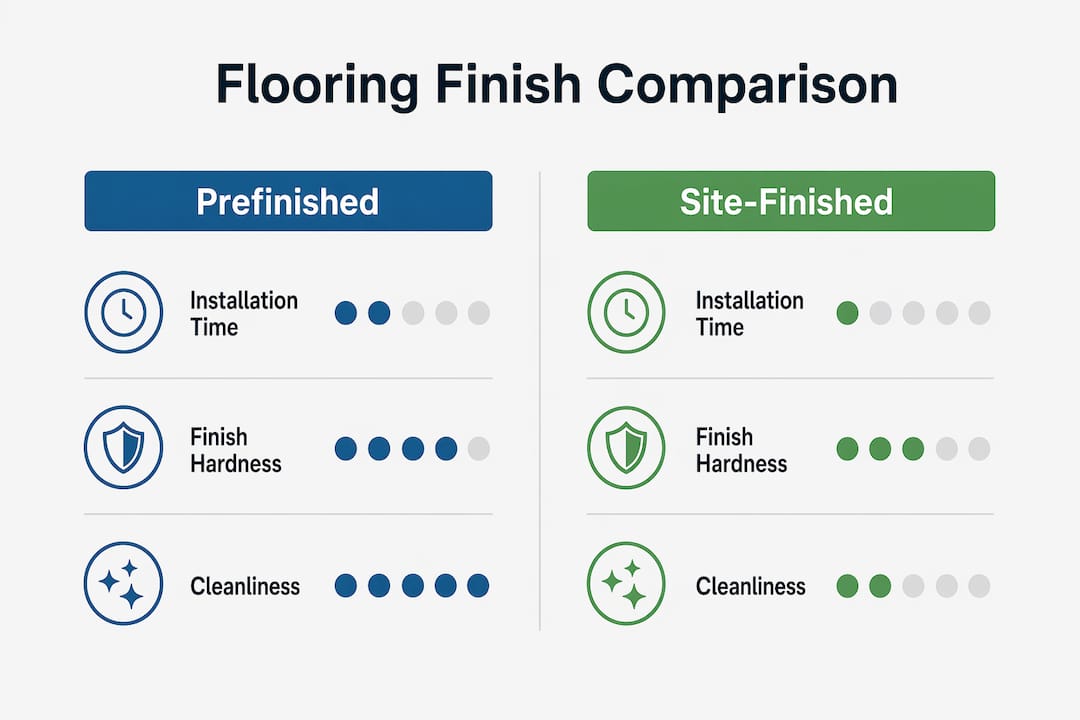
The tradeoff is design flexibility. Prefinished floors come in the colors and sheens the manufacturer offers. If you need an exact match to existing flooring or cabinetry, site-finished hardwood gives you more control. For new builds and full-room renovations where you are starting fresh, prefinished hardwood is the faster, cleaner, and often cheaper path.
How do you maintain and refinish prefinished hardwood floors?
Routine care for prefinished hardwood is straightforward. Sweep or vacuum regularly to remove grit, which is the primary cause of surface scratches. Use a damp mop with a pH-neutral hardwood floor cleaner. Avoid steam mops, which force moisture into the seams and can cause warping over time. For room-by-room cleaning guidance that applies directly to hardwood floors, a structured approach by room type helps maintain consistency.
The micro-beveled edges do collect dust and fine debris, so pay attention to the grooves between boards during cleaning. A soft-bristle vacuum attachment handles this better than a flat mop head.
Pro Tip: Place felt pads under all furniture legs and use area rugs in high-traffic zones. These two habits extend the life of the factory finish by years and delay the need for refinishing.
Refinishing is possible, but it changes the floor permanently. Prefinished floors can be refinished 2–3 times over a typical lifespan of 15–20 or more years. The process sands off the factory finish and the micro-beveled edges, leaving a flat surface that then receives a site-applied finish. The floor looks different afterward. It loses the defined plank-by-plank look and gains a seamless, flat appearance similar to a site-finished floor.
The other change is finish hardness. Refinishing removes the aluminum oxide factory coating, and the replacement site-applied finish is less scratch-resistant. That is not a reason to avoid refinishing when the floor needs it. It is simply a realistic expectation to set before the work begins.
- Sweep or vacuum daily in high-traffic areas.
- Use a pH-neutral cleaner and a barely damp mop.
- Avoid steam mops and wet mopping.
- Add felt pads under furniture and rugs in heavy-use zones.
- Expect a visual change after refinishing: flat surface, softer finish.
Key Takeaways
Prefinished hardwood flooring is the fastest, cleanest path to durable solid wood floors, with factory UV-cured finishes that outperform site-applied coatings in scratch resistance and require zero curing time after installation.
| Point | Details |
|---|---|
| Factory finish superiority | UV-cured aluminum oxide coatings apply 7–10 layers, harder than any site-applied finish. |
| Installation speed | Prefinished floors install in 1–2 days versus 4–7 or more days for site-finished options. |
| Cost savings | Eliminating on-site finishing labor saves $1.50–$3.00 per square foot on most projects. |
| Micro-beveled edges | These are a manufacturing feature, not a flaw; they create visible V-grooves between planks. |
| Refinishing reality | Sanding and refinishing removes micro-bevels and the aluminum oxide coating, changing the floor’s look and hardness. |
What I’ve learned from 40 years of watching homeowners choose floors
Most homeowners walk into a flooring decision focused on color and price. They rarely think about what happens on installation day, or three years later when the floor needs attention. That is where prefinished hardwood either earns its reputation or surprises people in ways they did not expect.
The convenience is real. I have seen families move furniture back into a room the same evening the floor went in. That is not possible with site-finished hardwood, and for anyone living in the home during a renovation, that difference is enormous. The lack of fumes matters too, especially in homes with kids or anyone with respiratory sensitivities.
Where I see expectations go sideways is with the micro-beveled edges. Some homeowners see the V-grooves between boards and assume something went wrong. Nothing went wrong. That texture is the product. If you want a flat, seamless floor, you want site-finished hardwood or you want to refinish the prefinished floor after a decade of use. Both are valid paths. Just know which one you are choosing before you buy.
My honest advice: if you are renovating an occupied space, prefinished hardwood is almost always the right call. If you are building new and want a completely custom look with a specific stain matched to your cabinetry, consider unfinished hardwood flooring and budget for the finishing labor. The product is not better or worse. It is a different tool for a different job.
— Mike Solomich
Quality Hardwoods of Michigan, Inc has your prefinished flooring covered
Quality Hardwoods of Michigan, Inc has served Michigan homeowners, contractors, and property managers for over 40 years with one of the region’s most complete hardwood flooring inventories.
Whether you are selecting a prefinished hardwood species, comparing finish sheens, or planning a full renovation, the team at Quality Hardwoods of Michigan, Inc can walk you through every option. The showroom carries solid prefinished hardwood floors alongside a full range of vinyl and laminate flooring for homeowners who want to mix materials across different rooms. If you are still weighing your options, contact Quality Hardwoods of Michigan, Inc directly for product guidance tailored to your project and budget.
FAQ
What is a prefinished hardwood floor?
A prefinished hardwood floor is solid wood flooring that arrives factory-sanded, stained, and sealed with a UV-cured finish, ready to install without any on-site finishing work.
How long does prefinished hardwood installation take?
Prefinished hardwood installation typically completes in 1–2 days, compared to 4–7 or more days for site-finished floors that require sanding, staining, and multiple finish coats.
Can prefinished hardwood floors be refinished?
Yes. Prefinished hardwood floors can be refinished 2–3 times over their lifespan, but the process removes the micro-beveled edges and the factory aluminum oxide coating, changing the floor’s appearance and reducing its finish hardness.
What are micro-beveled edges on prefinished hardwood?
Micro-beveled edges are small chamfers along the sides of each plank that prevent chipping during shipping and installation. They create visible V-grooves between boards, giving the floor a defined plank-by-plank look rather than a flat, seamless surface.
Is prefinished hardwood more expensive than unfinished?
The material cost of prefinished hardwood is often higher per square foot, but the total project cost is frequently lower because it eliminates on-site finishing labor, which typically runs $1.50 to $3.00 per square foot.