
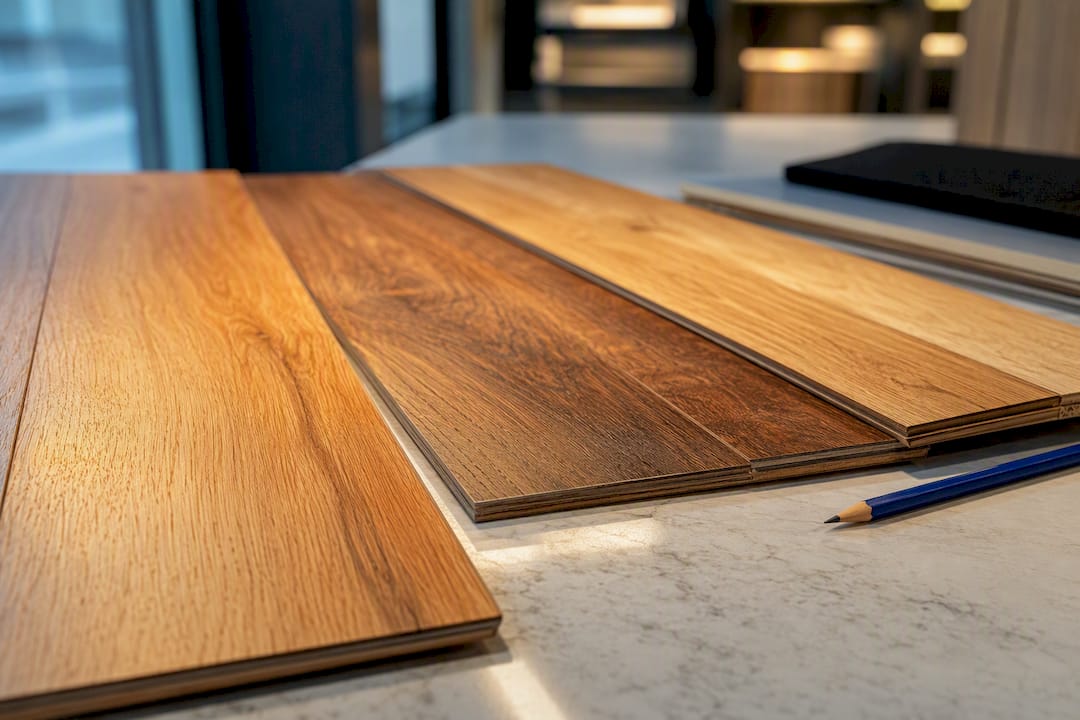
Warm neutrals have taken over from cool gray as the flooring color of the year: honey, caramel, and mid-tone browns paired with matte finishes and wide planks. If you’re picking a floor for a 2026 project, lean warm, lean matte, and test a real sample in your own light before you commit to anything.
TL;DR:
- Warm, matte finishes with wide planks in honey, caramel, and mid-tone browns are the dominant flooring trends for 2026, supported by extensive shopper data.
- Lighter tones like blonde and pale oak remain timeless, and deeper shades such as chestnut and pecan are favored in colder climates like Michigan for added warmth.
- Matte and wire-brushed textures are preferred, as they better hide wear and dust, and sheen variations significantly influence perceived warmth or coolness of the floor.
- Engineered wood and waterproof vinyl plank options are growing in popularity for their moisture handling and realistic appearance in warm tones, especially in kitchens and bathrooms.
- Testing samples in room lighting and considering room function are crucial to selecting a durable, visually appealing floor that coordinates with overall interior design.
Table of Contents
- Flooring Color Trends 2026: The Palette You’ll See Everywhere
- Finishes and Formats That Define 2026
- Materials and Performance: Solid Wood, Engineered Wood, and LVP
- Pattern, Layout, and Scale: How Pattern Changes the Way Color Reads
- How to Choose the Right 2026 Floor Color for Your Project
- What’s Out for 2026
- Quality Hardwoods of Michigan: Publisher Perspective and Supporting Evidence
- Sustainability Trends Shaping 2026 Flooring Colors
- How Technology Is Changing Flooring Colors and Finishes
- Regional Variations in 2026 Flooring Color Trends
- Emerging Accent Colors to Watch in Flooring
- How 2026 Flooring Colors Fit the Bigger Interior Design Picture
- Author Perspective: Balancing Trend and Timelessness
- Order Samples and See the 2026 Palette in Person
- Sources
- FAQ
Flooring Color Trends 2026: The Palette You’ll See Everywhere
The floor color story for 2026 is a full reversal of the last decade. Cool gray, the default choice from roughly 2015 through 2023, has given way to tones that read as lived-in and organic rather than manufactured. Retailer trend reports from McMillan Floors and multiple showroom sources converge on the same short list: warm natural oak, honey, mid-tone browns, warm greige, and wider plank formats. Roomvo’s shopper visualization data backs this up at scale. Its 2026 Flooring Trends Report tracked 240 million visualizations and found that beige, brown, and other neutral tones account for roughly 91% of shopper interactions in the Americas.
Here’s how the major tones break down and where each one actually works.
- Warm natural oak, honey, and wheat. This is the most specified look of the year, and for good reason. It reads bright without feeling clinical, works with both traditional and modern cabinetry, and photographs well for resale listings. Homeowners chasing a bright, welcoming great room tend to land here first. Our guide to popular hardwood floor colors breaks down specific stain and species combinations that hit this tone.
- Soft blonde and pale tones. Blonde oak and other pale finishes remain the safest long-term bet in the category. They don’t date the way high-contrast trends do, they make small rooms feel larger, and they pair with almost any wall color a homeowner might choose five years from now.
- Warm mid-tone browns (walnut, chestnut, pecan). These sit right in the middle of the 2026 palette and do the heaviest lifting in living rooms and dining areas. Chestnut and pecan in particular carry enough red-brown depth to hide daily wear while still feeling current.
- Warm greige. Think of this as the compromise pick for anyone not ready to abandon a neutral, gray-adjacent floor entirely. It keeps a hint of gray’s cool structure but shifts the undertone toward beige, which is why Garrison Collection and other trade sources note that gray isn’t wrong for 2026, it’s just no longer the default.
- Deep chocolate and espresso. These darker tones are back, but strictly as statement choices for studies, primary bedrooms, or accent areas rather than whole-house flooring. Forbes notes that social media is pushing younger buyers toward bolder, higher-contrast floors, and espresso tones are where that shows up most.
For species-specific guidance on how oak, walnut, and maple carry these tones differently, our breakdown of popular wood floor colors by species walks through the differences in grain and undertone.
Finishes and Formats That Define 2026
Color only tells half the story. How a floor is finished and cut changes how that color actually reads in a room, and 2026’s format shift is just as pronounced as its color shift.
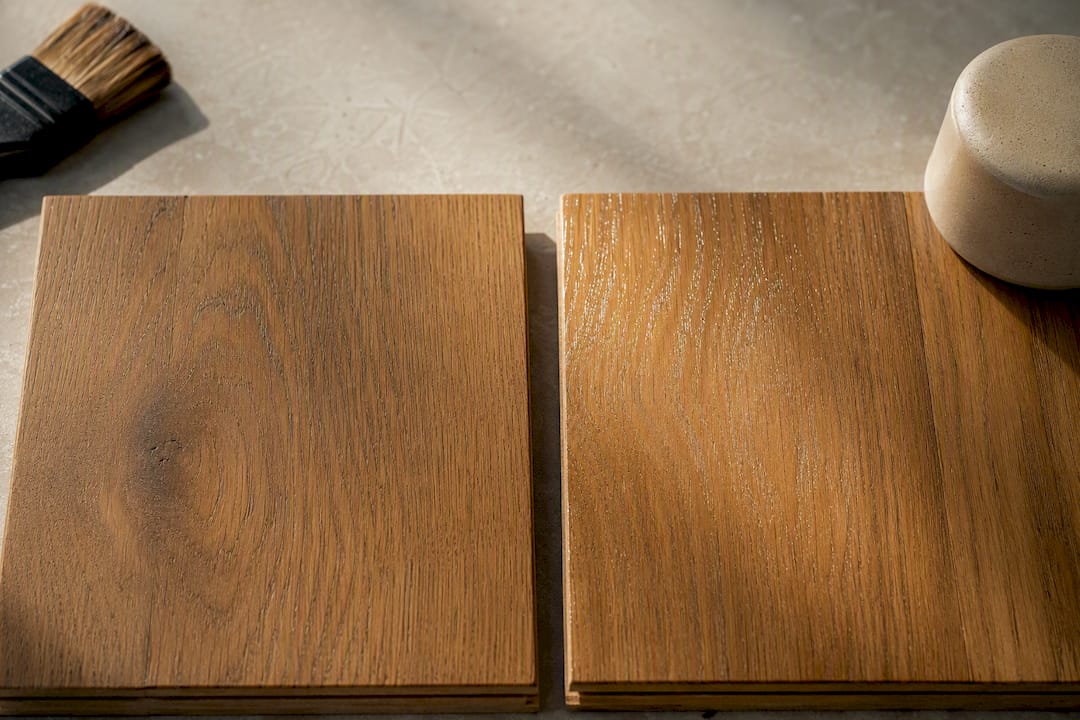
Matte and low-sheen finishes now dominate over the high-gloss look that was common a decade ago. A matte or satin sheen hides everyday scuffs and dust far better than gloss, and it lets the wood grain show through instead of getting buried under reflection. Wire-brushed textures push this further by adding a subtle physical texture that catches light unevenly, which reads as more natural and less manufactured.
- Matte and satin sheens cut glare from windows and overhead lighting, a real issue in open-concept homes with a lot of natural light.
- Wire-brushed textures hide fine scratches better than smooth-sanded boards and add depth to lighter tones like honey and blonde oak.
- Wide planks, typically 7 to 10 inches, reduce the number of seams in a room, which makes warm tones feel continuous rather than choppy.
- Large-format tile, used mostly in kitchens and baths, follows the same wide-format logic for a similar visual effect.
Retail and design coverage from Williamson Source lists wide planks and matte finishes among the most-requested features heading into 2026, alongside boards with visible natural color variation rather than uniform tone.
Finish sheen can also shift how warm or cool a color reads. A high-gloss finish on a warm oak can throw enough reflection to make the floor look cooler and flatter than it is in person, while a matte finish on that same board lets the honey undertone come through. If a showroom sample looks warmer or cooler than you expected, check the sheen before you blame the stain.
Pro Tip: Ask to see the same stain color in both matte and satin sheen side by side. The difference in perceived warmth can be surprising, and it’s a lot cheaper to catch in the showroom than after installation.
Materials and Performance: Solid Wood, Engineered Wood, and LVP
Picking a color means nothing if the material underneath can’t handle the room it’s going into. 2026’s warm palette shows up across all three major flooring categories, but each one has different strengths.
Solid hardwood remains the top choice for main living areas where you want the deepest, most authentic warm tones. White oak takes stain beautifully across the honey-to-walnut range and is prized for its stability, and it’s a species NWFA frequently references in specification guidance for exactly that reason. Solid wood also holds up to refinishing over decades, which matters if you want the option to shift shades later without replacing the floor.
Engineered hardwood is the fastest-growing choice for design-forward projects right now. NRLA’s industry analysis describes 2026 as something of a renaissance for real wood, and engineered construction is a big reason why. It handles humidity swings better than solid wood, which opens up basements and homes with radiant heat, while still delivering a genuine wood surface in the same warm tones.
LVP (luxury vinyl plank) is the practical answer for kitchens, bathrooms, mudrooms, and basements where moisture is a constant concern. Roomvo’s data shows engineered wood and LVP both grew as shopper categories heading into 2026, and modern LVP visuals have closed a lot of the gap with real wood in warm, textured looks. Our guide to LVP for homeowners covers wear-layer thickness and how to judge realistic wood-grain printing.
- Solid wood: best long-term value in dry, main-floor living spaces; refinishable multiple times.
- Engineered wood: better moisture tolerance; ideal over radiant heat or in basements.
- LVP: fully waterproof options exist for bathrooms and laundry rooms; check our waterproof vinyl plank flooring options for wet-area specs.
Pattern, Layout, and Scale: How Pattern Changes the Way Color Reads
The same warm stain looks completely different depending on how the boards are laid.
- Herringbone and chevron with softer, muted stains are having a real moment. The angular pattern already adds movement, so a quieter warm tone keeps the floor from feeling busy. Our herringbone hardwood flooring guide covers layout options for Michigan homes.
- Parquet in warm tones brings a traditional pattern into 2026’s palette without the dated feel gray-toned parquet had a few years ago.
- Checkerboard and statement tile work best confined to entryways or powder rooms, where the bold contrast reads as intentional rather than overwhelming.
- Wide-plank continuity gives the opposite effect: fewer seams, more visual flow, and a calmer look that suits open floor plans and smaller rooms where you want the space to feel larger.
Pick pattern based on room size and function first, then choose your stain. A large great room can carry a bold herringbone; a narrow hallway usually can’t.
How to Choose the Right 2026 Floor Color for Your Project
Start with function before you start with color swatches. A mudroom, a primary bedroom, and a basement rec room all have different moisture, traffic, and light conditions, and the right floor color depends on getting that part right first.
Run a lighting audit before you decide anything. Look at samples in the room at morning, midday, and evening. North-facing rooms pull cooler and can make a warm greige look flatter than it did in the showroom, while south-facing rooms amplify warmth and can push a mid-tone brown toward orange.
- Bring sample boards home and set them against your actual cabinetry, countertops, and trim, not just a photo on your phone.
- Ask suppliers directly about finish sheen, wear-layer thickness on engineered or LVP products, and the return policy on special orders.
- Watch for red flags: a “perfectly uniform” sample with zero grain variation, high-gloss claims used to disguise a weak grain pattern, or vague warranty language that doesn’t specify wear-layer coverage in writing.
- Compare at least two suppliers’ warm-tone samples side by side. Undertones vary more between brands than most buyers expect.
Pro Tip: Take your sample board to the room at night under your actual light bulbs, not daylight bulbs from the showroom. Warm LED versus cool LED can shift a honey oak floor several shades in either direction.
Our full hardwood flooring color selection guide walks through this process room by room if you want a more detailed checklist.
What’s Out for 2026
Cool gray hasn’t disappeared, but it’s no longer the automatic choice for new installs. It’s fading from dominance the way honey oak and dark walnut cycled out a decade ago, and buyers replacing a gray floor today are almost always moving toward warmer tones. High-gloss finishes are out for the same reason matte is in: gloss hides grain and shows every scuff, which reads as dated next to a wire-brushed matte board. Overly yellow or orange oak tones, common in builder-grade flooring from the 1990s and 2000s, are also on the way out.
- Cool gray as a default whole-house choice
- High-gloss sheen on any tone
- Perfectly uniform boards with no visible grain variation
- Heavy yellow or orange undertones in unstained oak
None of these are wrong choices outright. A gray floor in the right room with the right furniture can still work. But if you’re building a floor to last a decade, warmer and more textured is the safer bet for 2026 and beyond.
Quality Hardwoods of Michigan: Publisher Perspective and Supporting Evidence
The shift toward warm neutrals shows up clearly in what many customers are ordering for 2026 projects. That pattern lines up with the broader industry data from Roomvo and the trend commentary in Forbes, but it also shows up locally in ways the national reports don’t capture.
Michigan homeowners lean even warmer than the national average in colder months, favoring honey and chestnut tones that add visual warmth during long winters when natural light is limited.
If you’re planning a project, start by ordering physical samples rather than trusting a screen. A showroom visit lets you compare stain options against real lighting and see wear-layer thickness firsthand before you order, and staff can help match a stain to existing trim or cabinetry. Local pickup and statewide delivery options may be available once you’ve settled on a product. Local case studies in our Oakland County flooring trends roundup and our piece on hardwood floor and wall color trends show how these palettes actually look in Michigan homes.
Sustainability Trends Shaping 2026 Flooring Colors
Sustainability is nudging color choices in a specific direction: toward finishes and species that don’t require heavy chemical staining to hit a warm tone. Low-VOC finishes and water-based polyurethanes have improved enough that they can now achieve the deep, warm color saturation that used to require solvent-heavy stains, which matters both for indoor air quality and for installer safety during finishing.
Reclaimed and rapidly renewable materials are also feeding into the warm-tone trend indirectly. Reclaimed oak and barn wood naturally carry uneven, sun-aged coloring that fits the “natural variation” look buyers are already gravitating toward, so sustainable sourcing and the aesthetic trend are reinforcing each other rather than competing.
FSC-certified hardwood sourcing has also become a more common ask from designers specifying for commercial and high-end residential projects, and it doesn’t limit color options the way it might have a decade ago. Certified suppliers now offer the full range of warm stains, from pale wheat tones to deep chestnut, so sustainability credentials no longer force a compromise on the look a client wants.
Engineered wood construction itself plays into this too. Because engineered planks use a thinner layer of real hardwood over a stable core, they require less old-growth timber per square foot than solid wood floors of the same visual thickness, while still delivering the same warm surface color buyers are chasing in 2026.
How Technology Is Changing Flooring Colors and Finishes
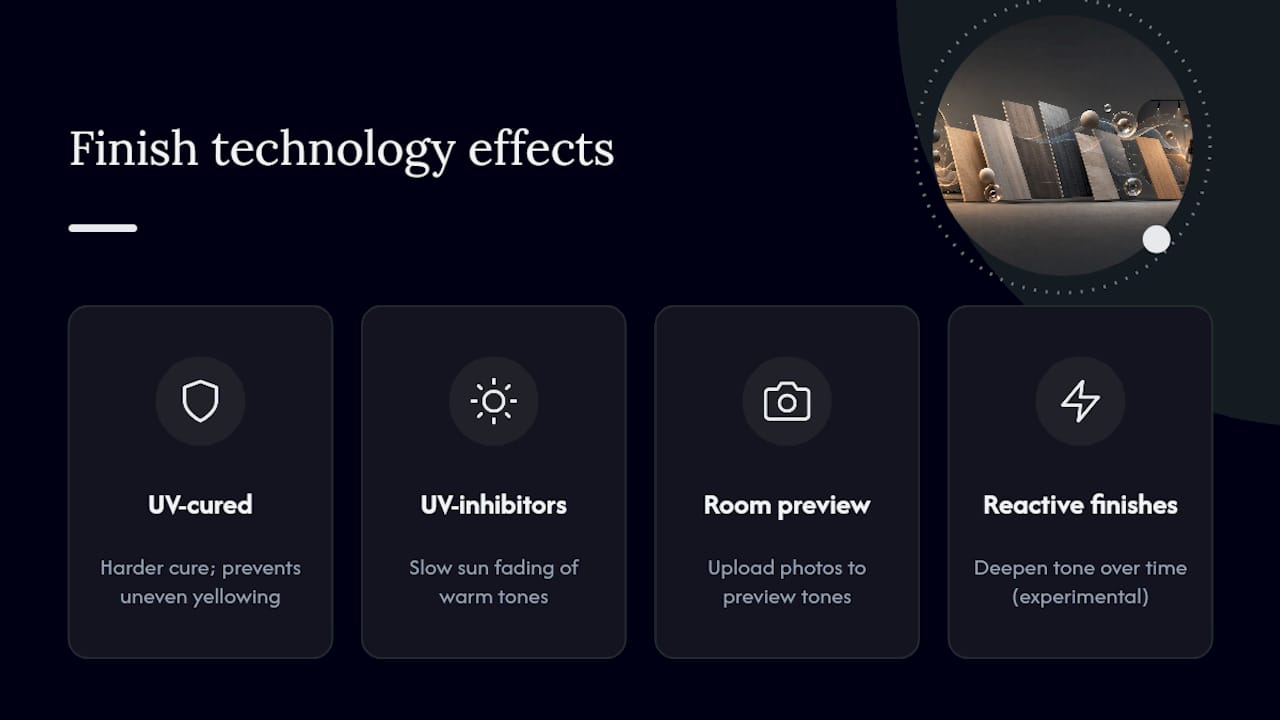
Finish technology has quietly become one of the bigger stories behind 2026’s color trends. UV-cured finishes, now standard on most factory-finished engineered and prefinished solid wood products, cure harder and more evenly than older oil-based topcoats, which helps warm tones stay consistent instead of yellowing unevenly over time the way older polyurethanes did.
UV-resistant additives in both hardwood finishes and LVP wear layers are addressing a problem that used to plague warm-toned floors specifically: sun fading. A honey or chestnut floor near a large south-facing window used to fade noticeably within a few years. Newer UV-inhibiting topcoats slow that fading considerably, which matters more for warm tones than it did for gray, since color shift is more visible on a warm base than on a neutral gray one.
Digital visualization tools, the same kind of technology behind Roomvo’s shopper data, have also changed how people shop for color. Instead of guessing how a stain will look in their own space, buyers can upload a photo of their room and preview different tones digitally before ordering a physical sample. That shift has made buyers more confident testing bolder warm tones, since they can rule out obvious mismatches before spending money on samples.
Color-shifting and reactive finishes remain a smaller, more experimental category, but manufacturers are testing topcoats that respond subtly to UV exposure or humidity to deepen a tone over time, mimicking the natural aging process solid wood floors already go through.
Regional Variations in 2026 Flooring Color Trends
Warm neutrals are winning nationally, but the exact tone people choose shifts by region and climate. In colder northern states, including Michigan, homeowners tend to lean toward richer, deeper warm tones like chestnut and pecan, which add visual warmth during long winters when natural daylight hours are shorter.
In sunnier southern and coastal markets, lighter warm tones like honey oak and pale wheat are more common, since intense natural light can make deep, saturated floors feel heavy and can accelerate visible wear on darker finishes. Coastal humidity in those same markets also pushes more buyers toward engineered wood and LVP over solid hardwood, regardless of color preference, simply because of moisture stability.
Urban markets with a lot of condo and loft renovations show a stronger pull toward wide-plank, low-variation warm oak, since that look reads as clean and current in smaller square footage. Suburban and rural markets with larger homes show more appetite for pattern, including herringbone and parquet, because they have the room to let a more elaborate layout breathe.
None of this changes the core 2026 direction. Warm beats cool almost everywhere. But the specific shade, and how much pattern or contrast a buyer wants, still tracks pretty closely with climate and home type.
Emerging Accent Colors to Watch in Flooring
While warm neutrals dominate the whole-floor conversation, a handful of accent colors are showing up in trim, inlays, and statement rooms for 2026. Deep terracotta and burnt orange undertones are appearing in accent borders and herringbone insets, playing off the same warm palette without committing an entire room to a bold color.
Muted forest green and deep blue are showing up occasionally in painted or stained accent strips, especially in mudrooms and laundry rooms where a small, contained pop of color reads as intentional rather than risky. These tend to pair with a warm oak or chestnut field floor rather than replacing it.
Black and charcoal accents, used sparingly as border strips or inlay lines around a lighter field, are giving designers a way to add contrast and definition without going back to an all-gray floor. This shows up most in kitchens with warm cabinetry, where a thin dark border frames an island or defines a transition between rooms.
These accent applications stay firmly secondary to the dominant warm-neutral field color. Think of them as the flooring equivalent of a throw pillow: a way to add personality and contrast without betting the whole room on a trend that might not age well.
How 2026 Flooring Colors Fit the Bigger Interior Design Picture
Flooring color choices for 2026 aren’t happening in isolation. They’re tracking the same shift showing up in cabinetry, wall paint, and furniture: a move away from the stark, cool minimalism that defined the 2015 to 2022 era toward warmer, more textured, more organic interiors overall. Forbes ties this directly to biophilic design principles, the idea that materials and tones should feel natural and grounded rather than deliberately styled.
That framing shows up in kitchen cabinetry trends too, where warm wood tones and creamy off-whites are replacing the stark white and gray combinations that dominated a few years back. A warm honey or chestnut floor now has cabinetry to match instead of fighting against it.
Wall color is following the same arc, with warm whites, soft terracotta, and muted sage replacing the cool grays and stark whites that used to be the default neutral backdrop. That matters directly for flooring, since a warm floor against a cool gray wall can look mismatched in a way it wouldn’t against a warm white or cream.
Furniture and textile choices, more natural fiber rugs, woven textures, and warm wood furniture, are reinforcing the same direction. The overall effect is a house that feels coordinated front to back rather than a floor trend layered awkwardly on top of an otherwise cool-toned room. If you’re planning a renovation, it’s worth choosing floor and wall tones together rather than picking flooring first and hoping the rest of the room catches up.
Author Perspective: Balancing Trend and Timelessness
The honest answer to “what floor color should I pick” depends entirely on your time horizon. If you’re flipping a house or building for a client who’ll sell within five years, lean into what’s trending now: warm oak, matte finish, wide planks. That’s what buyers are responding to in showings right now, and it photographs well for listings. If you’re flooring your own forever home, I’d weight the decision more toward what you personally find calming to look at every day, since the “2026 look” will eventually cycle the way gray did.
Either way, sample in place before you commit. A stain that looks perfect under showroom fluorescents can shift entirely under your own windows. And don’t let color choice override performance. A gorgeous chestnut floor in a mudroom that can’t handle moisture is a problem you’ll be dealing with in eighteen months, not a design win.
— Mike Solomich
Order Samples and See the 2026 Palette in Person
Warm neutrals defining 2026, from honey oak to walnut to chestnut, are available across solid hardwood, engineered wood, and LVP from distributors, so you’re not stuck choosing between the tone you want and the performance your room needs. Unlike browsing color swatches online and guessing how a stain will actually look, showrooms let you hold real samples against your own trim and cabinetry before you spend a dollar.
Our current inventory leans directly into the palette covered here: wide-plank formats, matte and wire-brushed finishes, and warm mid-tone stains across multiple species. If your project needs waterproof performance in a kitchen or basement, our luxury vinyl plank flooring matches those same warm visuals without the moisture risk of solid wood. For new-build or major renovation projects, our hardwood flooring for new construction service page covers material selection and delivery options for contractors and homeowners alike.
Visit a local flooring showroom to see these tones in person, or request a quote online to get started on your 2026 flooring project.
Sources
- 2026 Home Flooring Trends: Patterned Hardwoods, And Toasty Palettes — Forbes
- 2026 Flooring Color Trends: What’s In, What’s Out — McMillan Floors
- Flooring trends in 2026: Warmth, performance, and the renaissance of real wood — NRLA
FAQ
What are the flooring trends for 2026?
Warm neutrals dominate: honey oak, caramel, chestnut, and warm greige, paired with matte or wire-brushed finishes and wide planks between 7 and 10 inches. Patterned installs like herringbone and chevron in softer stains are also trending, according to Forbes.
What flooring is outdated?
Cool gray as a default whole-house color is fading, along with high-gloss finishes and perfectly uniform boards with no visible grain variation. Overly yellow or orange builder-grade oak tones are also on the way out for 2026.
What is the most popular floor color right now?
Warm natural oak in honey and wheat tones is the most specified color for 2026, based on shopper visualization data from Roomvo and retailer trend reporting. Mid-tone browns like walnut and chestnut are close behind for living and dining spaces.
What color floors never go out of style?
Soft blonde and pale oak tones are considered the safest long-term choice, since they don’t carry the strong undertone that makes a color feel dated a decade later. Solid hardwood in these tones also holds up well to refinishing if your taste shifts later, a point NWFA specification guidance supports for species selection.
Should I choose a warm or cool floor color for resale?
Warm neutrals are outperforming cool tones in current buyer interest, making them the safer bet for near-term resale. If you’re flooring a forever home rather than a flip, personal preference and lighting conditions should carry more weight than the current trend cycle.