
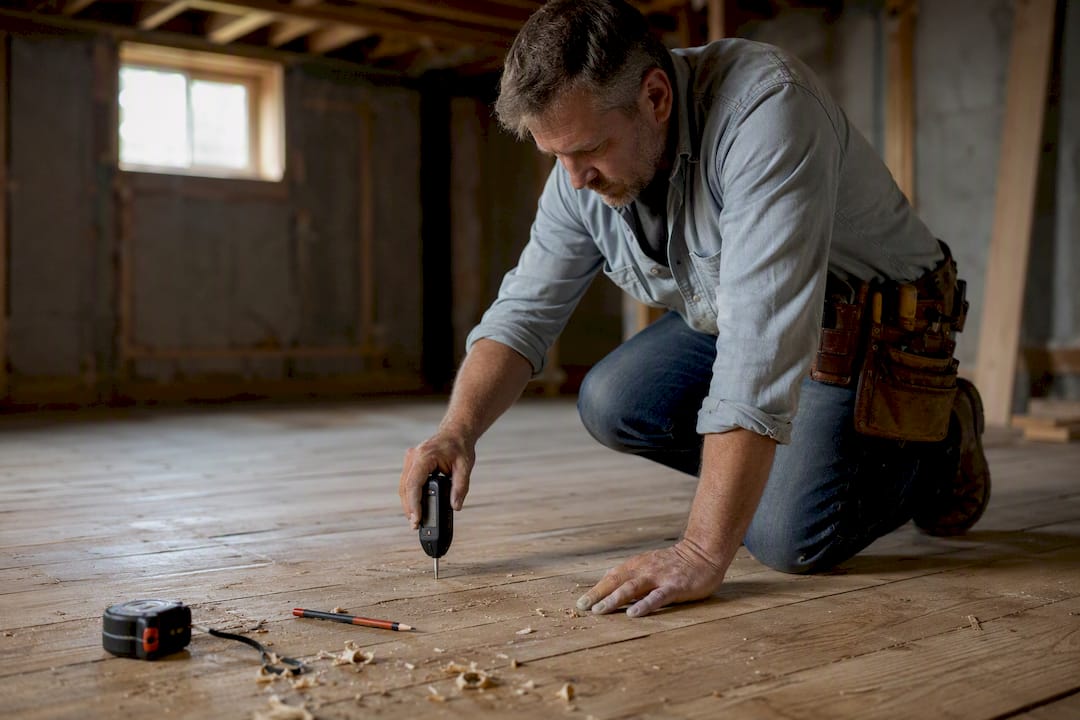
Hire an installer who is licensed, insured, and has verifiable experience with your specific material, not just flooring in general. Before you sign anything, demand proof of three things: manufacturer certification or equivalent training, a current certificate of insurance, and a written estimate with clear warranty terms. If they hesitate on any of those, keep looking. Quality Hardwoods of Michigan, Inc can point you toward vetted installers and help you source the right material once you’ve made your pick.
TL;DR:
- Ensure the installer provides proof of manufacturer certification, current insurance, and a detailed written estimate before hiring.
- Verify the installer’s experience with your specific flooring material and ask for recent references with photos of completed jobs.
- Confirm they perform moisture and subfloor flatness tests, documenting readings to prevent common installation failures.
- Be aware that costs vary widely, with hardwood typically costing more than engineered wood or vinyl, and get itemized bids covering all necessary categories.
- Michigan homeowners should be aware of state and local regulations, and always ensure contracts are in writing to enforce consumer protections.
Table of Contents
- How to Choose a Flooring Installer in Michigan: A Step-by-Step Checklist
- What Questions Should You Ask Before Hiring an Installer?
- Which Certifications and Insurance Should a Michigan Installer Have?
- What Do Flooring Projects Typically Cost in Michigan?
- Why Subfloor and Moisture Checks Should Factor Into Your Hiring Decision
- How Do You Finalize Your Installer and Schedule the Job?
- What Michigan Consumer Protections Apply to Flooring Contracts?
- How Quality Hardwoods of Michigan Helps You Get This Right
- Get Expert Material Guidance Before You Commit to an Installer
- Sources
- FAQ
How to Choose a Flooring Installer in Michigan: A Step-by-Step Checklist
Finding a qualified installer in Michigan takes more effort than scrolling through the first five search results. The good ones are often booked out weeks in advance, and the ones who answer the phone immediately aren’t always the ones you want.
Start your search in the right places. Manufacturer-certified installer directories, trade associations, and referrals from a local flooring showroom tend to surface better candidates than a generic search.
- Check manufacturer certified-installer lists, such as Armstrong’s program, which validates that an installer has been trained on that specific product line.
- Search trade association directories, including the National Wood Flooring Association and CFI Installers, both of which list installers who’ve completed formal training.
- Ask for referrals from a Michigan flooring showroom that works with contractors regularly. Staff at these locations usually know which installers actually show up on time and which ones ghost halfway through a job.
- Narrow your list by specialization. An installer who’s great with laminate isn’t automatically qualified to handle solid hardwood or large-format tile.
Once you have three to five names, request the same set of documents from each one:
- A current certificate of insurance (COI) naming general liability and workers’ compensation coverage.
- Proof of manufacturer training or trade certification relevant to your flooring type.
- At least three references from jobs completed in the last 12 to 18 months, with photos.
- A written scope of work and itemized estimate, not a verbal quote.
When you compare estimates, make sure each one covers the same scope. A bid that’s $2 lower per square foot might be excluding subfloor repair, disposal, or trim work that another installer included. Our guide on hiring a qualified flooring installer breaks down how to line up quotes so you’re comparing apples to apples.
What Questions Should You Ask Before Hiring an Installer?
Get specific in the interview. Ask how many jobs they’ve completed with your exact material in the last year, not just “flooring” in general. Ask who handles subfloor repair if problems turn up mid-job, and whether that work is included in the quote or billed separately. Ask how warranty claims get handled if something fails six months in.
Watch for these red flags:
- No written estimate, or one that’s vague about materials, labor, and exclusions.
- Requests for cash-only payment or a large deposit before any work starts.
- Refusal or delay in producing a certificate of insurance.
- Warranty language that’s fuzzy on what’s actually covered and for how long.
- Reluctance to test moisture levels or address subfloor issues before installing.
Call the references. Ask if the crew showed up when scheduled and whether the final price matched the estimate. If possible, ask to see a recent job in person rather than just photos, since photos can be old or borrowed.
Pro Tip: Ask every installer the same five questions, in the same order, and write down the answers. Side-by-side notes make it much easier to spot who’s dodging a question versus who’s just being brief.
Which Certifications and Insurance Should a Michigan Installer Have?
Certification alone doesn’t guarantee a great installer, but the absence of it is worth asking about. NWFA certification signals an installer has passed hands-on skill and inspection training specific to wood flooring. The Wood Flooring Contractors Association publishes similar best-practice standards that member installers agree to follow.
Manufacturer-certified programs matter for a different reason: warranty protection. Many manufacturers, including Armstrong, will void certain warranty terms if the installation wasn’t performed by a certified installer. Ask the installer which brands they’re certified for before you buy your material.
On insurance, confirm two coverages specifically:
- General liability, in case something in your home gets damaged during the job.
- Workers’ compensation, so you’re not liable if a crew member gets hurt on your property.
Michigan doesn’t require a specific statewide flooring installer license the way some states require licensing for electricians or plumbers, but always verify current requirements with your local municipality before hiring, since local permit rules can still apply.
What Do Flooring Projects Typically Cost in Michigan?
Costs vary widely based on material, subfloor condition, and square footage, but rough installed ranges give you a starting point for comparing bids; for more details on tile-specific installation steps, see this tile installation process. Solid hardwood installation tends to run higher than engineered wood or LVP, largely because of labor time and finishing steps. Carpet is usually the least expensive to install, while tile often lands in the middle to upper range depending on pattern complexity.
A realistic estimate breaks down into several line items, not one flat number. Compare bids against these categories:
- Material cost and allowance per square foot.
- Removal and disposal of existing flooring.
- Subfloor repair or leveling, often billed separately if issues are found.
- Adhesives, underlayment, or finish coats.
- A contingency line for change orders if problems surface mid-job.
Timeline-wise, expect inspection and prep first, then any repair work, then installation itself, then cure or finish time before the space is fully usable. Hardwood that’s finished on-site typically needs the longest cure window. For a closer look at what drives Michigan pricing up or down, see our breakdown of hardwood installation costs in Michigan.
Why Subfloor and Moisture Checks Should Factor Into Your Hiring Decision
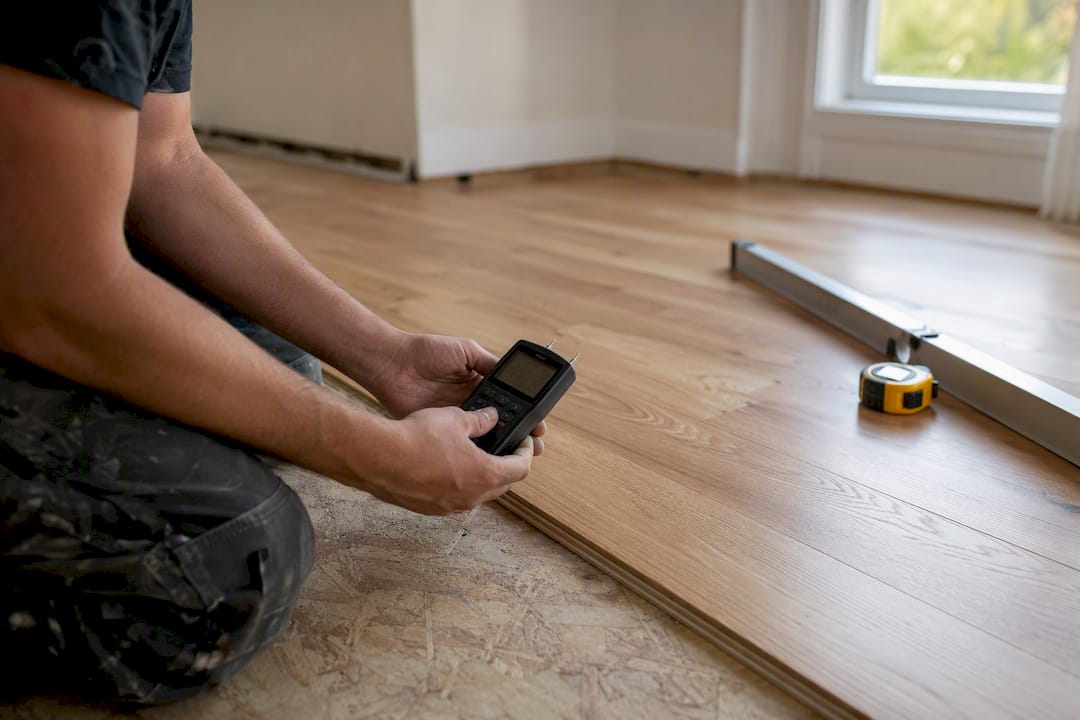
Michigan’s humidity swings between seasons hard, and that’s exactly why the installer you choose needs to test for moisture and subfloor flatness before laying a single plank. Skipping this step is one of the most common causes of flooring failure in the state, and it’s also one of the easiest things for homeowners to check for during hiring.
An installer should perform these checks, in order:
- Measure moisture content in both the subfloor and the flooring material, using a calibrated meter, and document the readings.
- Check subfloor flatness against manufacturer tolerances, usually within a certain variance over a set span.
- Identify the substrate type and confirm whether remediation, such as leveling compound, is needed.
- Confirm vapor barrier requirements, especially over concrete slabs.
- Verify radiant-heat compatibility if you have in-floor heating, since not every flooring product handles that heat cycling well.
Skipping these steps commonly leads to cupping, gapping, or adhesive failure within the first year or two, and manufacturers will often deny warranty claims if documented testing wasn’t performed. Quality Hardwoods’ subfloor preparation guidance outlines what a thorough pre-install assessment should look like.
Pro Tip: Ask your installer to put moisture and flatness readings in writing as part of the contract, along with what corrective action they’ll take if either reading is out of range. A verbal “yeah, we’ll check that” isn’t the same as a documented number you can point to later.
How Do You Finalize Your Installer and Schedule the Job?
Once you’ve narrowed things down to your top choice, confirm the final scope in writing before anything gets scheduled. That written estimate should list the material, square footage, labor cost, subfloor work, disposal, warranty terms, and payment schedule, all in one document both parties sign.
Ask about lead time. Popular installers in Michigan are frequently booked weeks in advance, especially in spring and fall when most remodeling happens. If you’re on a tighter timeline, ask directly whether they can meet it or if you need to adjust expectations.
Confirm the payment structure before work starts. A reasonable deposit is normal, often in the 10 to 30 percent range, but the bulk of payment should follow substantial completion, not happen entirely upfront. Avoid any installer asking for full payment before a single board is down.
Before the crew arrives, clear the space, remove furniture, and confirm whether the installer handles that prep or expects you to. Ask what happens on installation day: how long the crew will be there, whether pets and kids need to stay elsewhere, and when you can expect to walk the finished space.
Once the job wraps, do a walkthrough together. Check for gaps, squeaks, and finish consistency while the crew is still on-site, since it’s much easier to address issues before they leave than to schedule a return visit later. Get your final invoice and warranty documentation in writing, and keep both somewhere you can find them if a claim ever comes up.
What Michigan Consumer Protections Apply to Flooring Contracts?
Michigan homeowners have real recourse if a flooring contract goes sideways. The Michigan Consumer Protection Act prohibits deceptive trade practices, including false claims about a contractor’s qualifications or misleading pricing. If an installer misrepresents their certification status or hides fees in a verbal quote, that can fall under this law.
Get everything in writing. A verbal promise about warranty coverage or completion date means very little if a dispute lands in small claims court. Your written contract should specify the total price, payment schedule, start and completion dates, and exactly what happens if the job runs over or under the original scope.
Watch for any request to pay entirely in cash with no invoice. This isn’t just a red flag from a quality standpoint, it also strips away your paper trail if something goes wrong. A legitimate business provides an invoice with their business name, address, and contact information, regardless of payment method.
If a dispute does come up, Michigan’s Attorney General consumer complaint process is available for cases involving deceptive practices. For anything involving building code compliance, check with your local municipal building department, since permit and inspection rules vary by city and township within Michigan. None of this replaces legal advice for a serious dispute, but knowing these protections exist gives you leverage before you ever sign a contract.

How Quality Hardwoods of Michigan Helps You Get This Right
Quality Hardwoods of Michigan, Inc has spent more than 40 years helping Michigan homeowners and contractors choose the right material for their space, and that showroom experience matters when you’re staring at a wall of samples trying to guess what will actually hold up in your home. Our team walks you through species, plank width, and finish options based on your subfloor and household, not just what looks good under showroom lighting.
Beyond materials, we maintain relationships with installers across the state and can point you toward professionals with a track record on the specific product you’re buying. If you’re not sure where to start, a visit to the showroom or a materials consult is a practical first step before you commit to any bid.
Get Expert Material Guidance Before You Commit to an Installer
Getting the right installer is only half the equation. The material they’re installing has to match your home’s subfloor, moisture conditions, and how you actually live in the space, and that’s where a lot of DIY research falls short.

Quality Hardwoods of Michigan, Inc keeps an extensive inventory of unfinished and prefinished hardwood, luxury vinyl plank, and laminate flooring, along with the stains and finishes that go with them, so you’re not piecing a project together from three different suppliers. Once you’ve settled on a material, our team can also point you toward installers we know handle that product well, saving you a step in your vetting process.
If you’re planning a new build, our hardwood flooring for new construction page covers what to expect for builder and contractor projects specifically. Visit our Michigan showroom, or request a materials and referral consult online, to get matched with the right product before your installer ever picks up a saw.
Sources
FAQ
How Do I Choose a Flooring Installer?
Verify licensing and insurance, confirm manufacturer or trade certification for your material, request a written estimate and warranty terms, and call at least three recent references before signing anything.
How Much Does It Cost to Floor 1,000 Square Feet, Fully Installed?
Total cost depends heavily on material choice, subfloor condition, and removal needs, so get an itemized written estimate rather than relying on a flat per-square-foot number quoted over the phone.
Do You Need a License to Do Flooring in Michigan?
Michigan doesn’t require a statewide flooring-specific installer license, but always confirm current local permit and licensing requirements with your municipality before hiring.
Is There a Shortage of Flooring Installers in Michigan?
Qualified, certified installers are frequently booked several weeks out during peak remodeling seasons in spring and fall, so start your search early rather than waiting until you need work done immediately.
Why Does Manufacturer Certification Matter When Choosing an Installer?
Manufacturer-certified installer programs, like Armstrong’s, often affect warranty eligibility, so an installer’s certification for your specific brand can protect coverage if problems arise later.