
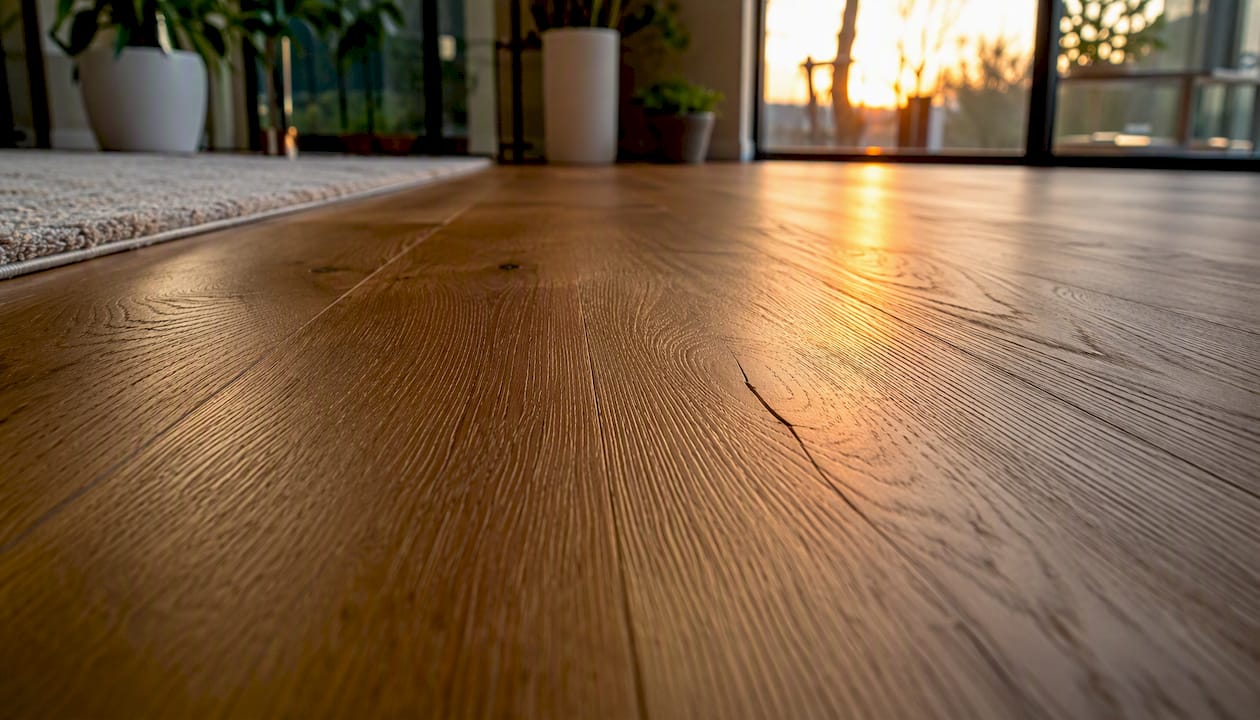
For maximum scratch resistance in a busy home, the single best configuration is engineered hickory or white oak with a factory-applied aluminum-oxide or UV-cured finish, a wear layer of several millimeters and a wire-brushed surface texture. That combination addresses every layer of the problem: the species provides baseline hardness, the factory finish delivers a protective coating far tougher than anything applied on-site, and the textured surface visually absorbs the marks that do get through.
Before you visit a showroom, three things are worth doing. Ask the retailer for the exact wear-layer thickness in millimeters and the documented finish chemistry, not just “scratch-resistant” marketing language. Request at least two or three full cartons to check milling consistency and finish uniformity across boards. For daily upkeep, a dry dust-mop pass before grit gets ground in does more to protect your floor than any product upgrade.
Table of Contents
- Which hardwood species actually resist scratches and dents?
- Engineered vs. solid hardwood: which is smarter for busy homes in 2026?
- How does wear-layer thickness affect scratch resistance and refinishing?
- How to pick a scratch-resistant hardwood floor: a shopping checklist
- What maintenance routines actually prevent scratches?
- How lab tests measure scratch resistance — and what they miss
- Do real user reviews match manufacturer scratch-resistance claims?
- What does hardwood flooring cost, and how long does installation take?
- Regional availability and environmental considerations for hardwood sourcing
- Key Takeaways
- The finish and texture gap most buyers miss
- Quality Hardwoods of Michigan, Inc makes the selection process concrete
- Useful sources
- FAQ
Which hardwood species actually resist scratches and dents?
The Janka hardness test measures the force required to embed a steel ball halfway into a wood sample, and it is the standard metric for comparing species resistance to denting and surface damage. For U.S. homeowners, three domestic species stand out.
Hickory leads the practical list with a Janka rating of approximately 1,820 lbf. It is the hardest widely available domestic species, and its dramatic grain variation does double duty: the visual noise in the wood naturally camouflages light scratches that would show clearly on a uniform surface. Families with large dogs consistently report that wire-brushed hickory holds up better than smooth-faced alternatives, even within the same product line.
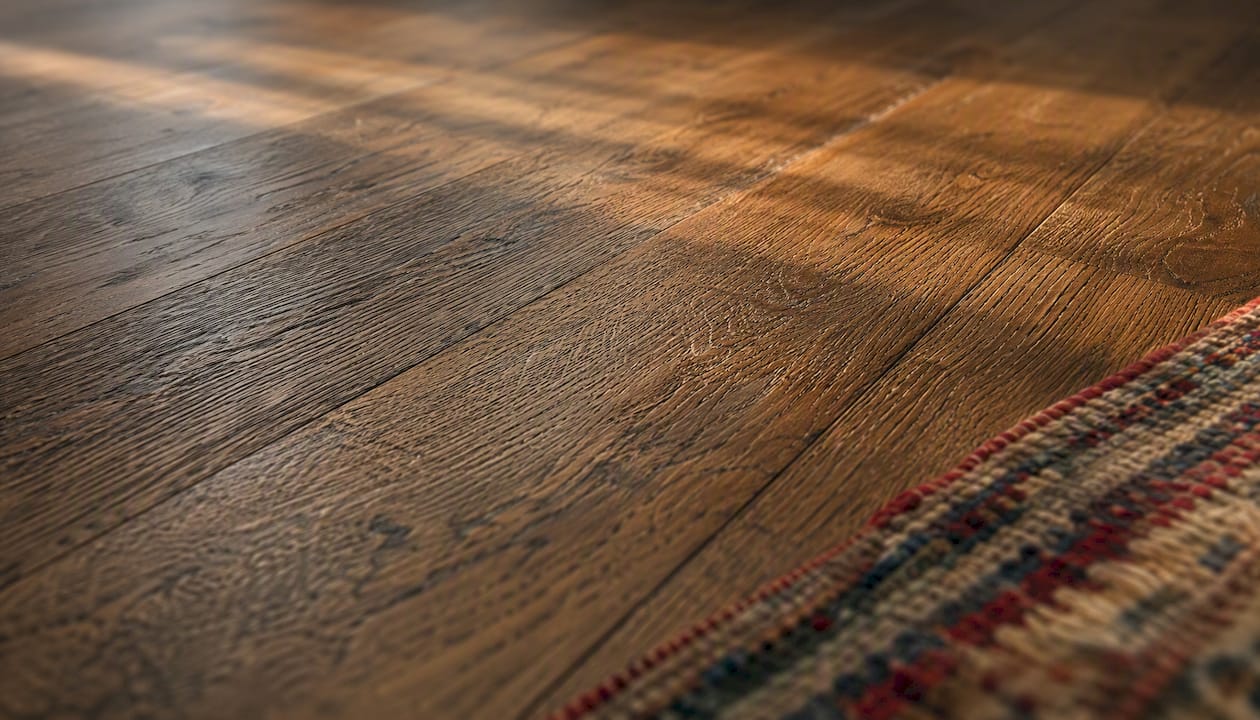
Maple comes in around 1,450 lbf. It is harder than most people expect, but its tight, pale grain shows scratches more readily than hickory because there is less visual texture to absorb them. Maple works well in lower-traffic bedrooms or formal dining rooms where foot traffic is predictable.
White oak sits near 1,360 lbf, slightly softer than maple, but its open grain structure and natural color variation hide wear far better in practice. White oak has become one of the most requested species for busy family homes in 2026, partly because its warm, neutral tone works with nearly any interior and partly because a wire-brushed finish on white oak looks genuinely good even after years of use.
A note on exotics: Brazilian walnut (Ipe) and similar tropical species are among the hardest woods but may have sourcing and refinishing challenges, which sounds impressive. In practice, they are difficult to source with responsible certification, expensive, and harder to refinish. For most residential buyers, hickory or white oak with a quality finish closes the gap without the complications.
Pro Tip: Don’t buy by Janka number alone. A smooth-finished maple at 1,450 lbf will show scratches more visibly than a wire-brushed white oak at 1,360 lbf. Surface texture and finish chemistry matter as much as the species rating.
Engineered vs. solid hardwood: which is smarter for busy homes in 2026?
Engineered hardwood is a plywood or high-density fiberboard core with a real hardwood veneer bonded to the top. That construction is not a compromise. For most busy households, it is the better choice.
The core layers run in alternating directions, which resists the expansion and contraction that causes solid wood to cup, gap, or buckle when humidity fluctuates. In Michigan homes, where indoor humidity swings between heating season and summer, that stability matters. Engineered hardwood can be installed over radiant heat, in basements above grade, and in kitchens where solid wood would be risky. For a deeper look at how the construction works and what wear-layer specs to expect, the engineered flooring Q&A at Quality Hardwoods of Michigan, Inc covers the technical details clearly.
Engineered products with a top veneer of 4mm or more deliver real-wood appearance with better dimensional stability than solid wood and are often the smarter choice for kitchens, basements, and radiant-heat installations. A thicker veneer also allows for more refinishing cycles, which extends the floor’s useful life considerably.
Solid hardwood still makes sense in specific situations. If you are matching existing solid floors in a historic home, or if you want the maximum number of refinish cycles over a 50-year period, solid wood has an advantage. A solid 3/4-inch plank can be sanded and refinished many more times than even a thick engineered veneer. The trade-off is that solid wood requires more controlled installation conditions, is not suitable for below-grade spaces, and tends to show seasonal movement more visibly.
For scratch and dent performance specifically, the species and finish matter far more than whether the product is solid or engineered. A solid hickory plank with a poor finish will scratch more visibly than an engineered white oak with a quality aluminum-oxide coating.
Considering alternatives for wet or high-moisture areas? The comparison of LVP and engineered hardwood at Quality Hardwoods of Michigan, Inc is worth reading before you decide on rooms like laundry areas or mudrooms.
How does wear-layer thickness affect scratch resistance and refinishing?
For engineered hardwood, the wear layer is the real hardwood veneer on top. Its thickness determines how many times the floor can be sanded and refinished, and it interacts directly with finish type to influence how scratch-resistant the floor feels over time.
| Wear Layer | Probable Refinishes |
|---|---|
| 2–3mm | 1–2 |
| 4–6mm | 2–4 |
A thin veneer is common in entry-level engineered products. You can clean and recoat the finish without sanding, but a full sand-and-refinish is risky because you can cut through the veneer quickly. A thicker veneer gives more flexibility for refinishing and extends the floor’s useful life.
Finish type interacts with wear layer in a practical way. A thick aluminum-oxide factory finish on a 2mm veneer may resist surface scratches well for years, but once the finish is worn through, you have limited options. The same aluminum-oxide finish on a 4mm veneer gives you the same daily protection plus the ability to sand and recoat when the time comes.
Pro Tip: When comparing products, ask for the wear-layer spec in millimeters, not fractions of an inch. Some manufacturers list it in fractions that sound larger than they are. 1/12 inch is about 2.1mm; 5/32 inch is about 4mm. Always convert.
How to pick a scratch-resistant hardwood floor: a shopping checklist
Walking into a showroom without a checklist means relying on whatever the sales rep volunteers. These questions put you in control.
- Ask for the wear-layer thickness in millimeters. If the rep cannot answer immediately or gives you a fraction without converting it, ask for the product spec sheet. A minimum of 4mm is reasonable; a thicker veneer is better for busier households.
- Ask for the finish chemistry by name. “Scratch-resistant” is marketing. “Aluminum-oxide” or “UV-cured urethane” is a specification. If the rep cannot name the finish type, the product documentation should.
- Request the finish warranty in writing. Check what it covers, for how long, and what voids it. A warranty that excludes pet damage or normal foot traffic is nearly useless.
- Ask whether SKU-level testing data is available. Some manufacturers provide abrasion-cycle data or dent-resistance ratings for specific products. If that data exists, ask for it.
- Request at least two or three full cartons for inspection. Check that the milling is consistent (boards should fit together without gaps or height variation) and that the finish looks uniform across boards from different boxes.
- Confirm the moisture limits and installation requirements in writing. For engineered products, ask about the acceptable subfloor moisture range and whether the product is approved for radiant heat or below-grade installation.
Red flags to walk away from:
- A rep who describes the wear layer only as “thick” without a millimeter spec
- No documentation of finish chemistry beyond “scratch-resistant coating”
- No sample cartons available for inspection
- A warranty with so many exclusions that normal household use voids it
What maintenance routines actually prevent scratches?
The National Wood Flooring Association is direct on this point: routine maintenance and prevention are more effective at protecting a finish than any single product choice. That means the habits you build after installation matter as much as the floor you buy.
Daily and weekly habits that work:
- Dry dust-mop or sweep before any grit gets ground into the finish. Sand and dirt act like sandpaper underfoot.
- Vacuum with the bare-floor setting (never the beater bar, which can scratch the surface).
- Clean up spills immediately. Standing water is the enemy of both finish and wood.
- A no-shoes policy at the entry points is one of the most effective single changes a household can make.
Furniture and entry protection:
Felt pads under every chair and table leg are non-negotiable. Replace them when they compress or pick up grit, because a grit-loaded felt pad scratches worse than bare wood on metal. Entry mats at every exterior door trap the abrasive particles that cause most of the daily wear.
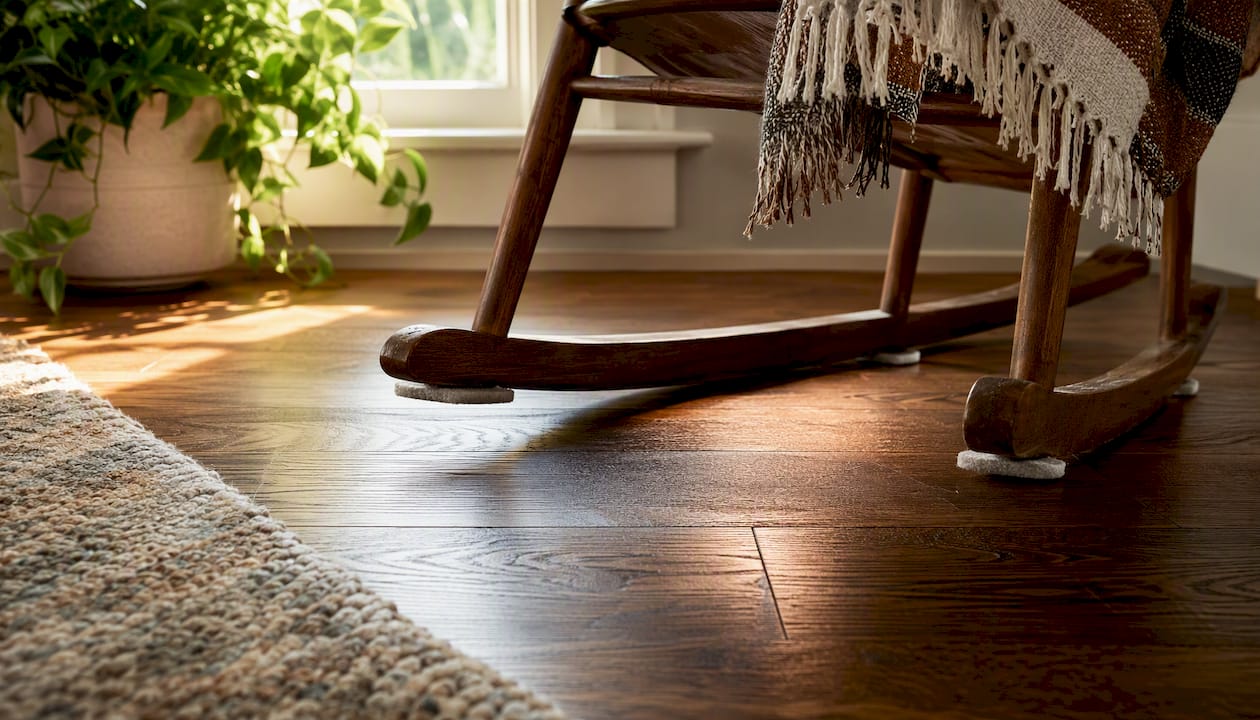
For pet owners: Keeping dog nails trimmed short reduces point-load scratches significantly. Place pet rugs or runners at transition points where dogs tend to scramble for traction, like the base of stairs or in front of doors. For a detailed breakdown of species and finish choices specifically for dog owners, the best flooring for pets guide at Quality Hardwoods of Michigan, Inc covers the practical options.
What to avoid:
Steam mops and acidic cleaners (vinegar, lemon-based products) are the two most common causes of finish damage that homeowners attribute to the floor itself. Good Housekeeping’s cleaning guidance is consistent with NWFA standards: use manufacturer-approved, pH-neutral cleaners, never let water sit, and never use a steam mop on hardwood. The heat and moisture from steam mops can delaminate engineered veneers and chemically break down even tough factory finishes over time.
Pro Tip: Before using any new cleaner, test it on a hidden area, like inside a closet or behind a door. Some cleaners leave a residue that dulls the finish or makes it slippery. The manufacturer’s recommended cleaner is always the safest starting point.
How lab tests measure scratch resistance — and what they miss
Consumer Reports evaluates flooring through a structured battery of tests: abrasive rub cycles (up to 50,000 passes), weighted dent-drop tests, surface water exposure, submersion tests, and UV fade exposure. These are genuinely useful baselines. A product that fails at 10,000 abrasion cycles is not going to hold up in a hallway.
The limits are real, though. Abrasion tests measure uniform surface wear from repeated light contact. They do not replicate point-load failures, which are the actual cause of most visible damage in real homes. A suitcase wheel dragged across a floor, a chair leg dropped from a few inches, a large dog’s claws scrambling for traction on a turn: these are concentrated forces applied to a small area, and they behave completely differently from a flat abrasion pad moving back and forth.
This is why a floor with an excellent abrasion rating can still show gouges from a moved appliance or deep scratches from a dog’s rear claws. The test did not lie; it just measured something different from what happened in your kitchen.
The practical takeaway: use lab results to filter out low-quality products, but do not use them to predict real-world performance in isolation. A product with strong abrasion ratings, a hard species, a textured surface, and a documented aluminum-oxide finish is a better bet than a product with strong abrasion ratings alone.
Do real user reviews match manufacturer scratch-resistance claims?
Consistently, no. The gap between manufacturer claims and homeowner experience is one of the most reliable patterns in flooring reviews. Products marketed as “scratch-resistant” or “pet-proof” regularly generate complaints about visible scratches within the first year of use, particularly in high-traffic zones and homes with dogs.
The pattern that real-world reviews reveal is more nuanced than “the claims are false.” Wire-brushed hickory collections from the same manufacturer consistently outperform smooth-finished planks in households with large dogs, even when both carry identical marketing language. The texture absorbs and hides wear in a way that the abrasion-cycle test does not capture.
A few specific failure patterns show up repeatedly in homeowner reports:
- High-gloss smooth floors showing scratches within months in pet households, despite strong lab ratings
- Thin-veneer engineered products (under 2mm) where the finish wears through in high-traffic areas within three to five years, leaving no refinishing option
- Products where the manufacturer’s “scratch-resistant” claim applies only to the finish, not the underlying wood, so a scratch that penetrates the finish goes straight to raw veneer
The most reliable indicator from consumer feedback is not the overall brand rating but the specific SKU and surface texture. Two products from the same manufacturer, same species, same finish chemistry, but different surface textures will perform differently in active households. Always look for reviews of the specific product, not the brand line.
What does hardwood flooring cost, and how long does installation take?
Hardwood flooring costs vary by species, construction, and finish. Unfinished solid hardwood typically runs lower per square foot than factory-prefinished engineered products, but the total installed cost often closes that gap once you factor in site finishing labor, materials, and drying time.
For prefinished engineered hardwood in hickory, maple, or white oak, material costs generally range from the mid-tier to premium end of the flooring market. Exotic species and thick-veneer products sit at the higher end. Installation labor in Michigan varies by contractor and project complexity, but most residential projects are quoted per square foot with additional charges for subfloor prep, transitions, and removal of existing flooring.
Timeline is where prefinished products have a clear advantage. Site-finished solid hardwood requires sanding, multiple finish coats, and drying time between coats, which can add several days to a week of off-limits time in the installed area. A prefinished engineered product can be walked on the same day installation is complete, which matters considerably when you are working around a family’s schedule.
Subfloor preparation is the most commonly underestimated cost. A floor installed over an uneven or moisture-compromised subfloor will fail regardless of how good the product is. Budget for subfloor assessment and correction before finalizing your material budget.
Regional availability and environmental considerations for hardwood sourcing
Hickory, maple, and white oak are all domestic North American species, which gives them a sourcing advantage over tropical exotics in terms of availability, lead time, and environmental footprint. For Michigan homeowners, domestic species are typically stocked locally or regionally, which shortens delivery times and reduces the risk of supply disruptions.
Environmental certification matters if sustainability is a priority. The Forest Stewardship Council (FSC) certification is the most widely recognized standard for responsible forestry. Asking for FSC-certified products is a reasonable request for any domestic or imported species, and reputable distributors can usually confirm certification status.
Michigan’s climate adds a specific consideration: the swing between dry winter heating season and humid summer months creates real stress on wood flooring. Engineered construction handles this better than solid wood, but even engineered products need to be acclimated to the installation space before installation. The hardwood flooring guide for Michigan homeowners at Quality Hardwoods of Michigan, Inc addresses regional humidity considerations in practical terms.
Sustainable sourcing is also becoming a factor in 2026 flooring trends, with more buyers asking about chain-of-custody documentation and carbon footprint. For buyers interested in how sustainable hardwood sourcing fits into broader material choices, the principles that apply to bespoke furniture sourcing translate directly to flooring decisions.
Key Takeaways
Hickory or white oak engineered hardwood with a factory-applied aluminum-oxide or UV-cured finish, a 4mm wear layer, and a wire-brushed surface is the most practical scratch-resistant hardwood configuration for busy U.S. households in 2026.
| Point | Details |
|---|---|
| Species hardness is the baseline | Hickory (~1,820 lbf Janka) and white oak (~1,360 lbf) are the top domestic choices; texture hides wear better than raw hardness alone. |
| Factory finish beats site-applied | Aluminum-oxide and UV-cured factory finishes outperform site-applied coatings; always ask for the finish chemistry by name. |
| Wear layer determines refinishability | A 4mm or thicker veneer allows 2–4 refinishes; under 2mm gives you little margin when the finish wears through. |
| Maintenance prevents most damage | A no-shoes policy, dry dust-mopping, felt pads, and pH-neutral cleaners protect the finish more than any product upgrade. |
| Quality Hardwoods of Michigan, Inc | Offers in-store samples, regional guidance, and product lines matching the recommended species and finish combinations for Michigan homes. |
The finish and texture gap most buyers miss
Buyers spend most of their research time comparing species Janka ratings and brand names. The variable that actually determines how a floor looks after three years of real use gets far less attention: the combination of surface texture and finish sheen.
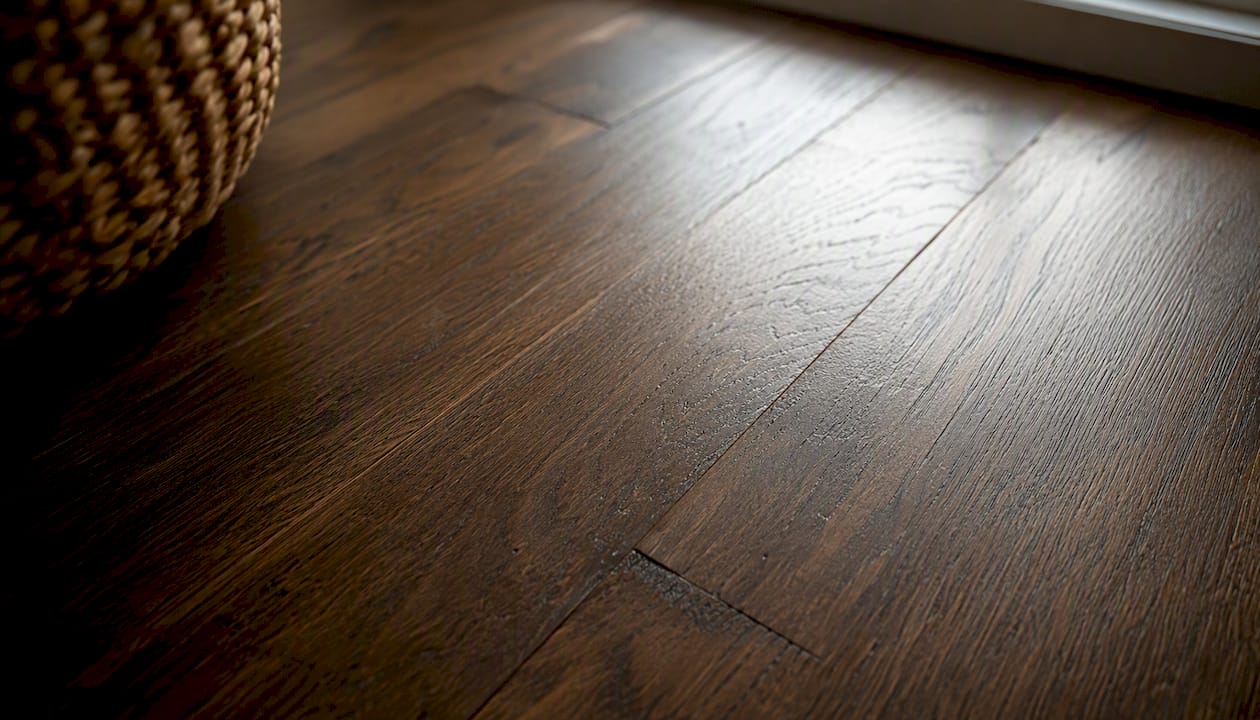
A smooth, high-gloss floor on the hardest domestic species will look worse faster than a wire-brushed, matte-finish floor on a softer species. The gloss amplifies every mark; the texture absorbs it. This is not a subtle difference. It is the single most consistent finding across homeowner reviews, and it is the thing most showroom conversations skip entirely because it is harder to sell than a Janka number.
The second thing buyers underestimate is how much the maintenance routine matters relative to the product. The NWFA’s position is clear: prevention and routine care outperform product selection as a long-term strategy. A floor that costs more per square foot does not protect itself. The no-shoes policy, the felt pads, the dry dust-mop pass before vacuuming: these are the actual variables that separate a floor that looks good at year ten from one that looks tired at year three.
If you are buying for a household with dogs, the wire-brushed texture is not optional. It is the single most practical upgrade available, and it costs nothing extra on most product lines. Pair it with a matte or satin finish and a hard domestic species, and you have covered the real-world failure modes that lab tests miss.
Quality Hardwoods of Michigan, Inc makes the selection process concrete
Choosing between species, finish types, wear-layer specs, and surface textures is genuinely easier when you can hold the samples side by side rather than compare product pages. Quality Hardwoods of Michigan, Inc has been serving Michigan homeowners and contractors for over 40 years, and the showroom carries the domestic species and finish combinations covered in this article, including hickory, white oak, and maple in both prefinished engineered and unfinished solid formats.
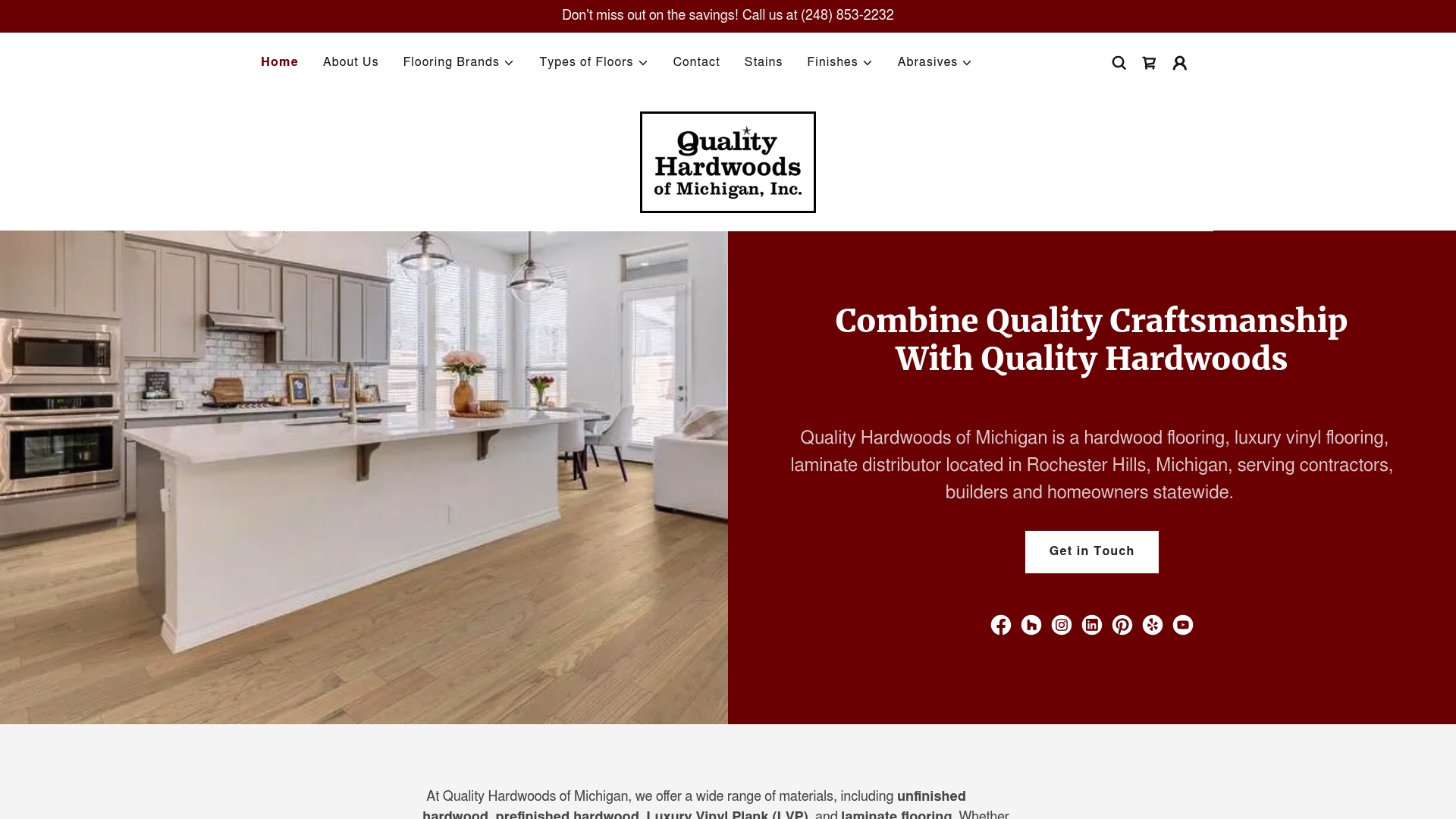
The team can pull samples of specific SKUs, confirm wear-layer specs in millimeters, and walk you through finish chemistry in plain terms. Statewide delivery is available for buyers who cannot make it to the showroom in person. For buyers weighing hardwood against other scratch-resistant options, the vinyl flooring options are also available for direct comparison.
To get started, visit the showroom, call for a product quote, or browse the current inventory at qualityhardwood.com. Bring your room dimensions and a photo of your existing flooring if you are matching, and the team can narrow the options quickly.
Useful sources
The following sources informed this article and are worth consulting directly for testing methodology, species data, and maintenance standards.
- Maintenance | National Wood Flooring Association | NWFA
- Best Flooring of 2026, Lab-Tested and Reviewed — Consumer Reports
- Best Engineered Wood Flooring Brands (2026 Real Reviews) — Block Renovation
- Best way to clean hardwood floors — Good Housekeeping
- Best Engineered Hardwood Flooring — Talk of the House
- The Hard Truth About Hardwood — TheFinalFloor (2026)
- Quality Hardwoods of Michigan — Home
Ask any retailer for SKU-level testing data and finish warranty documentation before purchasing. If they cannot provide it, that is useful information too.
FAQ
What type of hardwood flooring is most scratch-resistant?
Engineered hickory with a factory-applied aluminum-oxide or UV-cured finish and a wire-brushed surface texture is the most scratch-resistant practical option for U.S. homes. The combination of high Janka hardness (~1,820 lbf), a tough factory coating, and a textured surface that hides wear covers all three layers of the problem.
What are the best hardwood flooring options for busy households in 2026?
Hickory, white oak, and maple are the top domestic species for scratch and dent resistance in 2026. Paired with a prefinished engineered construction (4mm wear layer), an aluminum-oxide or UV-cured finish, and a wire-brushed texture, any of these species performs well in active family homes.
What type of flooring holds up best against dog scratches?
Wire-brushed hickory or white oak engineered hardwood holds up better against dog scratches than smooth-finished alternatives, even when the species and finish chemistry are identical. For more detail on species and finish choices specifically for pet households, the best flooring for pets guide at Quality Hardwoods of Michigan, Inc covers the practical options.
Is there a hardwood that does not scratch?
No hardwood is scratch-proof. Even the hardest domestic species (hickory at ~1,820 lbf Janka) will show marks from sharp point loads like pet claws or furniture legs. The goal is a species, finish, and texture combination that minimizes visible scratching and hides the marks that do occur.
Does finish type matter more than species hardness?
In practice, yes, for visible wear. A harder species with a poor finish will show scratches more clearly than a slightly softer species with a quality aluminum-oxide factory finish and a wire-brushed texture. Species hardness sets the baseline; finish chemistry and surface texture determine how the floor actually looks after years of use.
Recommended
- Flooring Trends Rochester MI | Quality Hardwoods of Michigan
- Vinyl Laminate Hardwood | Quality Hardwoods of Michigan
- Most Popular Flooring in New Homes 2026: What Michigan Builders Are Choosing | Quality Hardwoods of Michigan
- Hardwood Floor and Wall Color Trends 2026: Perfect Pairings for Michigan Homes | Quality Hardwoods of Michigan