
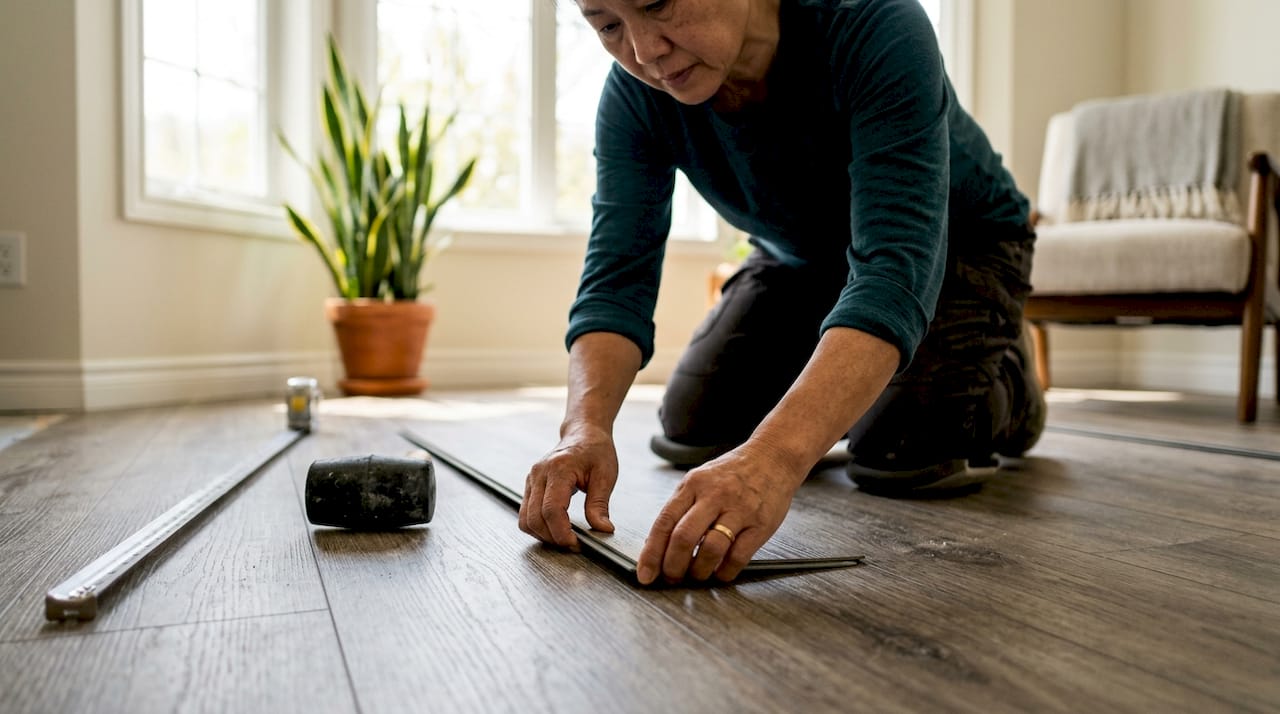
Waterproof vinyl flooring is defined as a flooring material made from 100% synthetic, moisture-impervious components that will not swell, warp, or degrade when exposed to water. Unlike traditional hardwood or laminate, the planks themselves cannot absorb moisture at the material level. The two dominant core technologies are Stone Plastic Composite (SPC) and Wood Plastic Composite (WPC), both engineered specifically for moisture-prone environments. Quality Hardwoods of Michigan, Inc has carried these products for over 40 years, and the demand from Michigan homeowners for moisture-resistant flooring has grown steadily every year.
What is waterproof vinyl flooring made of?
The waterproof property comes entirely from the core construction. SPC cores combine limestone powder and PVC stabilizers into a rigid, dense plank that resists denting and holds its shape under temperature swings. WPC cores use a foamed polymer composite that is slightly softer underfoot, making it more comfortable for long periods of standing. SPC accounts for roughly 46% of rigid-core waterproof vinyl sales, which reflects its reputation for superior dimensional stability in demanding spaces like kitchens and mudrooms.
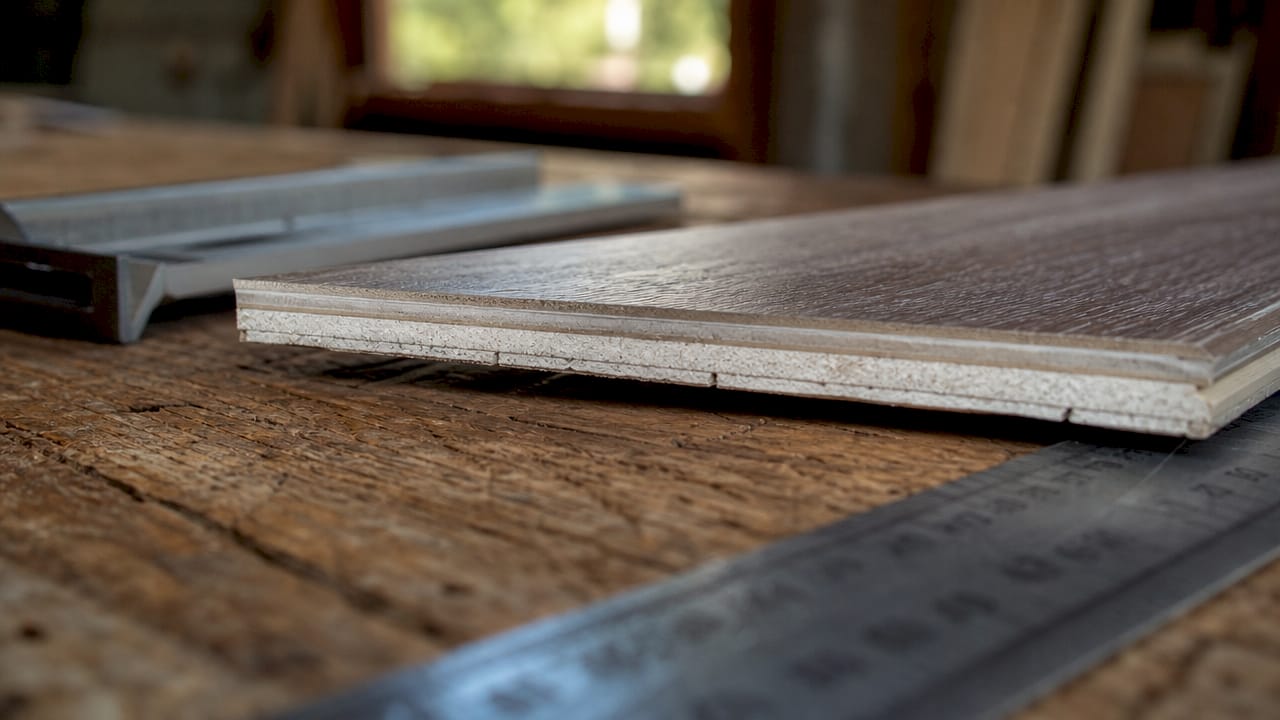
Standard vinyl and laminate floors use different core materials. Traditional vinyl uses a flexible PVC base that can resist surface moisture but is not truly rigid. Laminate uses a high-density fiberboard core that absorbs water and swells when seams are breached. Neither matches the full waterproof performance of SPC or WPC construction.
One critical distinction: the “waterproof” label applies to the plank material itself, not the entire floor system. Water can still migrate through seams and edges into the subfloor if installation is poor. That distinction shapes every decision from product selection to installation method.
| Core Type | Dent Resistance | Moisture Resistance | Best Use |
|---|---|---|---|
| SPC (Stone Plastic Composite) | High | Full material waterproof | Kitchens, bathrooms, high traffic |
| WPC (Wood Plastic Composite) | Moderate | Full material waterproof | Bedrooms, living rooms, comfort-focused spaces |
| Standard flexible vinyl | Low | Surface resistant only | Low-traffic, dry areas |
| Laminate | Moderate | Water-resistant surface only | Dry rooms, not wet areas |
What are the main benefits of waterproof vinyl flooring?
The most measurable benefit is fewer repairs. Homes with waterproof vinyl plank flooring experience 70% fewer moisture-related repairs than homes with traditional hardwood or laminate. That translates directly into lower long-term ownership costs, especially in Michigan where seasonal humidity swings are significant.
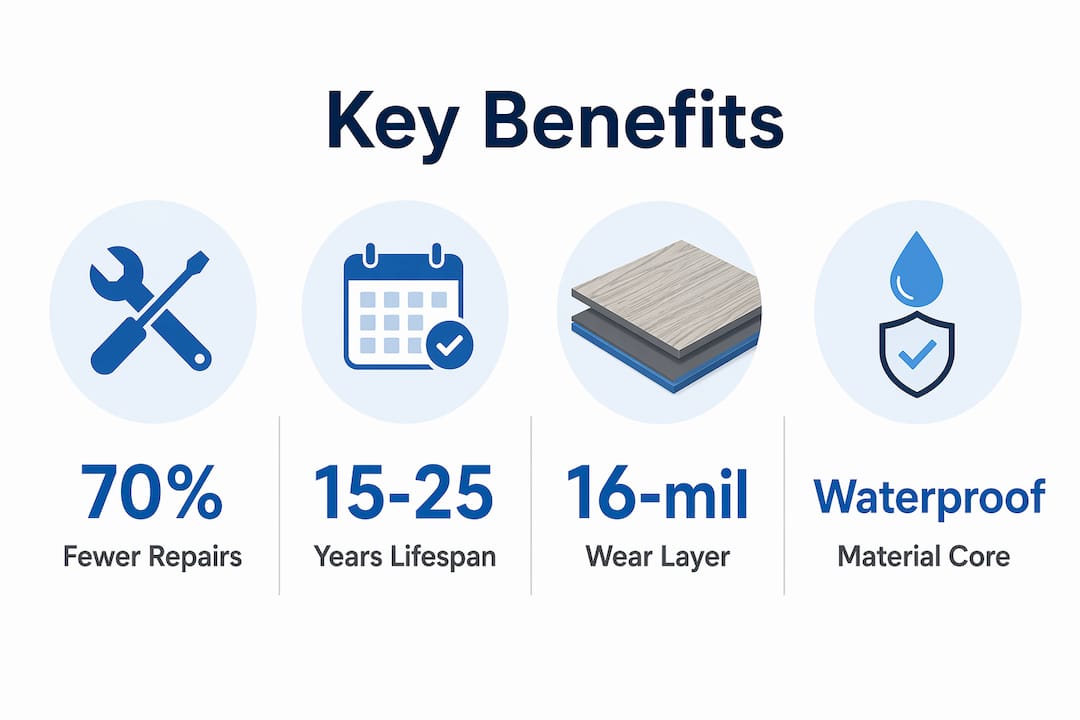
Lifespan is another strong argument. Quality waterproof vinyl lasts 15–25 years, compared to 10–20 years for laminate. That extra service life matters when you factor in the cost of materials, installation labor, and the disruption of replacing a floor.
The visual quality of modern vinyl has improved dramatically. Today’s embossed textures and photographic wear layers replicate the look of white oak, slate, and travertine convincingly. Homeowners no longer have to choose between aesthetics and practicality.
Key benefits at a glance:
- Moisture protection: The SPC or WPC core will not swell, buckle, or warp from spills or humidity.
- Scratch resistance: The wear layer protects against pet claws, chair legs, and dropped items.
- Pet and family friendly: Easy to clean, does not harbor allergens, and handles accidents without staining.
- Comfort underfoot: WPC options include a built-in foam underlayment that reduces fatigue.
- Low maintenance: Sweep and damp-mop. No waxing, refinishing, or sealing required.
- Cost effective: Material costs run lower than solid hardwood while delivering comparable visual appeal.
Pro Tip: For kitchens, laundry rooms, and any area with heavy foot traffic, choose a product with a minimum 16-mil wear layer. Thinner wear layers scratch through faster, and no amount of waterproofing compensates for a worn surface.
How is waterproof vinyl flooring installed?
Three installation methods exist: click-lock floating, glue-down, and peel-and-stick. Each suits different subfloor conditions and skill levels.
-
Click-lock floating: Planks snap together without adhesive and float over the subfloor. Click-lock systems allow a typical room to be installed in 3–4 hours using only a utility knife for cuts. This is the most popular method for DIY homeowners and works well over most existing subfloors.
-
Glue-down: Planks are adhered directly to the subfloor with pressure-sensitive adhesive. This method eliminates movement and is preferred in commercial settings or rooms with heavy rolling loads. It requires a perfectly flat subfloor and is harder to remove later.
-
Peel-and-stick: A self-adhesive backing bonds the plank to the subfloor. This method is the fastest but offers the least stability and is best reserved for low-traffic areas or temporary installations.
Subfloor preparation is the step most homeowners underestimate. The subfloor must be flat to within 3/16 inch over a 10-foot span. High spots cause planks to rock and wear unevenly. Low spots create hollow sounds and stress the locking joints over time. Address both before laying a single plank.
Acclimate vinyl planks for at least 48 hours in the room where they will be installed before starting. Temperature and humidity differences between the storage location and the installation room cause planks to expand or contract. Skipping this step leads to warping and gapping after installation.
Moisture management beneath the floor is non-negotiable. Use a vapor barrier over concrete subfloors. Check moisture readings with a concrete moisture meter before installation. Elevated moisture levels in the subfloor will cause problems regardless of how waterproof the planks are.
Pro Tip: In bathrooms, laundry rooms, and around kitchen sinks, apply a bead of silicone caulk along the perimeter where the flooring meets the wall or cabinetry. This seals the most common entry point for water to reach the subfloor. Professional flooring installers at Quality Hardwoods of Michigan, Inc include this step as standard practice.
What maintenance does waterproof vinyl flooring need?
Waterproof vinyl is low maintenance, but “low” does not mean “none.” A consistent routine protects the wear layer and prevents hidden damage beneath the floor.
Routine care is straightforward:
- Sweep or vacuum daily in high-traffic areas to remove grit that acts like sandpaper on the wear layer.
- Damp-mop weekly with a pH-neutral cleaner. Avoid steam mops. The heat and pressure force moisture into seams.
- Remove standing water promptly. The planks resist water, but trapped moisture beneath vinyl causes mold, structural rot, and odors over time.
- Use felt pads under furniture legs to prevent indentation, especially on WPC cores.
- Avoid dragging heavy appliances across the floor. Lift and carry, or use an appliance dolly with rubber wheels.
The wear layer thickness determines how long the floor looks good. A 12-mil layer handles residential light traffic. A 20-mil layer handles commercial environments. For kitchens and family rooms, 16 mil is the recommended minimum. Choosing a thinner product to save money upfront usually costs more in early replacement.
Bona floor care products, available through Quality Hardwoods of Michigan, Inc, are formulated for vinyl and hardwood surfaces and will not leave a residue that dulls the finish over time.
What are the common misconceptions about waterproof vinyl flooring?
The biggest misconception is that waterproof planks equal a waterproof floor. They do not. The waterproof label applies to the plank material, not the seams, edges, or the floor system as a whole. Water introduced at the perimeter or through an unsealed seam reaches the subfloor and stays there.
A second misconception is that vinyl and laminate perform similarly in wet conditions. Laminate uses a fiberboard core that swells and delaminates on contact with water. Vinyl’s SPC or WPC core does not. The gap in wet-area performance is significant.
A third misconception is that any installation method delivers the same protection. Sheet vinyl with heat-welded seams provides the most complete moisture barrier because it eliminates seam gaps entirely. Click-lock planks leave micro-gaps at every joint. Those gaps are acceptable in most rooms but require extra sealing in bathrooms and laundry rooms.
| Misconception | Reality |
|---|---|
| Waterproof planks = waterproof floor | Water enters through seams and edges; subfloor can still get wet |
| Vinyl and laminate perform the same | Laminate swells when wet; SPC/WPC vinyl does not |
| Any installation method is equivalent | Sheet vinyl with welded seams offers the highest moisture barrier |
| Waterproof means no maintenance needed | Standing water and poor sealing still cause hidden damage |
Understanding these limits helps you make better product and installation choices. A well-installed SPC floor with sealed perimeters performs far better than a poorly installed one, regardless of the product’s price point.
Key Takeaways
Waterproof vinyl flooring protects against moisture at the material level, but complete floor protection requires proper installation, sealed perimeters, and consistent maintenance.
| Point | Details |
|---|---|
| Material-level waterproofing | SPC and WPC cores resist moisture; the planks themselves will not swell or warp. |
| Lifespan advantage | Quality vinyl lasts 15–25 years, outperforming laminate’s 10–20 year average. |
| Installation method matters | Click-lock suits DIY projects; glue-down and perimeter sealing are best for wet rooms. |
| Wear layer is critical | Choose a minimum 16-mil wear layer for kitchens and high-traffic areas. |
| Maintenance prevents hidden damage | Remove standing water promptly; trapped moisture under planks causes mold and rot. |
Why I think most homeowners underestimate installation quality
After years of working with flooring products across Michigan homes, the pattern I see most often is this: a homeowner invests in a quality SPC product, installs it without proper subfloor prep or perimeter sealing, and then blames the floor when problems appear 18 months later. The floor is not the problem. The installation is.
Waterproof vinyl is genuinely one of the best flooring options available for Michigan homes. The freeze-thaw cycles, the basement humidity, the mudroom traffic. SPC handles all of it better than hardwood or laminate. But the product only performs as well as the installation beneath it.
My honest advice for first-time buyers: do not cut corners on subfloor preparation. Rent a floor grinder to flatten high spots. Use a moisture meter on concrete before you lay anything. Spend the extra $50 on silicone caulk for the perimeter. Those steps cost almost nothing compared to pulling up a floor and replacing a damaged subfloor.
For renters, click-lock floating floors are the right call. They install without adhesive, come up cleanly, and protect your deposit. For homeowners doing a full renovation, get a professional assessment of your subfloor moisture levels before committing to any product. The vinyl flooring questions I hear most often could be avoided entirely with better pre-installation planning.
The 2026 market has excellent SPC options at every price point. The product quality floor to ceiling has improved. What separates a floor that lasts 25 years from one that fails in five is almost always the installation, not the product.
— Mike Solomich
Quality Hardwoods of Michigan, Inc: your waterproof vinyl resource
Quality Hardwoods of Michigan, Inc has served Michigan homeowners, contractors, and builders for over 40 years with flooring products and professional installation expertise.
The team installs waterproof vinyl plank flooring across Michigan, including Salem, Richmond, and Romulus. Every installation includes subfloor moisture assessment and perimeter sealing as standard steps. Whether you are choosing between SPC and WPC, selecting the right wear layer thickness, or need a free quote on a bathroom or kitchen project, the team at Quality Hardwoods of Michigan, Inc brings the product knowledge and installation experience to get it right the first time. Contact them to schedule a consultation or visit the showroom to see current vinyl plank options in person.
FAQ
What is the difference between SPC and WPC vinyl flooring?
SPC (Stone Plastic Composite) uses a rigid limestone-based core that resists denting and handles temperature swings well. WPC (Wood Plastic Composite) uses a foamed polymer core that is softer underfoot and better suited to bedrooms and living areas.
Is waterproof vinyl flooring good for bathrooms?
Yes, but proper installation is required. The planks resist water at the material level, but seams and perimeter edges must be sealed with silicone caulk to prevent moisture from reaching the subfloor.
How long does waterproof vinyl flooring last?
Quality waterproof vinyl flooring lasts 15–25 years with proper care, which is longer than the 10–20 year average for laminate flooring.
Can I install waterproof vinyl flooring myself?
Click-lock vinyl is one of the most DIY-friendly flooring options available, with a typical room installable in 3–4 hours. Subfloor preparation and moisture testing are the steps most likely to require professional help.
Does waterproof vinyl flooring need underlayment?
Many SPC products include a pre-attached underlayment. On concrete subfloors, a separate vapor barrier is recommended to block moisture migration from below, regardless of whether the plank includes built-in padding.