
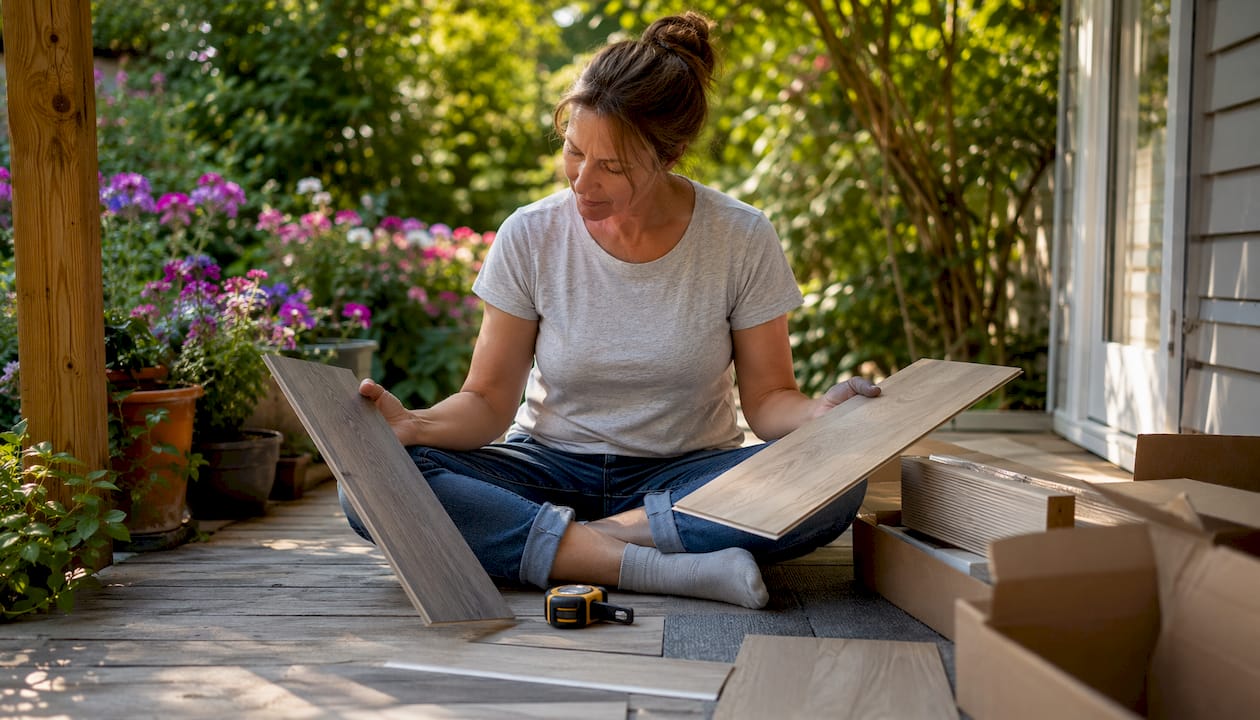
Choose luxury vinyl for wet or high-traffic rooms; choose laminate for dry spaces where wood realism and a lower upfront price matter most. That single rule covers the majority of decisions homeowners face when comparing these two materials.
Here is the quick breakdown before the details:
- Wet rooms (bathrooms, kitchens, laundry, basements): Luxury vinyl plank (LVP) or luxury vinyl tile (LVT). Their 100% PVC cores are fully waterproof, not just water-resistant.
- Dry rooms (living rooms, bedrooms, hallways): Laminate works well and often delivers deeper wood-grain texture at a lower installed cost.
- Pets, kids, or rentals: Luxury vinyl wins on spill tolerance and single-plank replaceability.
- Lifespan: Both materials can last 15–25 years when properly installed and maintained, though vinyl holds up better in moisture-prone conditions.
Pro Tip: Before you buy anything, bring a room photo and note any moisture concerns. A flooring specialist can tell you in minutes whether your subfloor and room conditions favor vinyl or laminate.
Table of Contents
- What are the core differences between laminate and luxury vinyl?
- How does water resistance actually differ between these two materials?
- How do wear layers and lifespan compare?
- Which material is easier to install yourself?
- Does one feel better underfoot than the other?
- Which material looks more realistic?
- What does each material actually cost, installed?
- How do you clean and repair each material?
- Which rooms should get which material?
- How to choose: your pre-purchase checklist
- What do installers actually recommend?
- Key Takeaways
- A flooring decision most guides get backwards
- Quality Hardwoods of Michigan, Inc can help you choose and install the right floor
- Useful sources and where to learn more
- FAQ
What are the core differences between laminate and luxury vinyl?
The performance gap between these two materials comes down to one thing: what the core is made of.
Luxury vinyl (LVP/LVT) is built entirely from synthetic materials. The construction runs from top to bottom: a clear wear layer (measured in mils, where 1 mil equals 0.001 inch), a printed decorative layer, a rigid or flexible PVC core, and a backing layer. Because every layer is plastic-based, water cannot penetrate or damage the structure. This is why luxury vinyl is fully waterproof while laminate is not.
Laminate is a composite material. Its layers are a clear wear layer (rated by AC class, from AC1 to AC5), a photographic print layer that mimics wood or stone, and a high-density fiberboard (HDF) or medium-density fiberboard (MDF) core, with a backing sheet underneath. That wood-fiber core is the vulnerability. Water that slips through seams reaches the HDF and causes irreversible swelling.
A few terminology points worth clarifying:
- LVP vs. LVT: Both are luxury vinyl. LVP comes in plank format; LVT comes in tile format. Neither is the same as old-school sheet vinyl or peel-and-stick vinyl, which use thinner constructions and less durable wear layers.
- “Water-resistant” laminate: Marketing language for improved joint sealing. It slows water intrusion but does not stop it. Prolonged exposure still reaches the fiber core.
- HDF vs. MDF: HDF is denser and more common in quality laminate; MDF is softer and found in budget options. Neither is waterproof.
How does water resistance actually differ between these two materials?
Luxury vinyl is waterproof. Full stop. You can mop it, leave a wet towel on it, or install it in a basement below the water table and the core will not swell, warp, or delaminate. The PVC construction simply has no wood fiber to absorb moisture.
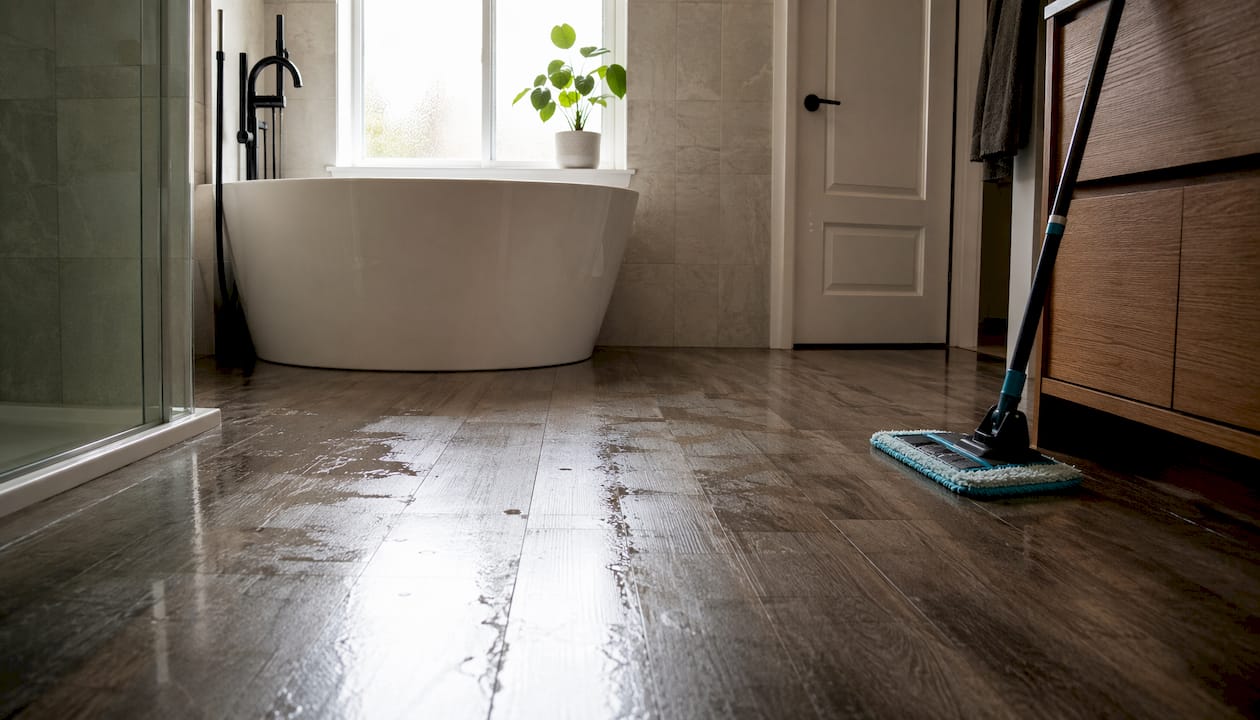
Laminate is a different story. Even products marketed as “water-resistant” will eventually fail if water sits on the surface long enough to work through the seams. Once it reaches the HDF core, the damage is permanent. No drying out, no refinishing — the plank needs replacement. Many professionals note that water-resistant laminate is not waterproof, and that improved joint systems only delay the inevitable in genuinely wet conditions.
Practical room guidance:
- Use luxury vinyl: Bathrooms, kitchens, laundry rooms, basements, mudrooms, entryways
- Laminate can work: Living rooms, bedrooms, hallways, home offices with no moisture risk
- Avoid laminate entirely: Any room with a floor drain, a history of leaks, or below-grade installation
Pro Tip: Run a simple plastic-sheet moisture test on a concrete subfloor before installing either material. Tape a 2-foot square of plastic sheeting to the slab for 24 hours. Condensation underneath means you need luxury vinyl, not laminate.
How do wear layers and lifespan compare?
Wear-layer thickness is the single most useful spec to check before buying. For luxury vinyl, it is measured in mils: 6 mil is entry-level residential, 12 mil handles moderate traffic, and 20 mil or above suits heavy-use commercial or pet households. For laminate, the equivalent rating system uses AC classes: AC3 covers moderate residential use, AC4 handles heavy residential and light commercial, and AC5 is commercial-grade.
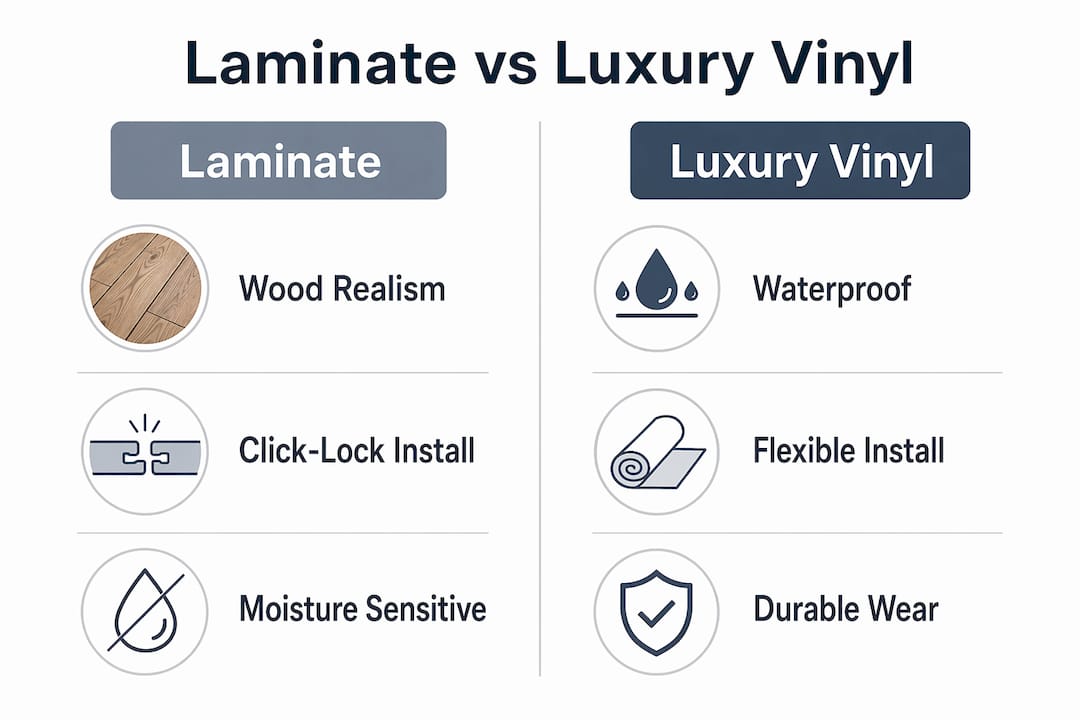
Thicker wear layers resist scratches, scuffs, and dents longer. Vinyl’s PVC wear layer tends to be more flexible and forgiving of dropped objects; laminate’s wear layer is harder but more brittle, meaning a sharp impact can chip or crack it rather than dent it. For homes with large dogs or heavy furniture, quality luxury vinyl in the 12–20 mil range typically outperforms mid-grade laminate over time.
Both materials can realistically last 15–25 years under normal residential conditions. The difference shows up in wet or high-traffic environments, where laminate may need replacement years earlier due to moisture damage or surface wear. Vinyl also holds up better against UV fading in sun-exposed rooms, though neither material is as fade-resistant as solid hardwood with a UV-cured finish.
Key spec to ask for: Wear-layer thickness in mils (vinyl) or AC rating (laminate). A 12-mil LVP and an AC4 laminate are both solid mid-range choices for busy households.
Which material is easier to install yourself?
Luxury vinyl offers more installation flexibility. Options include click-lock (the most common for DIY), loose-lay, glue-down, and peel-and-stick. Rigid-core LVP with click-lock is the most popular for homeowners because it goes over most existing floors without adhesive and tolerates minor subfloor imperfections. Flexible LVP can bridge small dips or humps that would cause laminate to fail.
Laminate is exclusively click-lock floating installation, which sounds simple but has real requirements. Rigid laminate demands a very flat subfloor: the standard tolerance is no more than 3/16 inch over a 10-foot span. Dips outside that range cause the locking joints to stress and eventually fail. Expansion gaps around the room perimeter are also non-negotiable. Omit them and the floor can buckle or tent within months, especially in rooms with temperature swings.
| Scenario | Estimated time |
|---|---|
| Small room, DIY vinyl click-lock | 4–6 hours |
| Small room, DIY laminate click-lock | 6–10 hours (includes subfloor prep) |
| Professional install, either material, small room | 1 day typical |
Laminate also requires specialty cutting tools (a miter saw or a laminate-specific scoring tool) and more precise cuts around door casings. Vinyl cuts with a utility knife or a basic flooring cutter, which is a meaningful advantage for first-time installers.
Does one feel better underfoot than the other?
Laminate tends to feel firmer and more like real wood because the HDF core is dense and rigid. That rigidity also means it can sound hollow or produce a clicking noise when walked on, especially without a quality underlayment beneath it.
makes a noticeable difference for laminate: a thin foam pad does little; a dense, pre-attached acoustic backing or a separate cork underlayment significantly reduces footstep noise.
Luxury vinyl, particularly products with a pre-attached foam or cork backing, is quieter and slightly softer underfoot. Over concrete subfloors, that backing also adds a small amount of thermal insulation, making the floor feel less cold in winter. Neither material matches carpet for warmth or cushion, but vinyl with a thick backing comes closer.
- Over concrete: Vinyl with pre-attached backing is the more comfortable choice.
- Over wood subfloor: Both materials perform well; laminate with a quality underlayment closes the comfort gap.
- Noise reduction: Vinyl with acoustic backing outperforms laminate without one; a good underlayment brings laminate close.
Which material looks more realistic?
Laminate has traditionally held the edge in visual realism, and for good reason. The photographic print layer can be extremely detailed, and the embossing on the wear layer often follows the grain pattern precisely, a technique called embossed-in-register (EIR). The result is a texture you can feel that matches what you see. Laminate also tends to be thicker overall (8–12mm is common), which gives it a more substantial look at the seams.
Luxury vinyl’s realism has improved dramatically. High-end LVP with deep embossing and wide planks (7 inches or wider) can be genuinely difficult to distinguish from hardwood at a glance. The gap narrows further when vinyl uses beveled edges that mimic the shadow lines between real wood boards. Budget vinyl, though, still tends to look flat and plasticky under direct light.
Edge profiles matter more than most buyers realize. A micro-bevel on either material creates visual separation between planks and hides minor height differences at the joints. Square-edge planks look cleaner in photos but show every imperfection in the subfloor.
Pro Tip: In a showroom, crouch down and look at the floor at a low angle under the store lighting. That angle reveals embossing depth, edge quality, and whether the sheen looks natural or artificial. It is the fastest way to separate a realistic product from a cheap one.
What does each material actually cost, installed?
Vinyl typically runs $1–$10 per square foot for materials, with installation adding $2–$10 per square foot, according to Angi. Laminate materials often range from $1–$5 per square foot, with labor between $3–$13 per square foot. At the budget end, both materials overlap. At the premium end, high-end LVP can cost more than mid-grade laminate once installation is factored in, because vinyl installation often requires less subfloor prep and fewer specialty cuts.
Long-term value shifts the math. Laminate in a moisture-prone room may need full replacement in 5–8 years if water damage occurs. Vinyl in the same room could last the full 15–25 year range. For rental properties or high-traffic homes, that replacement cost difference often justifies vinyl’s higher upfront price. Modern LVP/LVT is increasingly viewed as a premium, value-adding feature by buyers, particularly in pet- or kid-friendly homes, which narrows the resale-value gap that laminate once held. For more on renovation ROI, a home value renovation checklist can help you prioritize flooring alongside other upgrades.
How do you clean and repair each material?
Vinyl tolerates wet-mopping and most pH-neutral floor cleaners without issue. A regular vacuum followed by a damp mop is all it needs. Avoid abrasive scrubbers or wax-based products, which can dull the wear layer over time.
Laminate requires more caution. Vacuuming is fine, but mopping means using a nearly dry mop and cleaning up any standing water immediately. Excess moisture seeping into seams is the primary cause of laminate failure, so the cleaning routine directly affects lifespan.
Repairs differ significantly:
- Vinyl: A damaged plank in a click-lock installation can often be replaced individually by disassembling the floor back to that plank. Glue-down vinyl repairs are trickier but still possible with a heat gun and replacement plank.
- Laminate: Single-plank replacement requires disassembling back to the damaged board, which is manageable in a floating floor. Laminate cannot be sanded or refinished — once the wear layer is gone, the plank is done.
Keep a box of spare planks from your original installation for either material. Dye lots change, and a perfect color match years later is rarely guaranteed.
Which rooms should get which material?
| Room | Recommended material | Reason |
|---|---|---|
| Bathroom | Luxury vinyl | Standing water, humidity, splash zones |
| Kitchen | Luxury vinyl | Spills, grease, frequent mopping |
| Laundry room | Luxury vinyl | Appliance leaks, humidity |
| Basement | Luxury vinyl | Below-grade moisture, potential flooding |
| Entryway | Luxury vinyl | Wet boots, tracked-in dirt |
| Living room | Either (laminate preferred for realism) | Low moisture, aesthetic priority |
| Bedroom | Either (laminate preferred for budget) | Low traffic, dry conditions |
| Rental unit | Luxury vinyl | Durability, easy cleaning, tenant turnover |
| Radiant heat floor | Luxury vinyl (check manufacturer specs) | Laminate can gap or warp with heat cycles |
Mixing materials in one home is common and practical. Use luxury vinyl throughout the main floor and wet areas, then switch to laminate in bedrooms where budget is a priority. Transition strips at doorways handle the height difference cleanly, especially when both materials are close in thickness.
How to choose: your pre-purchase checklist
Work through these before you buy:
- Measure room moisture: run the plastic-sheet test on concrete subfloors
- Check subfloor flatness: laminate needs no more than 3/16 inch variation over 10 feet
- Confirm wear-layer specs: ask for mil rating (vinyl) or AC class (laminate) in writing
- Review warranty terms: does the warranty cover water damage? What voids it?
- Request a sample: take it home and view it in your room’s actual light
- Ask about return policy: can you return unopened boxes if you over-ordered?
Questions to ask your retailer or installer:
- Is this product fully waterproof, or only water-resistant?
- What is the wear-layer thickness, and what traffic level is it rated for?
- How flat does my subfloor need to be, and will you assess it before installation?
- Does the installation warranty cover expansion gap management?
- Can you provide references for similar installations in comparable rooms?
Three quick decision scenarios:
- Budget-first, dry room: AC3 or AC4 laminate, 8mm or thicker, with a quality underlayment
- Moisture or pets: 12-mil or thicker rigid-core LVP with a pre-attached backing
- Premium appearance, any room: High-end LVP with EIR embossing and wide planks, or AC5 laminate in a dry space
What do installers actually recommend?
Installers consistently recommend luxury vinyl for kitchens, bathrooms, basements, and rental properties, and reserve laminate for dry living areas where a client wants maximum wood realism on a controlled budget. The reasoning is straightforward: vinyl forgives the job site conditions that laminate punishes.
The two most common installer cautions about laminate are subfloor flatness and expansion gaps. Rigid click-lock laminate requires a substrate that is flat to within 3/16 inch over 10 feet. Flexible LVP can bridge minor dips that would cause laminate locking joints to crack over time. Expansion gaps are equally critical: skipping them leads to buckling, particularly in rooms that heat and cool seasonally.
Industry guidance from flooring professionals points to long-term value favoring quality luxury vinyl in heavy-use or moisture-prone situations, even when the upfront cost is higher than comparable laminate. For a deeper look at how these materials perform in real Michigan homes, the LVP vs. laminate comparison at Quality Hardwoods of Michigan, Inc covers local installation examples and product-specific guidance.
Pro Tip: Ask any installer you interview how they handle subfloor prep for laminate. If they say they skip the flatness check, walk away. That step is what separates a floor that lasts 20 years from one that buckles in two.
Key Takeaways
Luxury vinyl wins in wet or heavy-traffic rooms; laminate wins on wood realism and upfront cost in dry spaces — always confirm wear-layer specs and warranty terms before you buy.
| Point | Details |
|---|---|
| Moisture is the deciding factor | Luxury vinyl’s PVC core is fully waterproof; laminate’s HDF core swells with prolonged water exposure. |
| Wear-layer specs matter | Ask for mil rating (vinyl) or AC class (laminate) before purchasing; 12 mil or AC4 suits most active households. |
| Laminate needs a flat subfloor | Rigid click-lock laminate requires no more than 3/16 inch variation over 10 feet; vinyl is more forgiving. |
| Resale value is converging | Modern LVP/LVT is increasingly viewed as a premium feature by buyers, narrowing laminate’s traditional resale edge. |
| Quality Hardwoods of Michigan, Inc | Stocks both LVP/LVT and laminate with in-person samples and local installer referrals across Michigan. |
A flooring decision most guides get backwards
Most comparison articles frame this as vinyl vs. laminate, as if the two materials compete equally across every room. They do not. The real question is not which material is better overall — it is which material is appropriate for the specific conditions of each room in your home.
The mistake many homeowners make is choosing laminate throughout the main floor because it looks better in the showroom, then discovering two years later that the kitchen seams have swollen or the entryway planks have lifted. Vinyl in those rooms would have lasted a decade longer with zero drama. The aesthetic difference between a quality LVP and a quality laminate is smaller than most people expect once both are installed and lived on.
The other underrated factor is subfloor prep. Laminate’s flatness requirement is not a suggestion. Installers who skip that assessment are setting up a failure, and the homeowner pays for it. Vinyl’s flexibility on subfloor conditions is a genuine practical advantage, not just a marketing claim.
If you are renovating a whole floor and want one material throughout for visual continuity, choose luxury vinyl. It handles every room, the realism at the mid-to-high price point is excellent, and you will never have to worry about a slow leak under the dishwasher destroying your floor. Laminate makes the most sense when you are finishing a bedroom or a home office on a tight budget and moisture is genuinely not a concern.
Quality Hardwoods of Michigan, Inc can help you choose and install the right floor
Forty-plus years of flooring distribution means Quality Hardwoods of Michigan, Inc has seen what holds up in Michigan homes and what does not. The showroom carries a curated range of luxury vinyl plank options and laminate flooring, so you can compare real samples side by side under natural light rather than guessing from a website photo.

Bring a photo of your room, your subfloor type, and any moisture concerns you have. The team can walk you through wear-layer specs, warranty terms, and which products fit your budget and conditions. Local installer referrals are available for homeowners who want professional installation with a written warranty. Schedule an in-store consultation or request a free estimate at qualityhardwood.com.
Useful sources and where to learn more
These resources back the guidance in this article and are worth bookmarking for your own research:
- Vinyl vs. Laminate Flooring (House Beautiful): Expert-sourced breakdown of cost, installation, and durability with contractor quotes. Good starting point for understanding the basics.
- Laminate vs. Vinyl (Architectural Digest): Covers subfloor requirements and installer cautions in detail. Useful if you are planning a DIY install.
- Vinyl vs. Laminate Flooring (The Spruce): Practical maintenance and cleaning guidance for both materials.
- Resale Value: Vinyl or Laminate?: Market commentary on how buyers currently perceive each material.
- How Resale Value Remodeling Works: Broader renovation ROI context for homeowners weighing flooring as part of a larger project.
- Quality Hardwoods of Michigan flooring articles: Local guides covering installation, product selection, and maintenance for Michigan homeowners.
Before finalizing any purchase, take samples home and view them in your room’s light at different times of day. If your subfloor is concrete, run a moisture test first. Both steps take less than an hour and can save you from a costly mistake.
FAQ
Which is better, LVT or laminate flooring?
Neither is universally better. Luxury vinyl tile (LVT) is the stronger choice for wet or high-traffic rooms because its PVC core is fully waterproof; laminate performs well in dry spaces where deeper wood-grain texture and a lower upfront cost are priorities.
What is the lifespan of vinyl versus laminate?
Both materials typically last 15–25 years under normal residential conditions. Laminate may need earlier replacement in moisture-prone rooms, while quality luxury vinyl maintains its lifespan even in kitchens, bathrooms, and basements.
What are the disadvantages of luxury vinyl flooring?
Luxury vinyl cannot be sanded or refinished, and budget options can look noticeably artificial under direct light. It is also less rigid underfoot than laminate and can show dents from heavy furniture over time. A full breakdown of LVP downsides is worth reading before you commit.
Do high-end homes use laminate flooring?
Yes, particularly in dry rooms like bedrooms and home offices where high-AC-rated laminate with deep embossing can closely mimic hardwood. That said, many buyers now view waterproof LVP/LVT as a premium feature, so the perception gap between the two materials has narrowed considerably in recent years.
Can laminate be installed in a basement?
Laminate is generally not recommended for basements because below-grade spaces carry elevated moisture risk. Even a small amount of humidity or a minor water intrusion can cause the HDF core to swell permanently. Luxury vinyl is the safer choice for any below-grade installation.