

What does hardwood flooring lead time actually mean?
Hardwood flooring lead time is the total time between placing your order and having the material on-site, acclimated, and ready for installation. For in-stock products at a local distributor, that window can be as short as a few days. For special-order or custom-milled hardwood, it can stretch to several weeks or longer.
Getting this number wrong is one of the most common reasons flooring projects stall. Subfloor prep finishes, other trades clear out, and then everyone waits because the floor hasn’t arrived yet. Knowing your lead time before you finalize any other schedule is the single most useful thing you can do at the start of a flooring project.
A few factors that shape the total window:
- Product type: Prefinished hardwood from distributor stock ships fastest. Unfinished or custom species takes longer.
- Order type: Stock orders ship quickly; special orders can range from several weeks to a few months.
- Supplier location: A Michigan-based distributor like Quality Hardwoods of Michigan, Inc ships regionally faster than an overseas source.
- Acclimation time: Add 48 hours to several days on-site before installation can begin.
What factors push hardwood flooring delivery time longer?
Several variables compound on each other, and missing even one can throw off your whole schedule.
Product type and finish. Prefinished engineered hardwood typically ships faster than unfinished solid hardwood, which may need additional milling or finishing steps before it leaves the warehouse. Wide-plank or custom-species orders almost always carry longer production queues.
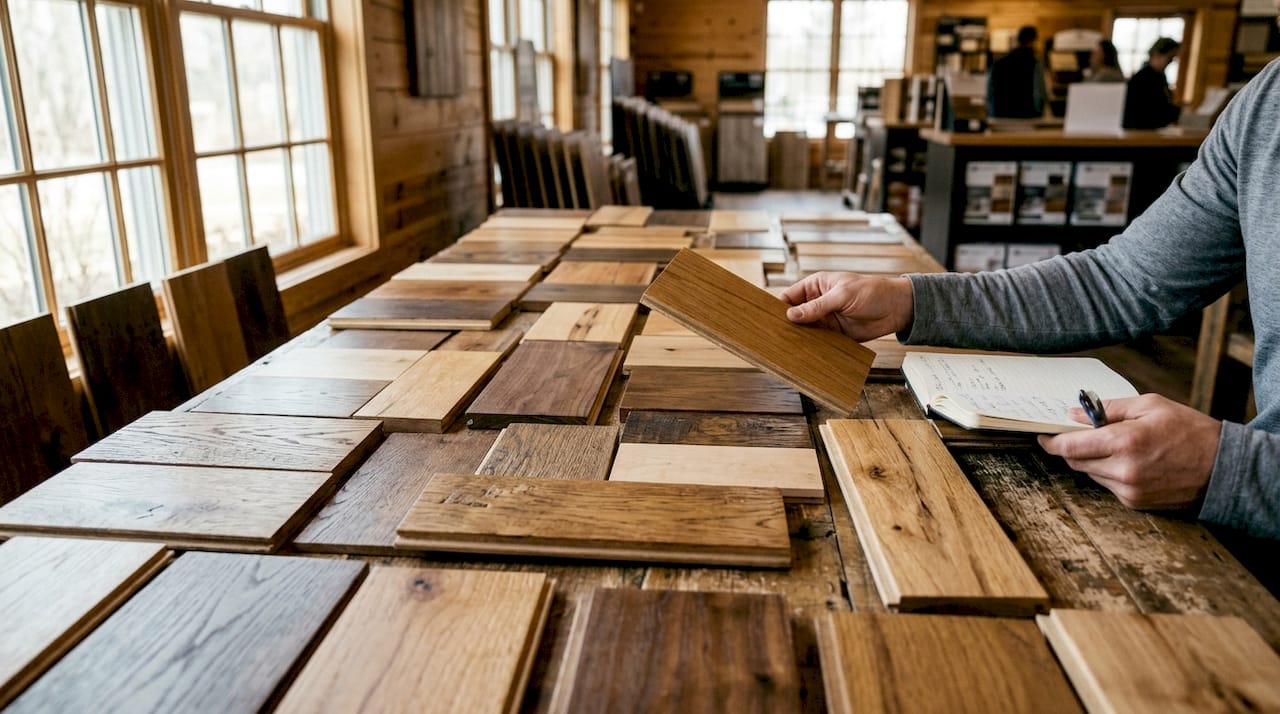
Customization. Any deviation from a standard profile, width, or finish triggers a special-order process. Lead times for custom flooring can range from several weeks to a few months depending on the manufacturer and product availability.
Inventory and manufacturing capacity. Even in-stock products can be delayed when a supplier’s warehouse runs low during peak renovation season, typically spring and fall. Manufacturing backlogs at the mill level add time before the product even reaches a distributor.
Shipping logistics. Wood flooring shipments fall under NMFC Item 34735, Freight Class 60. Accurate classification matters: misclassified freight gets flagged for reclassification, which adds fees and delays transit. Most hardwood moves via Less-Than-Truckload freight, which includes terminal stops and transfers that extend delivery windows compared to dedicated truckload service.
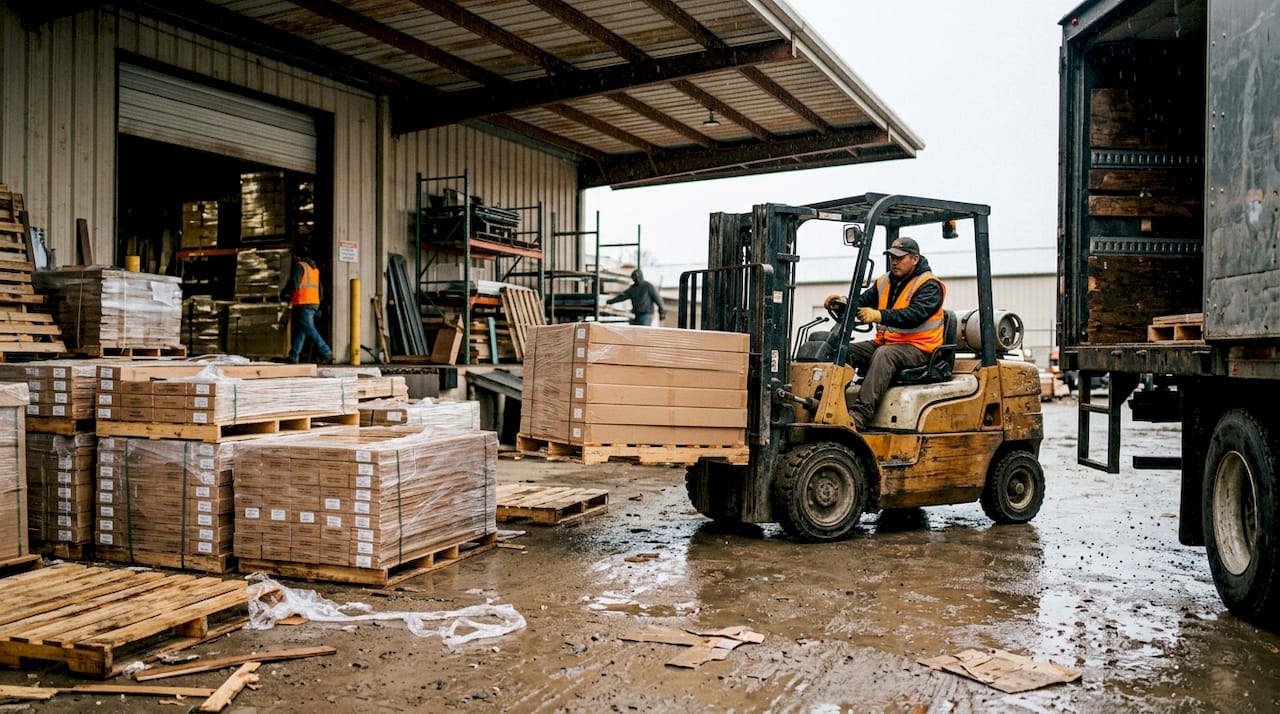
Seasonal demand. Ordering during peak renovation months means longer queues at both the mill and the carrier. Builders who plan ahead and order in slower months often get faster turnaround.
What does a typical hardwood flooring order timeline look like?
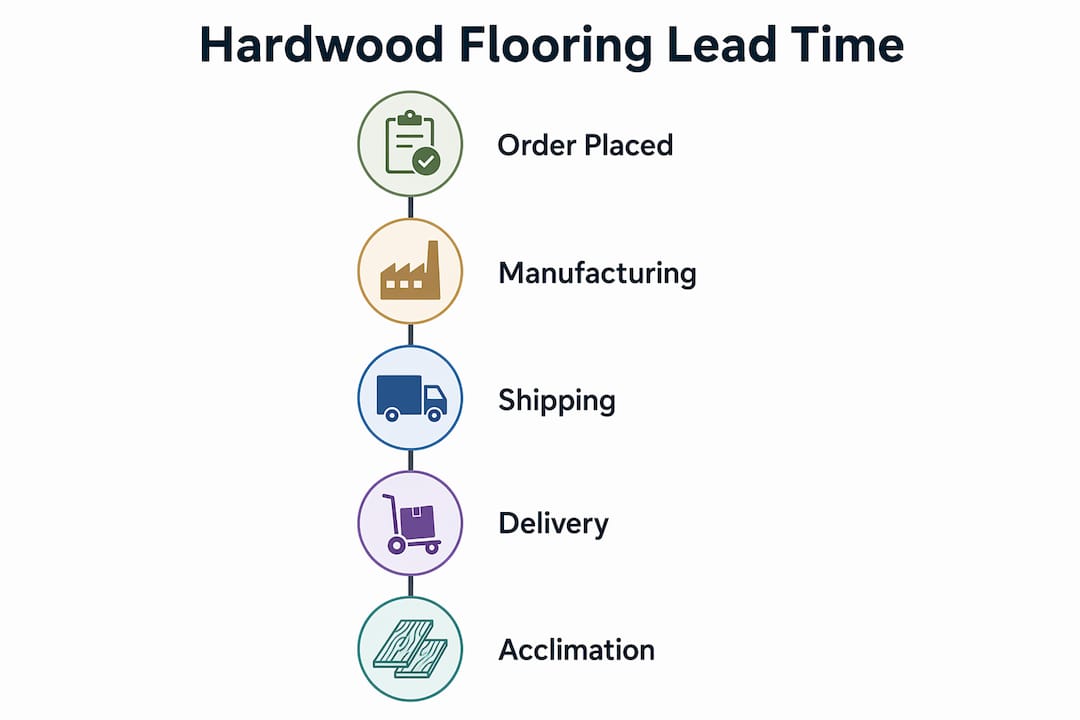
Here is a realistic breakdown from order placement to installation-ready:
- Order placement and confirmation (Day 1–2). The supplier confirms product availability, pricing, and estimated ship date. Special orders require a purchase order before production begins.
- Production and finishing (varies). In-stock products skip this step. Custom or special orders may require 2–8 weeks of production time depending on species, profile, and mill capacity.
- Freight pickup and transit (3–10 business days). LTL shipments make multiple terminal stops. Dedicated truckload freight moves direct and arrives faster. Proper NMFC classification under Freight Class 60 keeps transit predictable.
- Receiving and inspection (Day of delivery). Count every bundle, check for visible damage, and note any discrepancies on the delivery receipt before the driver leaves. Damage claims filed after the fact are harder to resolve.
- Acclimation (48 hours to 5 days). The flooring sits on-site in its installation environment before any boards go down.
| Scenario | Estimated Total Lead Time |
|---|---|
| In-stock prefinished, regional distributor | 3–10 business days |
| In-stock unfinished, LTL freight | — |
| Special order, domestic mill | 4–8 weeks |
| Custom or imported hardwood | 8 weeks or more |
Pro Tip: Order 4–6 weeks before your target installation date even for in-stock products. That buffer absorbs carrier delays, inspection time, and the full acclimation period without compressing your schedule.
How does acclimation fit into your installation schedule?
Acclimation is not optional. Hardwood flooring needs 48 hours to several days on-site to adjust to the temperature and humidity of its installation environment before any boards go down. Skip this step and you risk cupping, gapping, or buckling after installation.
The acclimation window depends on how different the delivery environment is from the installation space. A floor arriving from a climate-controlled warehouse into a newly built home without active HVAC needs more time than one delivered to a conditioned space. HVAC must be commissioned and running before acclimation begins, which means coordinating with mechanical trades, not just the flooring crew.
A few scheduling realities worth knowing:
- Concrete subfloors must reach acceptable moisture levels before hardwood goes down. Test with a moisture meter, not a visual check.
- Temperature and relative humidity in the space should be at normal living conditions during acclimation, typically 60–80°F and 30–50% relative humidity.
- If site prep runs late and compresses the acclimation window, do not cut it short. Rushing acclimation is one of the most common causes of post-installation flooring failures.
- For statewide delivery in Michigan, transit conditions vary by season, so build in extra acclimation time for winter deliveries into unheated spaces.
Moisture management during transit also matters. Proper kiln drying and container sealing reduce the risk of warping and staining before the flooring even reaches your site.
Expert advice on keeping your flooring schedule on track
The contractors who consistently hit their flooring dates treat their supplier as a schedule partner, not just a vendor. That means having the lead time conversation at the time of project award, not when the GC is already pushing for an install date. By then, the window to course-correct on a late order has usually closed.
Get written delivery confirmations for special orders. A verbal estimate from a sales rep is not a schedule. A written confirmed ship date is. That document is what you use to sequence your other trades and protect your project timeline.
Order early, even before your install date is locked. Early procurement is standard practice among experienced contractors precisely because lead times fluctuate. A supplier can hold finished product for you; they cannot manufacture it faster once you need it tomorrow.
For projects involving international sourcing, port dwell times and consolidation warehouse delays add unpredictable time to LCL shipments. Full container loads are preferred for minimizing handling and moisture exposure, but they require volume to justify. If you are sourcing domestically through a regional distributor, you sidestep most of these risks entirely.
Delivery method also affects your day-of schedule. Floor-loaded delivery reduces vertical pressure on boxes and allows faster manual unloading without heavy equipment, though it requires confirming that site access accommodates the carrier vehicle. Coordinating these details before the truck arrives prevents the kind of last-minute scramble that pushes installation start times back by hours.
Pro Tip: Flag lead time risks in writing before they become problems. The contractors who miss dates find out at week ten that their product won’t arrive until week fourteen. A renovation project management checklist that includes flooring lead time milestones prevents exactly that scenario.
Ready to plan your next flooring project with a supplier who stocks what you need and ships regionally? Quality Hardwoods of Michigan, Inc has served contractors, builders, and homeowners across Michigan for over 40 years. Browse vinyl flooring options or get a quote today.

Key Takeaways
Hardwood flooring lead time runs from order placement through delivery and acclimation, and planning for the full window, not just transit time, is what keeps projects on schedule.
| Point | Details |
|---|---|
| Lead time definition | Total time from order to installation-ready, including production, transit, and acclimation. |
| Stock vs. special order | In-stock regional orders arrive in 3–10 business days; special orders take 4–8 weeks or more. |
| Acclimation is mandatory | Hardwood needs 48 hours to several days on-site before installation can begin. |
| Order early | Place orders 4–6 weeks before your target install date to absorb delays. |
| Get written confirmations | Written delivery dates protect your schedule on special and custom orders. |
FAQ
How long does it take to install 1,000 sq ft of hardwood floor?
An experienced crew typically installs hardwood flooring in one to two days, but that clock does not start until acclimation is complete and the subfloor passes moisture and flatness checks.
How long should hardwood flooring sit before installing?
Hardwood flooring needs a minimum of 48 hours to acclimate on-site, though 5 days is preferred for best results, especially in spaces with significant humidity differences from the delivery environment.
Is 48 hours enough time for flooring to acclimate?
Forty-eight hours is the minimum, not the target. Wider planks, higher humidity differentials, or unfinished hardwood often need closer to 3–5 days to fully stabilize before installation.
What does flooring order lead time mean for project planning?
Flooring order lead time is the total time from purchase order to delivery, and it must be factored into your project schedule before other trades are sequenced, not after.
What is the best time to order hardwood floors to avoid delays?
Order during off-peak months and at least 4–6 weeks before your install date. Supply chain variability means early procurement is the most reliable buffer against schedule disruptions.