
Flooring maintenance education is defined as the practice of teaching homeowners and property managers the specific care routines, cleaning techniques, and prevention strategies that protect floor surfaces over time. To educate customers on flooring maintenance effectively, you need to go beyond handing them a product brochure. The National Association of Home Builders confirms that hardwood floors last 75–100 years with proper care, but neglected floors may need refinishing in under 10 years. That gap is almost entirely explained by daily habits. The EPA recommends indoor humidity between 30% and 50% year-round to prevent moisture damage, and Quality Hardwoods of Michigan, Inc has spent over 40 years helping Michigan homeowners put that guidance into practice.
What tools and materials do customers need for floor care?
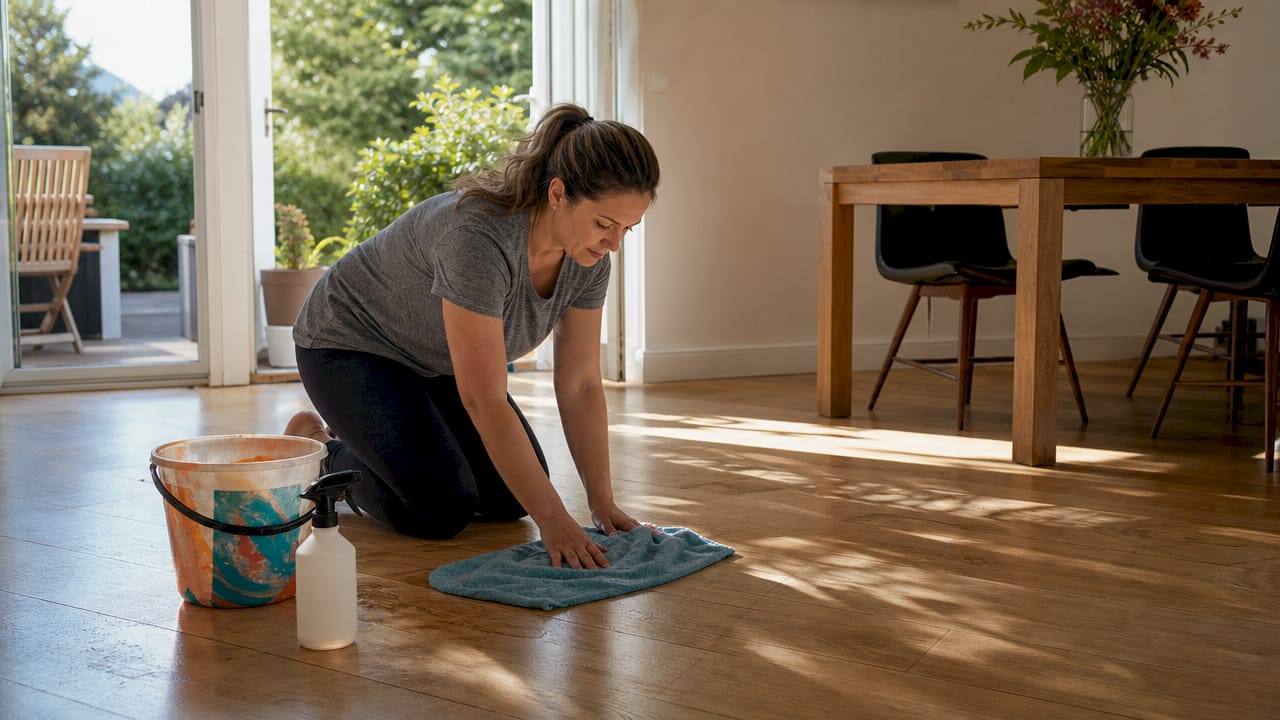
The right tools make floor care faster and safer. Using the wrong equipment causes more damage than skipping cleaning altogether. Every homeowner should build a basic kit before establishing any routine.
Core tools for daily and weekly cleaning:
- A microfiber dust mop or flat mop for daily debris removal on hardwood, laminate, and luxury vinyl plank
- A vacuum with a hard-floor setting and no beater bar for grit removal without surface damage
- Soft-bristle brushes for grout lines on tile floors
- A microfiber mop with a wrung-out, barely damp pad for weekly damp mopping
Vacuum beater bars cause micro-abrasions that dull hardwood and vinyl finishes over time. Switching to a hard-floor attachment costs nothing extra and prevents years of premature wear.
Cleaning products matter as much as tools. All-purpose cleaners leave residues that attract dirt and degrade finish integrity. Use pH-neutral cleaners formulated for your specific floor type. Hardwood needs a wood-safe cleaner. Luxury vinyl plank needs a vinyl-safe formula. Tile can handle slightly stronger solutions, but grout still benefits from pH-neutral products to prevent discoloration.
Protective accessories that prevent damage before it starts:
- Felt pads under all furniture legs, replaced every 6–12 months as they compress
- Walk-off mats at every exterior entry point
- A whole-home humidifier or dehumidifier to maintain the EPA’s recommended humidity range
Pro Tip: Low-moisture microfiber mop pads capture soil without pushing water into seams. This matters most for wood and laminate, where even small amounts of standing moisture cause swelling.
How should customers maintain hardwood, laminate, tile, vinyl, and carpet?
Each flooring type has a different tolerance for moisture, abrasion, and chemical exposure. A single cleaning routine does not work across all materials. The table below summarizes the core tasks by floor type and frequency.
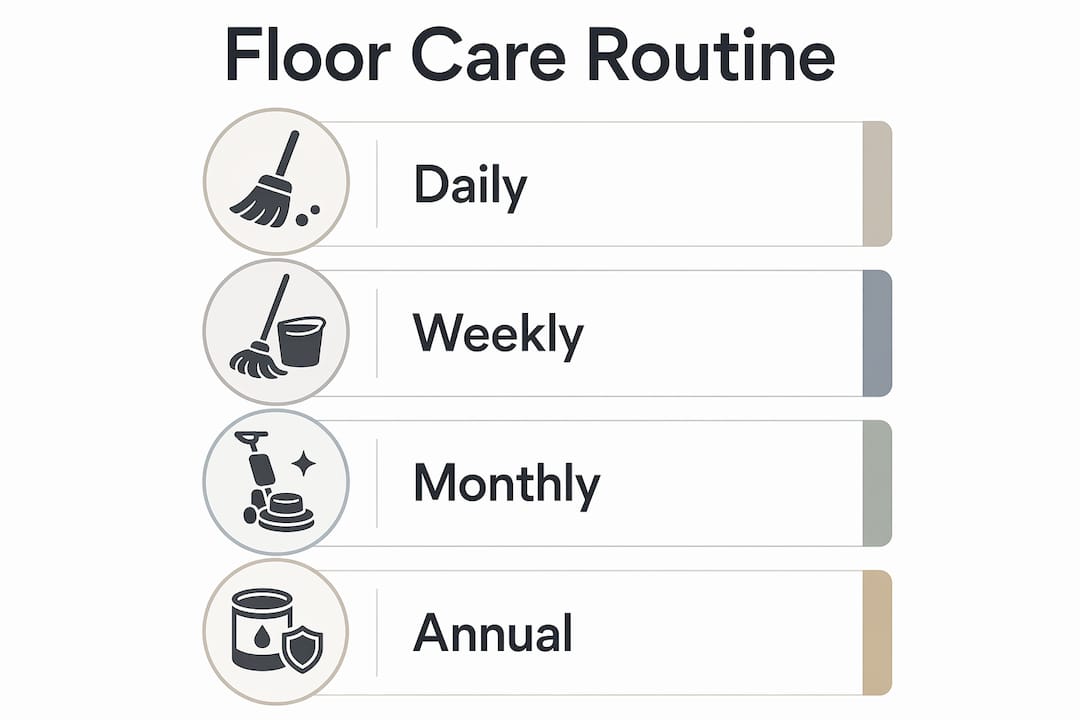
| Floor Type | Daily | Weekly | Monthly/Annual |
|---|---|---|---|
| Hardwood | Dust mop or dry sweep | Damp mop with wood-safe cleaner | Inspect finish; refinish every 7–10 years |
| Laminate | Dry sweep or microfiber mop | Damp mop, no excess water | Check for swelling at seams; reseal edges annually |
| Tile/Grout | Sweep or vacuum | Mop with pH-neutral cleaner | Deep-clean grout; reseal grout annually |
| Luxury Vinyl Plank | Dry sweep or vacuum | Damp mop with vinyl-safe cleaner | Inspect for lifting edges; check adhesive |
| Carpet | Vacuum high-traffic areas | Full vacuum | Professional hot water extraction every 12–18 months |
Hardwood floor care
Daily dust mopping takes under 10 minutes and stops grit from acting like sandpaper on the finish. For weekly cleaning, use a barely damp microfiber mop and a pH-neutral wood cleaner. Wipe up spills immediately. Standing water on hardwood causes cupping, where the edges of boards rise above the center. For long-term hardwood care, controlling humidity is as important as any cleaning product you choose.
Laminate floor care
Laminate looks like hardwood but tolerates even less moisture. The core layer is fiberboard, which swells when wet and does not recover. Use a dry mop daily and a barely damp mop weekly. Never use steam on laminate. Avoid wax-based cleaners, which leave a film that dulls the surface. Check the manufacturer’s warranty before applying any product, since some warranties are voided by unapproved cleaners.
Tile and grout care
Tile itself is nearly indestructible. Grout is not. Unsealed grout absorbs stains and harbors bacteria. Sweep or vacuum tile daily to prevent grit from scratching the glaze. Mop weekly with a pH-neutral cleaner. Reseal grout once a year, or more often in kitchens and bathrooms. A soft-bristle brush works better than an abrasive scrubber for grout lines.
Luxury vinyl plank care
Luxury vinyl plank is one of the most forgiving floor types for maintenance. It resists moisture, scratches, and stains better than hardwood or laminate. Still, abrasive scrubbers and beater-bar vacuums will dull the wear layer over time. Follow the vinyl plank cleaning guide from Quality Hardwoods of Michigan, Inc for product-specific advice. Avoid rubber-backed mats on vinyl, since rubber can stain the surface permanently.
Carpet care
Vacuum high-traffic areas daily and the full carpet at least once a week. The Carpet and Rug Institute confirms that professional hot water extraction every 12–18 months doubles carpet lifespan. Spot-treat stains immediately by blotting, never scrubbing. Scrubbing spreads the stain and damages fibers.
Pro Tip: Place area rugs in high-traffic zones on top of hardwood or vinyl. Rotate them every few months to prevent uneven color fading from UV exposure.
What mistakes do customers most often make with floor maintenance?
Most floor damage is self-inflicted. The errors below account for the majority of premature wear, warping, and finish failure.
-
Using a steam mop on the wrong surface. Steam mops force moisture into seams and strip protective finishes on hardwood, laminate, and luxury vinyl. They are appropriate only for sealed tile and stone. The biggest misconception in floor care is that steam mops work on all floor types. They do not.
-
Skipping the dust mop. Grit tracked in from outside acts as an abrasive on every floor type. Skipping daily dry sweeping accelerates finish wear faster than almost any other single habit.
-
Over-wetting the floor. Excess water on wood and laminate causes swelling, warping, and mold growth under the boards. Wring out mops until they are barely damp. If you can see water on the floor after mopping, you used too much.
-
Using the wrong cleaner. All-purpose household cleaners leave a residue film that attracts dirt and dulls finishes. Always use a cleaner formulated for your specific floor type.
-
Ignoring the dwell time on cleaners. Many homeowners spray and immediately wipe. Effective deep cleaning requires letting the cleaner sit for the time listed on the label. Rushing this step reduces results and wastes the product.
-
Delaying refinishing or resealing. Worn finish on hardwood exposes bare wood to moisture and staining. Worn grout sealer allows stains to penetrate permanently. Address these on schedule rather than waiting for visible damage.
Flooring maintenance is best treated as a defense system. The goal is to stop damage at the entry point, not to clean up after it has already occurred. Walk-off mats, felt pads, and daily dry sweeping prevent the vast majority of floor damage before any cleaner is ever needed.
How can customers prevent floor damage before it happens?
Prevention costs far less than repair. A few simple habits protect floors more effectively than any cleaning product on the market.
- Walk-off mats at every entry. Mats at entryways trap 80–90% of tracked-in debris before it reaches the floor. Use mats both outside and inside the door for maximum effect.
- Felt pads under all furniture. Chair legs, table bases, and sofa feet all scratch floors when moved. Replace felt pads every 6–12 months as they wear flat.
- Humidity control year-round. The EPA’s 30%–50% humidity target applies in both summer and winter. Low humidity causes wood to shrink and crack. High humidity causes swelling and cupping.
- Rotate rugs and furniture. Sunlight fades floors unevenly. Moving rugs and furniture every few months prevents permanent color differences.
- Schedule seasonal inspections. Spring inspections catch winter moisture damage before it spreads. Fall inspections prepare floors for heating-season humidity drops. Catching problems early reduces repair costs significantly.
Pro Tip: Test your hardwood finish by placing a few drops of water on the surface. If the water beads up, the finish is intact. If it soaks in within a few minutes, the floor needs recoating before moisture damage begins.
For a broader look at which floor types hold up best under heavy use, the most durable flooring guide from Quality Hardwoods of Michigan, Inc compares materials by traffic tolerance and maintenance demands.
Key Takeaways
Proper flooring maintenance is a prevention-first system where daily dry sweeping, humidity control, and material-specific cleaning products protect floors far more effectively than reactive deep cleaning.
| Point | Details |
|---|---|
| Daily dry sweeping is non-negotiable | Grit acts as sandpaper on all floor types; a 10-minute dust mop prevents years of finish wear. |
| Match cleaners to floor type | pH-neutral, material-specific cleaners protect finish integrity; all-purpose products leave damaging residue. |
| Humidity control protects wood and laminate | Keep indoor humidity between 30% and 50% year-round to prevent swelling, cracking, and cupping. |
| Prevention beats cleanup | Walk-off mats trap 80–90% of debris at entry points, reducing the cleaning burden on every floor surface. |
| Schedule professional care | Hot water extraction every 12–18 months doubles carpet lifespan; hardwood refinishing on schedule prevents costly board replacement. |
What I’ve learned from 40 years of watching floors fail too soon
Most floor damage I see comes from two sources: the wrong cleaner and the wrong assumption that more moisture means cleaner floors. Homeowners spend real money on beautiful hardwood or luxury vinyl, then unknowingly strip the finish with a product they grabbed from the grocery store. The label says “floor cleaner.” It does not say which floor.
The advice I give every customer is to treat maintenance as a system, not a checklist. Start with one habit: dry sweep every day. That single action prevents more damage than any other step. Once that is automatic, add humidity control. Then add felt pads. Build the system in layers rather than trying to overhaul everything at once.
The other thing I tell people is to call before the problem gets expensive. A floor that needs recoating costs a fraction of a floor that needs full refinishing. A grout line that needs resealing costs nothing compared to tile replacement. I have seen homeowners delay a $200 fix until it became a $3,000 project. Timely professional advice is part of the maintenance system too.
For specific guidance on keeping new floors looking great, the principles are consistent regardless of floor type: prevent, protect, and address wear early.
— Mike Solomich
Quality Hardwoods of Michigan, Inc supports your floor care from day one
Quality Hardwoods of Michigan, Inc carries flooring products backed by manufacturer warranties designed to support long-term durability, not just initial installation. The team provides specific maintenance guidance for every product sold, so you know exactly which cleaners, tools, and schedules apply to your floor.

Whether you are maintaining luxury vinyl plank in a rental property or caring for prefinished hardwood in a family home, Quality Hardwoods of Michigan, Inc can match you with the right product and the right care plan. Visit the showroom or contact the team directly for personalized recommendations on flooring selection, maintenance products, and professional installation across Michigan.
FAQ
How often should hardwood floors be refinished?
Hardwood floors typically need refinishing every 7–10 years under normal residential traffic. The National Association of Home Builders confirms that well-maintained hardwood can last 75–100 years, making timely refinishing one of the highest-return maintenance investments.
Can you use a steam mop on luxury vinyl plank?
No. Steam mops force moisture into seams and can strip the wear layer on luxury vinyl plank. Use a barely damp microfiber mop with a vinyl-safe, pH-neutral cleaner instead.
What humidity level is best for wood floors?
The EPA recommends maintaining indoor humidity between 30% and 50% year-round. Levels outside this range cause wood to shrink, crack, swell, or cup depending on the season.
How do I know if my hardwood finish needs recoating?
Place a few drops of water on the floor surface. If the water soaks in within a few minutes rather than beading up, the finish has worn through and the floor needs recoating before moisture damage reaches the wood.
How often should carpet be professionally cleaned?
The Carpet and Rug Institute recommends professional hot water extraction every 12–18 months. This schedule doubles carpet lifespan compared to vacuuming alone.
Recommended
- Flooring Articles & Expert Guides — Hardwood, LVP & More | Quality Hardwoods of Michigan
- How to Clean Hardwood Floors: The Complete Guide | Quality Hardwoods of Michigan
- Hardwood Floor Cleaning & Maintenance Tips for Michigan Homes | Quality Hardwoods of Michigan
- Flooring in Michigan Guide | Quality Hardwoods of Michigan