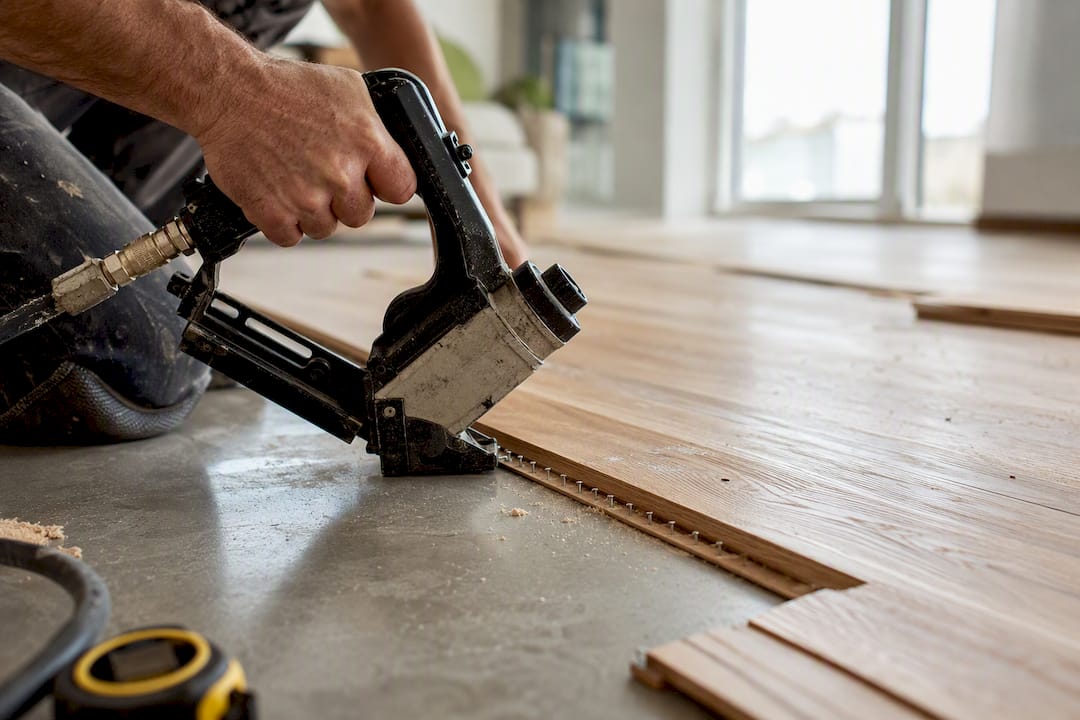
For most single-family homes with a plywood subfloor, nail-down is the better call. For concrete slabs, basements, condos, or a fast DIY weekend project, floating usually wins. The single biggest factor is your subfloor: plywood or OSB opens the door to nail-down, while concrete rules it out entirely. Product type matters too. Solid hardwood almost always gets nailed; engineered hardwood and luxury vinyl plank are built to float.

Before you decide anything else, run these two checks:

  • Subfloor type: plywood/OSB supports nailing; concrete or a slab requires floating or glue-down.
  • Sound and heat needs: condos with strict noise rules and homes with radiant heat both lean toward specific floating or glue-down products, not nail-down.

Key Takeaways

The right installation method depends almost entirely on subfloor type, with concrete ruling out nail-down and plywood opening up both options.

Point Details
Subfloor decides the method Concrete requires floating or glue-down; plywood/OSB supports nail-down.
Nail-down suits permanence Best for single-family homes where refinishing and resale value matter most.
Floating suits speed and flexibility Fits basements, condos, rentals, and DIY schedules on almost any substrate.
Sound depends on underlayment, not method A quality acoustic pad largely fixes the hollow-sound complaint on floating floors.
Source materials before you decide Quality Hardwoods of Michigan, Inc stocks underlayments and adhesives matched to each installation method.

Table of Contents

Floating vs Nail Down Installation: A Side-by-Side Look

A nail-down floor gets fastened directly to a wood subfloor with a pneumatic cleat nailer, driving fasteners through the tongue of each board every few inches. A floating floor never touches the subfloor at all. Its boards click together at the edges and rest on top of a underlayment layer, held in place by gravity, trim, and a gap around the perimeter.

Materials suit each method differently. Solid hardwood almost always gets nailed down over plywood or OSB. Engineered hardwood, laminate, and luxury vinyl plank are usually manufactured for click-lock floating installs, though some engineered lines can also be nailed or glued.

Factor Nail-Down Floating
Subfloor compatibility Plywood or OSB only Plywood, concrete, existing flooring, radiant slabs
DIY difficulty Moderate to hard (requires a nailer) Easy to moderate
Install speed Slower, fastener-by-fastener Up to 500 to 800 square feet per day for experienced crews
Typical cost driver Labor-moderate for solid wood Lower labor, but precision click-lock boards can cost more per square foot
Refinishing Sandable multiple times over decades Limited or not refinishable, depending on wear layer

Removability is where the two methods really split. A floating floor can be pulled up in an afternoon and replaced without touching the subfloor, which is exactly why renters and flippers favor it. Nail-down flooring is meant to stay for the life of the house. Pulling it up damages the boards and often the subfloor underneath, according to installer guides on nail, glue, and float methods.

Pros, Cons, and Best-Fit Scenarios for Each Method

Nail-down flooring earns its reputation for solid feel underfoot because the boards are physically locked to the subfloor with no air gap beneath them. It can be sanded and refinished many times over its life, which is a real asset for a forever home. The tradeoffs: it demands a wood subfloor, a pneumatic flooring nailer most homeowners don’t own, and more physical effort to install correctly.

Floating flooring wins on speed and flexibility. It goes down fast, works over concrete, plywood, or even existing flooring, and comes back up just as easily if you change your mind later. The downside is a potential hollow or “drummy” sound underfoot on lower-grade underlayment, and most floating products can’t be refinished more than lightly, if at all.

Glue-down deserves a mention here too, even though it’s a third method: it’s the common answer on concrete slabs where floating isn’t preferred, and it gives full contact with the substrate for the quietest possible floor, according to installation method comparisons from Potomac Floors.

  • Single-family home, plywood subfloor: nail-down, especially if you plan to stay long-term.
  • Basement or condo on a slab: floating or glue-down, since nailing into concrete isn’t an option.
  • Rental property: floating, for fast turnover between tenants.
  • Home you plan to sell soon: nail-down solid hardwood still carries more weight with buyers and inspectors who equate it with permanence.

Pro Tip: If resale value matters more than convenience, solid nail-down hardwood in main living areas tends to appraise and show better than floating floors, even when the floating product looks nearly identical.

How Nail-Down and Floating Installations Actually Go Down

Both methods follow a logical sequence, but the tools and pace differ a lot; for more details, see The Complete Guide to Professional Hardwood Floor Installation. Here’s what each looks like in practice.

Nail-down, step by step:

  1. Check subfloor flatness and repair any dips or high spots.
  2. Acclimate the hardwood to the room for several days per manufacturer guidance.
  3. Snap a chalk line and lay a starter row against the straightest wall.
  4. Face-nail the first few rows by hand, then switch to a pneumatic flooring nailer, driving cleats roughly every 8 to 10 inches through the tongue.
  5. Rack subsequent rows for staggered seams, then finish with base shoe or trim.

Floating, step by step:

  1. Check subfloor flatness with a long straightedge and correct anything outside the manufacturer’s tolerance.
  2. Roll out underlayment, choosing a moisture barrier over concrete or an acoustic-rated pad for upstairs rooms.
  3. Leave an expansion gap of about half an inch around the perimeter to let the floor move with humidity changes.
  4. Click boards together following the manufacturer’s angle-and-drop or tap-together sequence, working row by row.
  5. Install transition strips at doorways and finish trim to hide the expansion gap.

Tools worth renting or buying include a pneumatic flooring nailer for nail-down jobs, a tapping block and pull bar for floating installs, and a moisture meter for either method over questionable subfloors. The most common mistake on floating jobs is skipping the flatness check, since underlayment cushions small imperfections but won’t stop joint failure over a real dip or hump. On nail-down jobs, it’s rushing acclimation, which leads to gapping or cupping months later.

Subfloor, Sound, and Radiant Heat Rules That Decide Your Method

Concrete changes everything. You physically cannot drive nails into a slab, so concrete subfloors require either floating with a moisture-barrier underlayment or glue-down with the right adhesive. Wood subfloors give you more freedom, but they still need to meet flatness tolerances and be securely screwed at every joist before nail-down is a good option.

Floating hardwood floor layers on concrete subfloor

Sound is the other major decision driver, especially in multi-story homes and condos. A floating floor over thin foam padding can sound noticeably hollow when walked on, but a quality cork or rubber acoustic underlayment largely solves that. In condos with strict impact-noise (IIC) requirements set by an HOA, glue-down is often the safer default because full contact with the slab eliminates hollow spots entirely.

Radiant heat adds one more wrinkle: nail-down is typically off the table because fasteners risk puncturing the tubing embedded in the subfloor. Most radiant-heat installations call for glue-down with a heat-rated adhesive or a floating product specifically certified for radiant systems.

  • Concrete or slab subfloor: floating or glue-down only, never nail-down.
  • Upstairs bedrooms or condos: pair floating with acoustic-rated underlayment.
  • Radiant heat systems: confirm the product is radiant-approved before buying anything.

Getting the Install Right: A Homeowner’s Checklist

Before any crew shows up or you rent a nailer yourself, run through a short pre-install checklist. Test the subfloor’s moisture content, confirm flatness with a straightedge across at least six to ten feet, let the flooring acclimate to the room, and double-check that the product you bought actually matches the construction method you’re planning (solid boards don’t float, and not every engineered product is rated for nailing).

Quality Hardwoods of Michigan, Inc stocks underlayment options for both moisture control and acoustic performance, along with adhesives suited to glue-down jobs on concrete, so you’re not guessing which product pairs with which method. If you’re hiring an installer, ask specifically for a moisture test result, the adhesive specification if it’s a glue-down job, and the target IIC rating if you’re in a condo. Those three questions separate a professional quote from a generic one.

Checklist Item Why It Matters
Moisture test Confirms concrete or wood subfloor is dry enough per NWFA standards
Flatness check Prevents soft spots and joint failure in floating installs
Acclimation period Reduces gapping and cupping after installation
Product/method match Solid hardwood nails; many engineered and LVP products float

What Actually Matters When You’re Picking a Method

Most flooring advice treats this as a binary choice between two roughly equal options, and that framing does homeowners a disservice. Subfloor type isn’t a preference. It’s a hard constraint. If you have concrete, the nail-down conversation is over before it starts, no matter how much you like the idea of a solid feel underfoot.

What Actually Matters When You're Picking a Method — overview diagram

The bigger blind spot is sound. Homeowners fixate on cost and DIY difficulty, then get blindsided by a hollow-sounding floor six months later because nobody mentioned underlayment quality. That’s not really a flaw in floating floors. It’s a flaw in cheap padding paired with an uneven subfloor, and industry sources back that up.

If you’re weighing resale value against convenience, don’t split the difference room by room without a plan. Nail-down solid hardwood in main living areas, floating engineered product in a basement rec room. That’s not compromise, that’s matching the method to the actual constraints of each space, which is what this decision should have been about from the start.

— Mike Solomich

Where to Get Materials and Guidance for Your Installation

Whichever method fits your project, the harder part is often sourcing the right materials, not swinging the hammer. Quality Hardwoods of Michigan, Inc stocks solid and engineered hardwood, luxury vinyl plank, laminate, moisture-barrier and acoustic underlayments, and the adhesives glue-down jobs require, all under one roof at the Michigan showroom.

Quality Hardwoods of Michigan, Inc

Instead of guessing whether a product is rated for floating, radiant heat, or nailing, you can walk the showroom floor and ask directly. The team also refers customers to trusted local installers when a project calls for professional hands, so you’re not stuck choosing between a big-box aisle and a solo internet search. If you’re building new or replacing an existing floor, start with the new construction hardwood flooring page to see product options and get a quote, or browse the full flooring product catalog to compare hardwood, LVP, and laminate side by side before you commit to a method.

Sources

FAQ

What Are the Downsides of Floating Flooring?

The main complaints are a hollow sound underfoot on thin underlayment, limited or no refinishing depending on the wear layer, and less resale appeal than solid nailed hardwood in some markets.

Which Is Better, Floating Floor or Glue-Down?

Neither is universally better. Glue-down usually wins on acoustic performance for condos and slabs, while floating wins on install speed and DIY ease.

Can You Nail Down a Floating Floor?

No. Floating floor products, especially engineered click-lock boards and LVP, are milled with locking joints that aren’t designed to hold nails, and nailing them voids most manufacturer warranties.

What Are the Most Regretted Flooring Choices?

Homeowners most often regret skipping a moisture test before installing over concrete and choosing thin, cheap underlayment under a floating floor, both of which lead to costly problems within a year or two.

Is Nail-Down or Floating Better for a Condo?

Floating can work in a condo, but glue-down is often preferred because it meets stricter impact-noise requirements set by HOAs, and nail-down usually isn’t an option over a concrete slab.